
Clear Angle Studios has become one of those companies whose name seems to surface again and again in production conversations. Without a doubt, Clear Angle has quietly become a key part of the modern VFX production pipeline.
In this fxpodcast, we speak with Jamie Hearing, Digital Effects Supervisor at Clear Angle Studios, following a visit to the company’s Pinewood facility in the UK. The conversation looks at the broad range of capture work Clear Angle now undertakes, from full-body scanning and facial performance capture through to large-scale exterior LiDAR, drone and photogrammetry work.
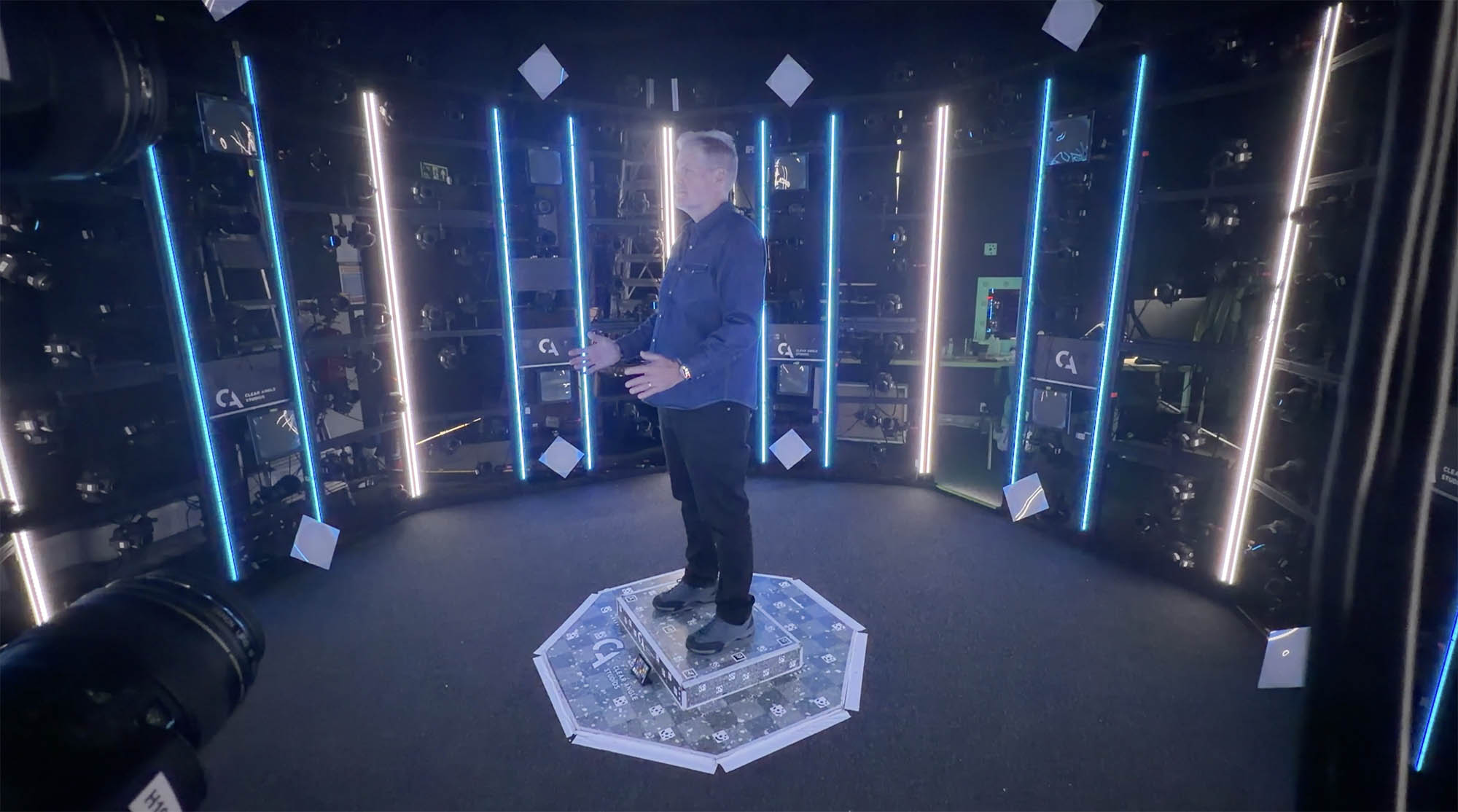
At Pinewood, Mike was scanned in one of Clear Angle’s full-body systems, a 24-camera array with multiple LED lights designed to capture a static human pose with accurate geometry and texture. Clear Angle now operates 18 of these rigs globally, with each camera carefully calibrated to cover different areas of the body, including the more complex regions where higher fidelity is required.
But the discussion quickly moves beyond traditional scan pipelines. Jamie explains how the same capture expertise is now being extended into radiance fields and Gaussian splatting. Rather than producing a cleaned-up mesh for a conventional CG workflow, these approaches use neural rendering to reproduce what the cameras actually saw. This can be especially powerful for complex visual features such as hair, reflections and transparency, which have historically been difficult to reconstruct convincingly.
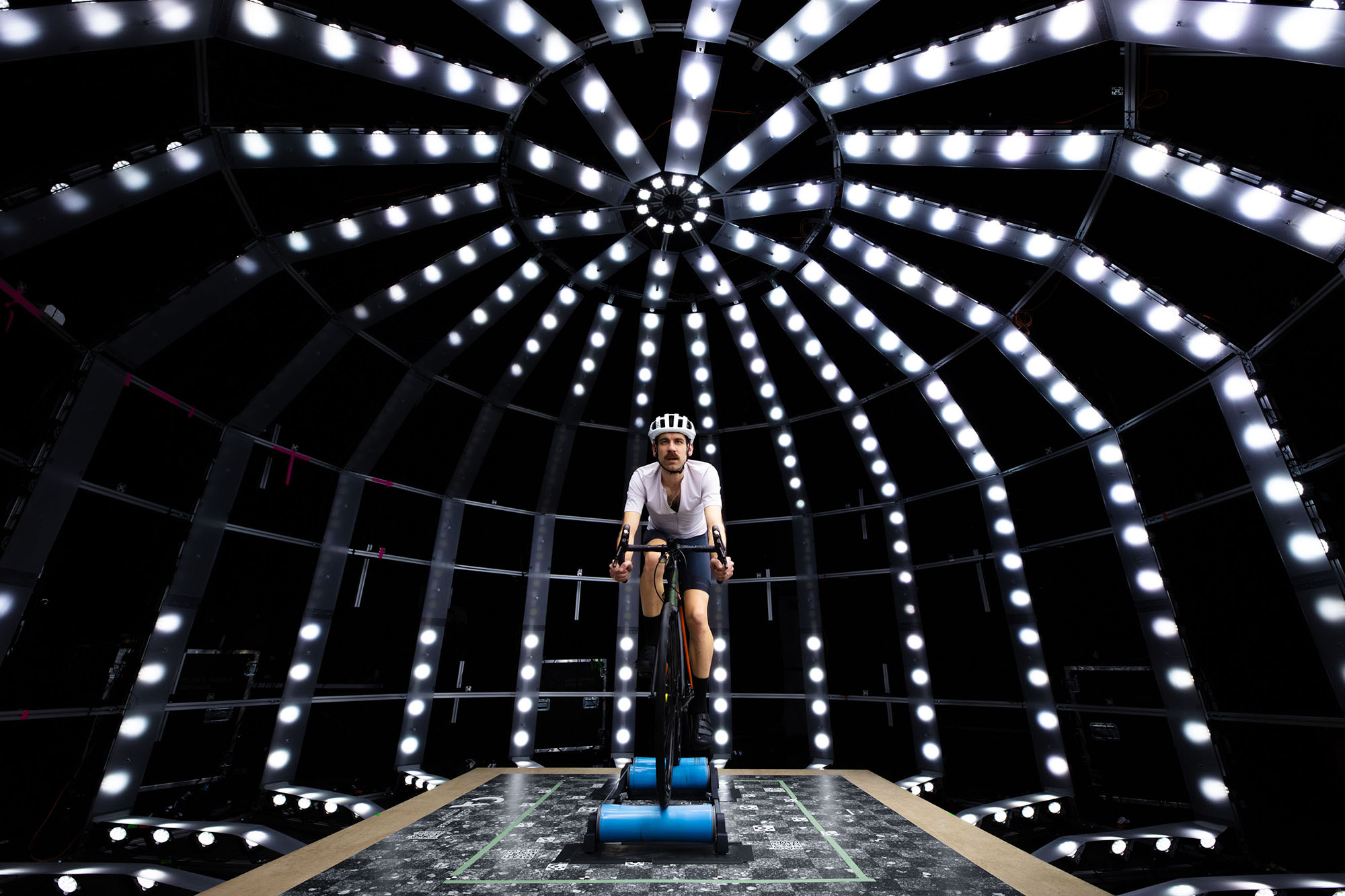
The podcast also explores Clear Angle’s VCR, or Volumetric Capture Rig, a larger modular capture system using 40 machine vision cameras with Sony sensors. Built for Gaussian splat and volumetric work, it can encompass full characters or groups of characters, with synchronised lighting and high frame-rate capture. Jamie discusses how this system evolved from Clear Angle’s Dorothy head capture rig, which is used for facial scans, FACS poses and 4D facial performance capture.
A major part of the conversation focuses on facial capture and the recent integration of DI4D into Clear Angle’s workflow. DI4D’s 4D capture and TopoTrack technology allow subtle facial performance data to be captured with consistent topology and texture correspondence over time. As Mike notes, this is not just a convenience. Human facial movement is highly non-linear, and 4D capture gives artists and vendors a much more faithful reference for the way skin, expressions and textures actually move.
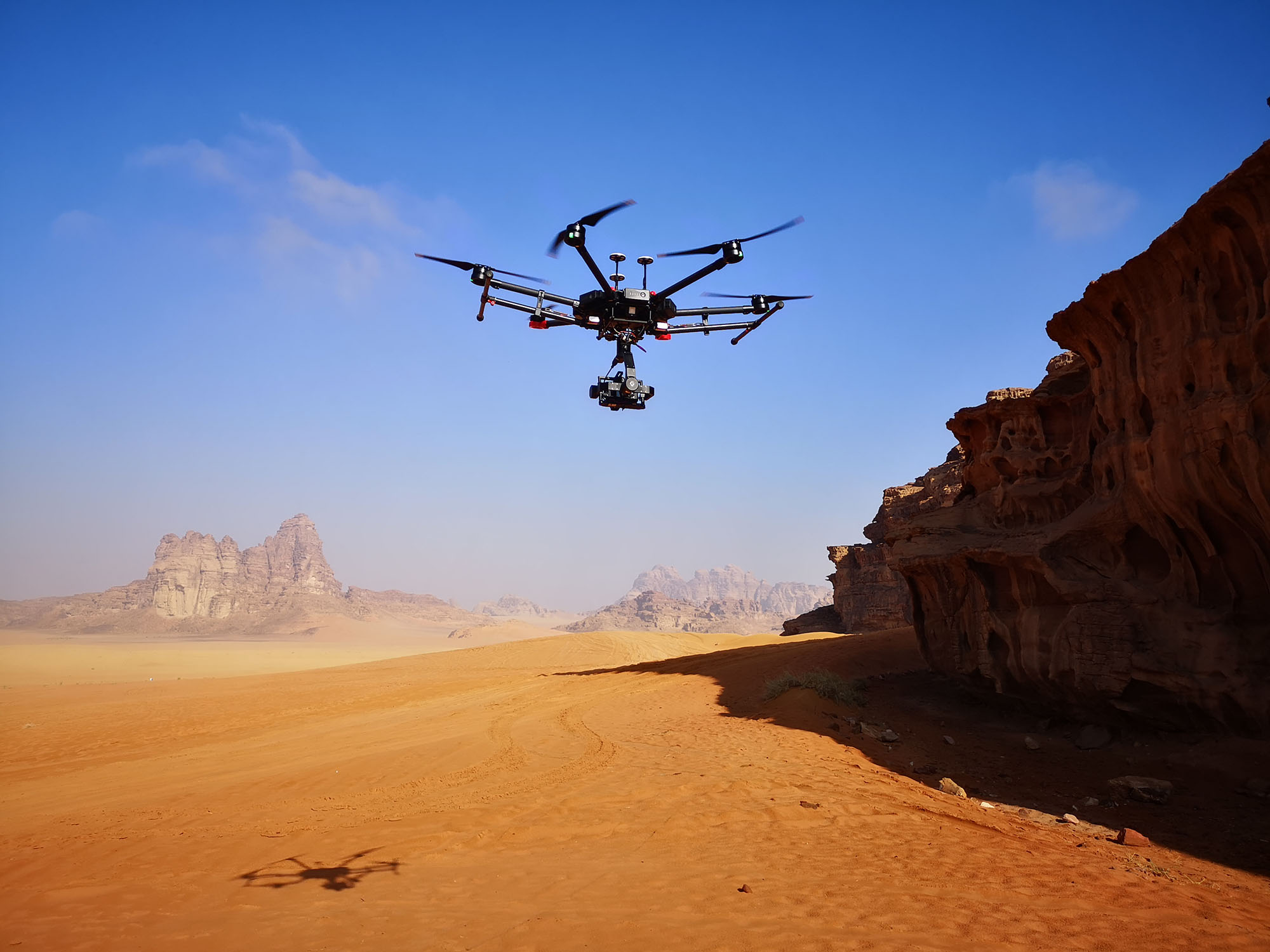
The episode then widens out to Clear Angle’s environment work, where the scale and logistics increase dramatically. Jamie discusses recent work in Iceland and the way the company combines LiDAR, aerial capture, drones and photogrammetry to produce accurate data across everything from close-up texture detail to vast establishing-shot environments. The challenge is not simply to capture more data, but to capture the right data, with sufficient metadata and raw sensor fidelity to support downstream VFX decisions.
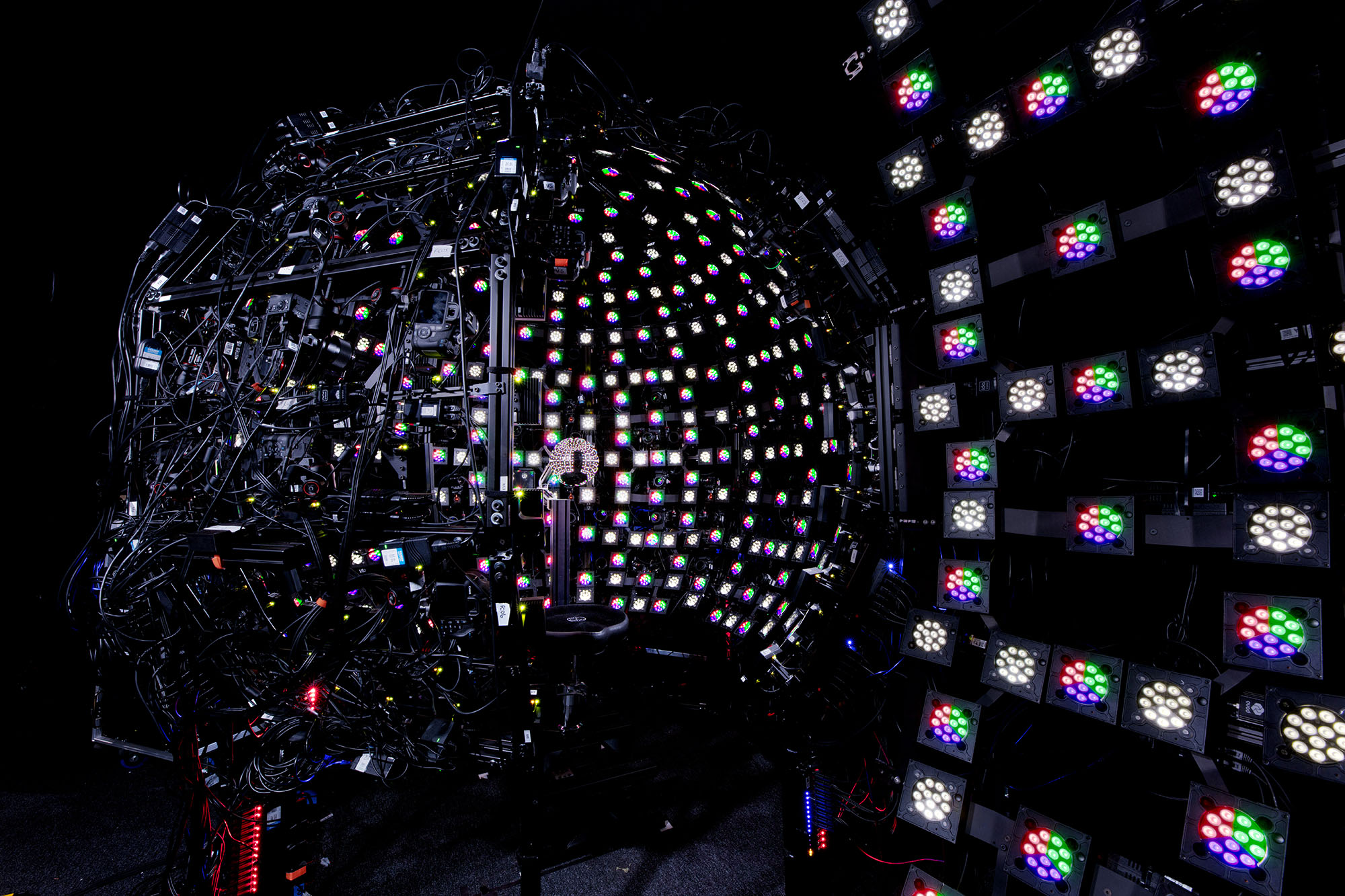
As the industry moves into more machine-learning-driven workflows, Clear Angle is also seeing increased demand for capture as training data. In many cases, scanning is no longer only about producing a final asset directly. It can also provide the high-quality, controlled data needed to improve the final 10 or 20 percent of a character, performance, or neural rendering pipeline.
Jamie also reflects on his own path into the industry, from Bournemouth University to character work at DNEG, and then into on-set and capture supervision. That combination of artistic understanding and production capture experience reflects much of what makes Clear Angle interesting: it sits at the intersection of scanning, data, VFX craft and emerging neural workflows.
In short, Clear Angle is not just a scanning company. It is increasingly part of how modern productions bridge the physical world, traditional VFX pipelines, and the rapidly evolving world of neural rendering and machine-learning-assisted imagery.
So proud😁