
Sony has launched a new compact full-frame Cinema Line camera with 5K Open Gate acquisition, internal 16-bit X-OCN, and thus offered a new level of distinctly stripped-down approach to production.
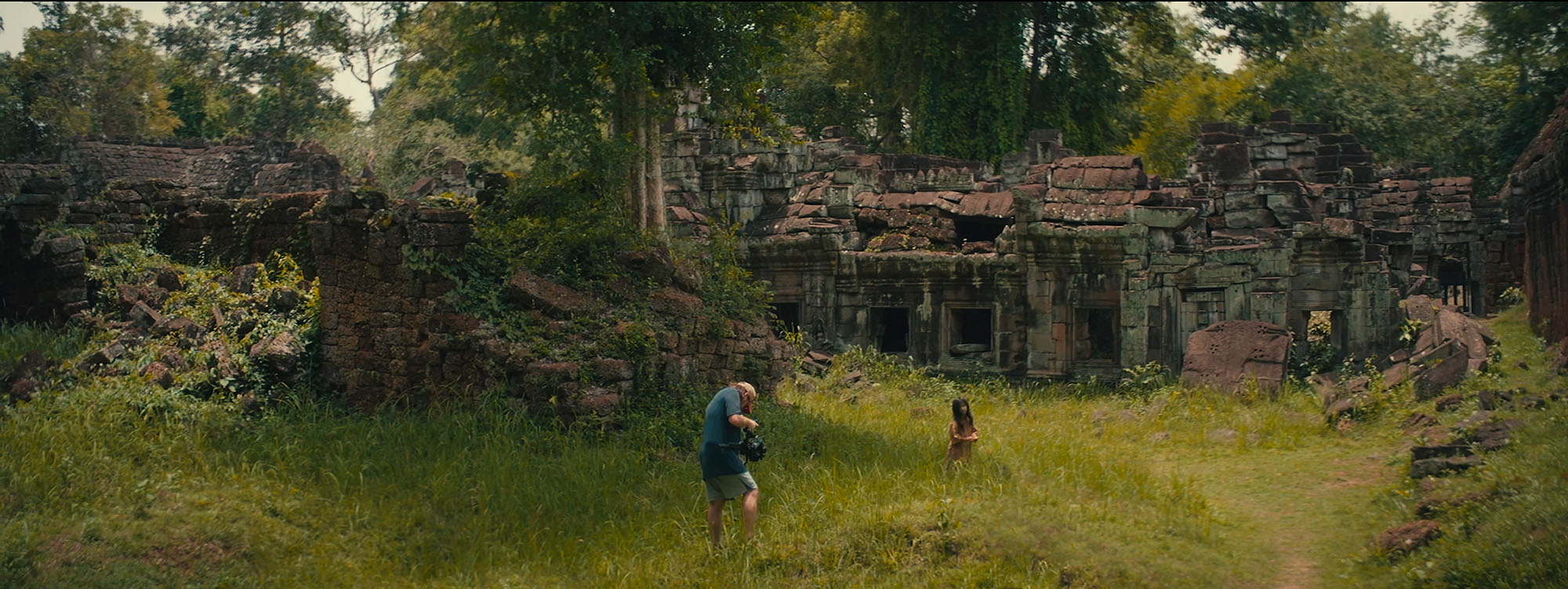
Gareth Edwards, director of The Creator, Rogue One: A Star Wars Story and Jurassic World: Rebirth, took the new FX5 to Cambodia, Thailand and Nepal, to film his own camera test.
“Guerrilla filmmaking just went to the next level,” Edwards says, speaking to Yaroslav Altunin. “The FX5 is the run-and-gun cinema camera to beat.”
The shoot returned Edwards to territory he knows well. In 2022, he travelled to more than 80 locations across Southeast Asia while making The Creator, capturing the film almost entirely with Sony’s compact FX3. That camera helped Edwards and cinematographers Greig Fraser, ASC, ACS, and Oren Soffer operate with an unusually small footprint, scouting and shooting simultaneously rather than locking every image into a traditional production structure.
With the FX5, Edwards brought the same exploratory approach back to locations in Cambodia, Thailand and Nepal. but this time with internal RAW, Open Gate recording, higher low light sensitivity and a more self-contained camera system.
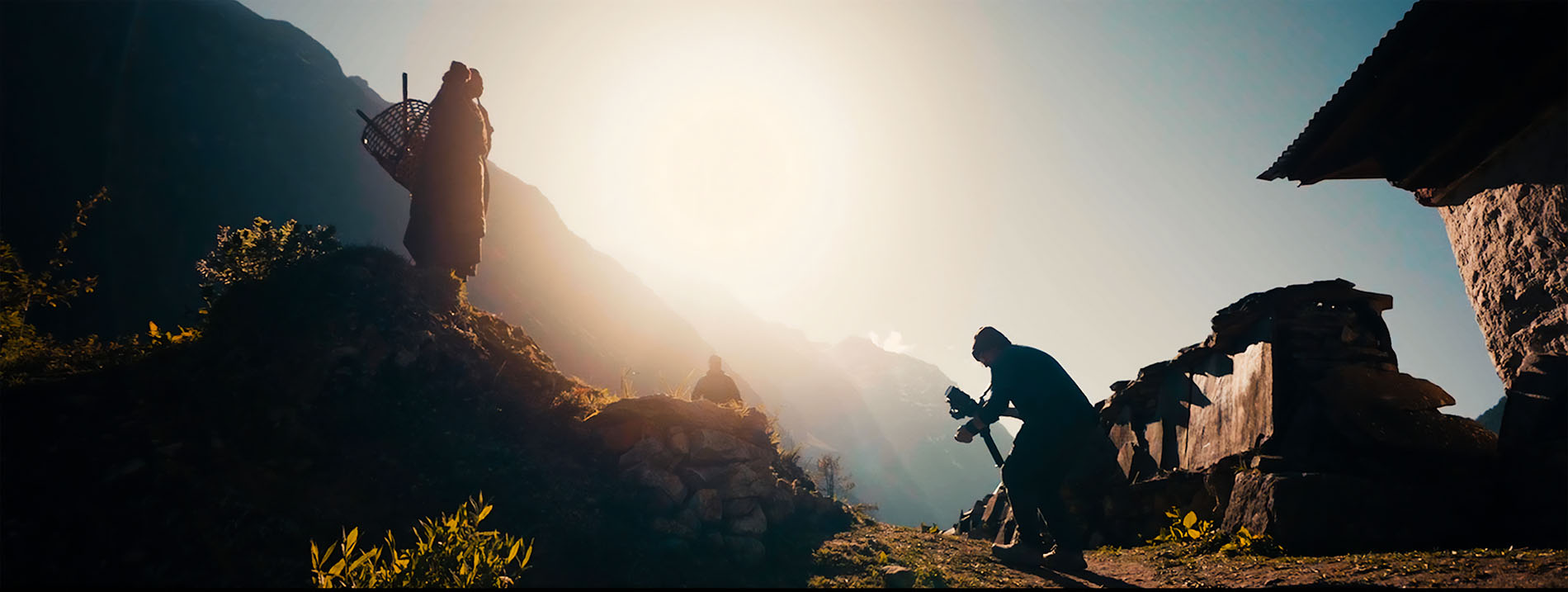
For one week, Edwards and a small team moved between modern cities, ancient temples and Himalayan villages in temperatures ranging from approximately 35°C down to –5°C. The equipment was reduced to three bags: one for the FX5, another for a compact dolly and slider, and a third for camera accessories.
Anything that was not essential stayed behind.
“I got [the FX5] in my hands about a week before we were shooting, so we had to turn it around really fast,” Edwards says. “I knew from The Creator, – because we had looked around the whole of Southeast Asia for that movie, – if I had a gun to my head and someone said, ‘You’ve got a day or so to shoot loads of great images, where would you go?’ I’d immediately say Kathmandu in Nepal, and then a close second, Cambodia.”
The iPhone as a wireless viewfinder
Edwards configured the FX5 around a 2x vintage Japanese anamorphic lens and a lightweight gimbal. Internal X-OCN recording eliminated the need for an external RAW recorder he’d used on previous productions, while the camera’s wireless monitoring allowed him to remove a conventional onboard display and video transmitter.
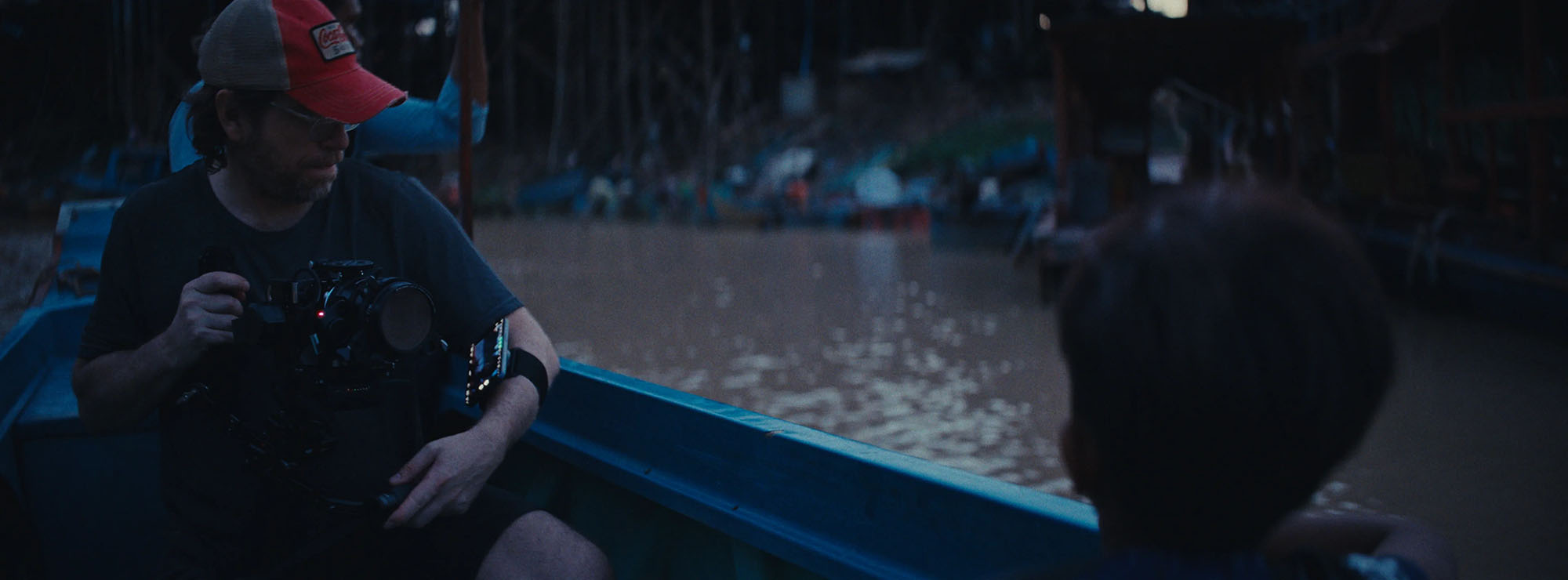
Instead, Edwards used an iPhone as his monitor. The iPhone’s MagSafe let him move the phone between magnets attached to the gimbal and his wrist.
“The iPhone is so bright and the battery is so good, it’s better than any five-inch field monitor you could get,” Edwards says. “And because of the magnets, I could use it on the gimbal and quickly pull it off and put it on. I also had a little magnet on my wrist, and I could wear it like a watch if I was holding the gimbal low or doing something awkward.”
The image was transmitted over Wi-Fi from the camera. “You don’t need a transmitter, necessarily,” Edwards adds.
It proved to be a wonderfully pragmatic monitoring arrangement. When the camera is carried high, low or close to the body, Edwards could relocate the image without rebuilding the rig. More importantly, it preserved the small silhouette that defines his way of working and filming.
“What’s great about the FX5 versus the FX3 and some of the other cameras is that I was powering the camera from the handle of the gimbal,” he says. “I didn’t need an extra V-mount battery somewhere. I didn’t need a crazy rig like I had last time. I could hold it in one arm like a classic gimbal. I didn’t need an extra big recording device, and so it all became a lot more tiny.”
A stacked full-frame sensor and internal X-OCN
At the centre of the FX5 is a newly developed full-frame fully stacked Exmor RS CMOS image sensor and the latest high-speed BIONZ XR2 image processing engine, paired with a dedicated AI processing unit.
The camera records 5K at up to 60 fps, 4K at up to 120 fps and Full HD at up to 240 fps. In S-Log3, Sony rates the FX5 at more than 15 stops of dynamic range. The broad latitude and low-noise performance enable seamless roll-off from highlights to shadows and natural texture reproduction, even in high-contrast scenes. Three Base ISOs of ISO 800, ISO 4000, and ISO 12800 enable low-noise image expression under a wide range of conditions.
For the first time in an FX-series camera, the FX5 can record Sony’s 16-bit scene-linear X-OCN format internally. Alongside X-OCN LT are two more data-efficient variants, X-OCN C1 and C2, intended to reduce storage and transfer requirements while retaining the benefits of a RAW workflow.
The FX5 is also the first FX camera to provide 3:2 full-sensor Open Gate recording. Additional scan modes include 17:9, 16:9 and Super 35mm, giving productions greater freedom to frame for multiple deliverables or use the extra sensor area with anamorphic lenses.
Sony has included in-camera de-squeeze for 1.3x, 1.5x, 1.6x, 1.8x and 2x optics. This was particularly relevant to Edwards, whose vintage 2x anamorphic was selected as much for its size as its optical character.
“It’s got this beautiful character about it, and it does all those things I love about Panavision lenses,” he says. “It’s like a classical painting where it’s just suggestive in a lot of places.
“But then what’s great is when you finally get the focus, you get that person’s face; it’s in 5K. It’s really crisp, but the rest of it has a much more painterly feeling.”
Edwards has traditionally been more concerned with controlling what an audience sees than simply capturing more information. Working with the FX5’s 5K X-OCN files nevertheless changed his view of what additional image data could provide.
“What was super interesting is, when I came back, I started to appreciate having a lot of information and what it can do,” he says. “Firstly, my exposures didn’t need to be that great. You can be quite out and, in post, slide it back to what you want…and the same with the colour science. There’s enough colour in there that we could get really nice skin tones. When I did the grade, I didn’t do any power windows. What you see is exactly what came out of the camera. We didn’t skew anything, we didn’t key anything. It’s all as it comes to you with this LUT on it.”
ISO 800, 4000 and 12,800
The FX5 offers three base ISO settings: 800, 4000 and 12,800. It also introduces Dual Gain Shooting to the FX series, designed to extend latitude and control noise while maintaining shadow detail.
For Edwards, the new ISO 4000 base became the setting for much of the day. Combined with a variable ND filter, it allowed him to move quickly between bright exteriors and darker interiors without removing filters or rebuilding the lens.
“What it meant is I could have a variable ND on the camera, go out in bright sunlight, get a perfect exposure in the middle of the day, and then go inside a house, just change the variable ND and keep filming without having to unscrew and take everything off,” he explains.
“I basically ended up at ISO 4000 throughout the whole day. Then, just as magic hour was happening, I would put it to ISO 12,800 because I knew this was going to be our little moment of all these beautiful images.”
Edwards used available light for most of the project, carrying a single INKEE Gold Crow Air 30C to provide a soft accent when necessary. At ISO 12,800, even that small fixture was frequently dimmed to around 2%.
“The best light in the day starts happening as the sun is going down,” he says. “Essentially, if I could see it with my eye, I knew the camera could see it. It was pretty much doing what your natural eye does in dark conditions…You can just keep going and going and get all these magical, happy accidents that, without it, you just can’t. I can’t go back from ISO 12,800. I’m just not interested in cameras that can’t do it now.”
Edwards considers the high-sensitivity performance a significant step beyond his previous FX3 workflow. “The 12,800 is a big improvement on this camera over the FX3,” he says. “When I put it to 12,800 on this, it’d be hard to know sometimes because it wasn’t that grainy.”
Hiding in plain sight
The appeal of a small cinema camera for Edwards is not merely physical. A reduced production footprint changes how people behave around the camera and can provide access to moments that would disappear in the presence of a conventional crew.
“I feel like I do my best work when I’m left alone a lot more, and I can fail,” he says. “I really enjoy just picking up the camera and going somewhere and trying things. That freedom and the excitement of when something you didn’t plan starts to happen.”
In a Himalayan mountain village, the crew heard a bell and followed it to a monastery. They were invited inside as a Buddhist ceremony began. “Because it was just me and a tiny camera, nobody cared,” Edwards recalls. “I took my shoes off, and I went inside, and this Buddhist ceremony started taking place. They were just in the midst of this thing, and I shot loads of different shots.”
Attempting to organise the same sequence as a formal production, Edwards believes, would have introduced considerable cost, permission requirements and disruption. “Because we looked so non-intrusive, it didn’t cause a problem,” he says. “I really don’t want to look like I’m making a movie. I want to look like I’m just passing through, -like, carry on with what you’re doing. That’s when you get the really naturalistic behaviour, and you get permission to walk into places and do things that you wouldn’t otherwise have got so easily.”
Or, as Edwards puts it more succinctly: “You hide in plain sight. You can be shooting for a movie that gets a theatrical release, but you just look like a tourist. I think it’s going to open up lots of opportunities.”
Designed to stay small
The flat-top FX5 body is designed for handheld, gimbal and confined-space operation. It incorporates five-axis optical in-body stabilisation, with Sony claiming approximately twice the roll-correction range of its previous stabilisation system. Active and Dynamic Active electronic stabilisation modes are also available.
The body provides multiple mounting points so that accessories can be attached without necessarily adding a cage. An active cooling system places the fan in a separate air chamber, while dust- and moisture-resistant construction is intended to support sustained recording in demanding locations.
The rear display is a 3.5-inch, approximately 2.76-million-dot, 16:9 touchscreen. It can tilt approximately 98 degrees upward and 40 degrees downward, as well as opening 180 degrees to the side. Shooting information can be placed around the edges rather than over the image.
Sony has also brought its CineAlta-influenced BIG6 operability home screen to the FX5. The interface groups frame rate, exposure, LUT and other principal settings on one display, while a new menu system is designed to provide greater consistency with the FX6 and Sony’s larger CineAlta cameras.
AI-assisted autofocus uses human pose estimation to recognise a subject’s eyes, head and body, including in dark scenes. Real-time Tracking is supported, while Auto Tracing White Balance combines visible-light and infrared sensor data with deep-learning-based light-source estimation.
The camera includes two USB-C ports, USB Power Delivery, a wired LAN connection and timecode input through Sony’s optional USB-C-to-BNC VMC-BNCU1 cable. It is compatible with the 2670 mAh NP-SA100 battery, which has approximately 1.3 times the capacity of the NP-FZ100.
“Sometimes, I’ve felt like there are little moments in the middle of a shot where you’re holding the camera, and you think to yourself, a year from now, this is going to get a major theatrical release around the whole world,” Edwards said. “And you could argue that hundreds of thousands or millions of people are going to see this. And it creates this really strange feeling where you go, ‘I am carrying millions of people right now. In this shot, I’m holding them.’ It gives you such a buzz…And to feel like, in such a small camera, to have that same feeling, where there’s no weight to it, it feels like a TARDIS.”
Monitoring, Catalyst and a future firmware update
Sony’s Monitor & Control 3.0 application supports wired and wireless monitoring and camera operation from iPhones, tablets and Mac computers. Version 3.0 expands multicamera and vertical-video functions and adds EL Zone exposure monitoring.
Catalyst Prepare 3.0, scheduled for August 2026 or later, will combine the previous Catalyst Prepare and Catalyst Browse workflows. It will support playback and stabilisation of the FX5’s X-OCN C1 and C2 material, together with access to shooting metadata.
Sony is already flagging a major version 2.0 camera update for August 2027 or later. Planned additions include X-OCN high-frame-rate recording at up to 240 fps, 3:2 Open Gate recording in XAVC S-I, a vertical-shooting interface and frame grabs. These are future features and will not form part of the initial camera release.
Price & shipping
We only have A$ pricing, but in Australia, the Cinema Line FX5 will be available from early August 2026. Cinema Line FX5 (body only) A$7,849.