
For Citadel Season 2, DNEG combined invisible effects with large-scale digital spectacle, from a haunting figure engulfed in flames and a fully CG car crash to digital doubles, an 80-second continuous shot and the destruction of satellites in orbit. Fxguide sat down with DNEG VFX Supervisor Daniel Baldwin about the practical reference, simulation work and close attention to performance that grounded the season’s most technically demanding sequences.
fxg: How early was DNEG involved in this season of Citadel?
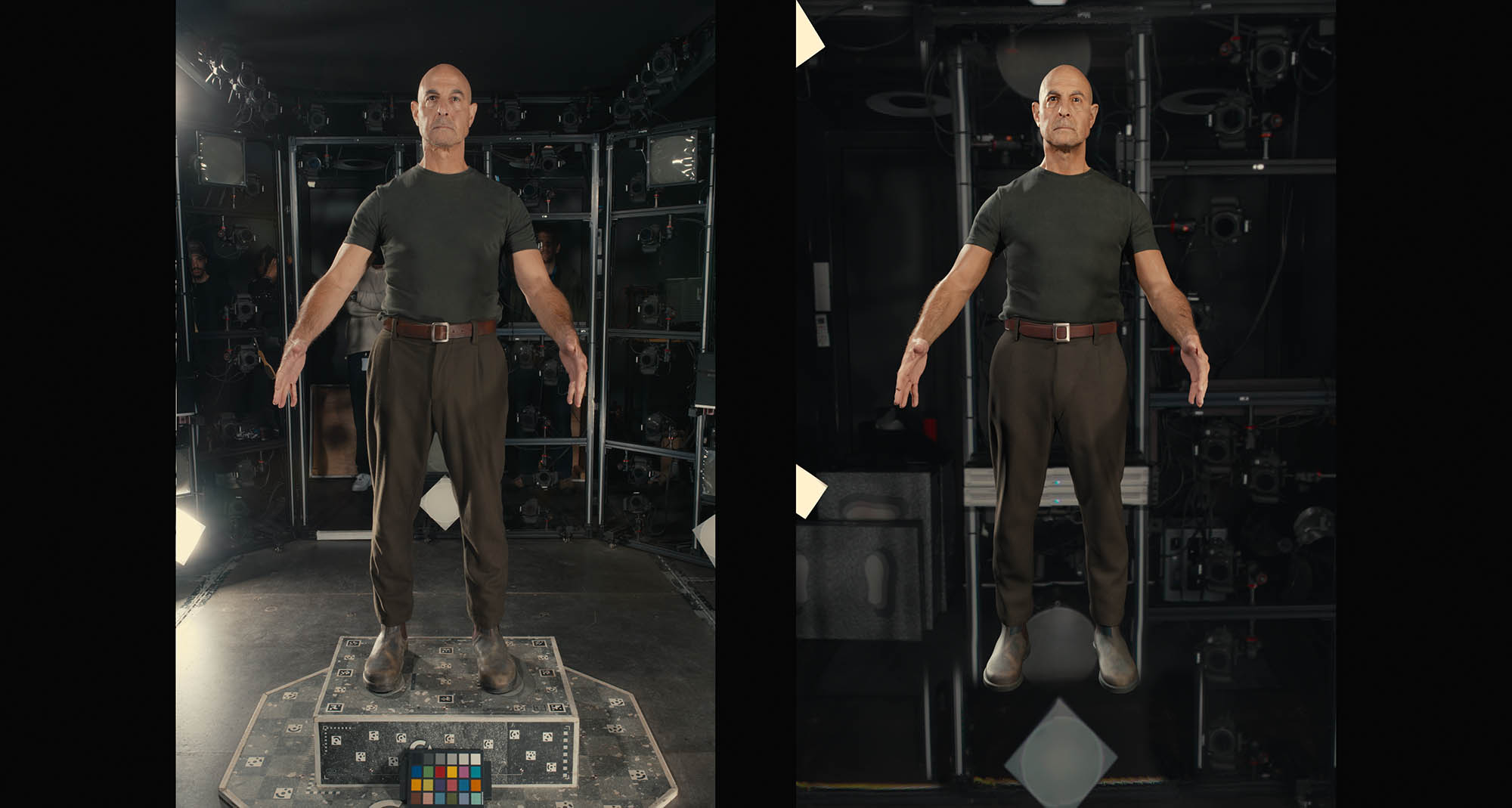
Daniel Baldwin: DNEG was involved from the very beginning of ‘Citadel season 2’. After establishing a strong relationship on season 1 with Production Supervisor Wesley Froud, we knew for a while that we wanted to bring the team back together for the second season and had stayed in touch throughout the time in between. Wes is very collaborative and always encourages technical and creative input from our side, so we discussed best practices and ideal approaches specifically for capturing controlled real-world references for the burning man shots. I also attended the shoot with a DNEG data capture team for the car crash sequence and the full CG Frankfurt environment data acquisition, as well as supervising the digital scanning sessions for the actors.
Grounded Realism & Invisible Work
fxg: Did you do any digital cosmetic, de-aging or face replacement work, or is it more environmental this season?
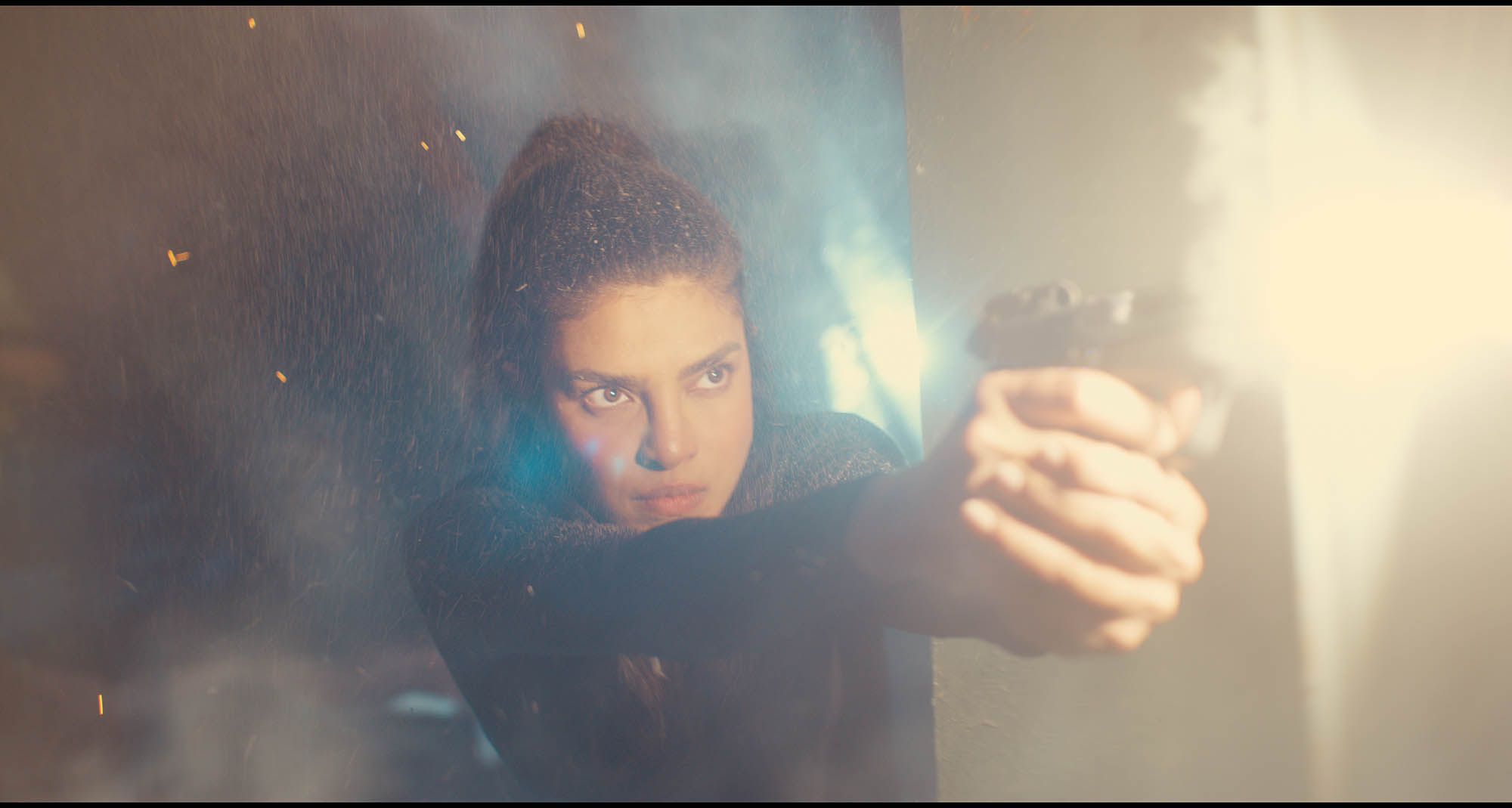
Daniel Baldwin: Our work was mostly additive digital effects, CG blood effects, DMP wounds and some CG stunt double face replacements. We were careful to respect and never alter the principal actors’ performances and understood it was very important to expand upon the SFX and make-up work that had been done on set, without changing the overall aesthetic.
Father and Fire & digital doubles
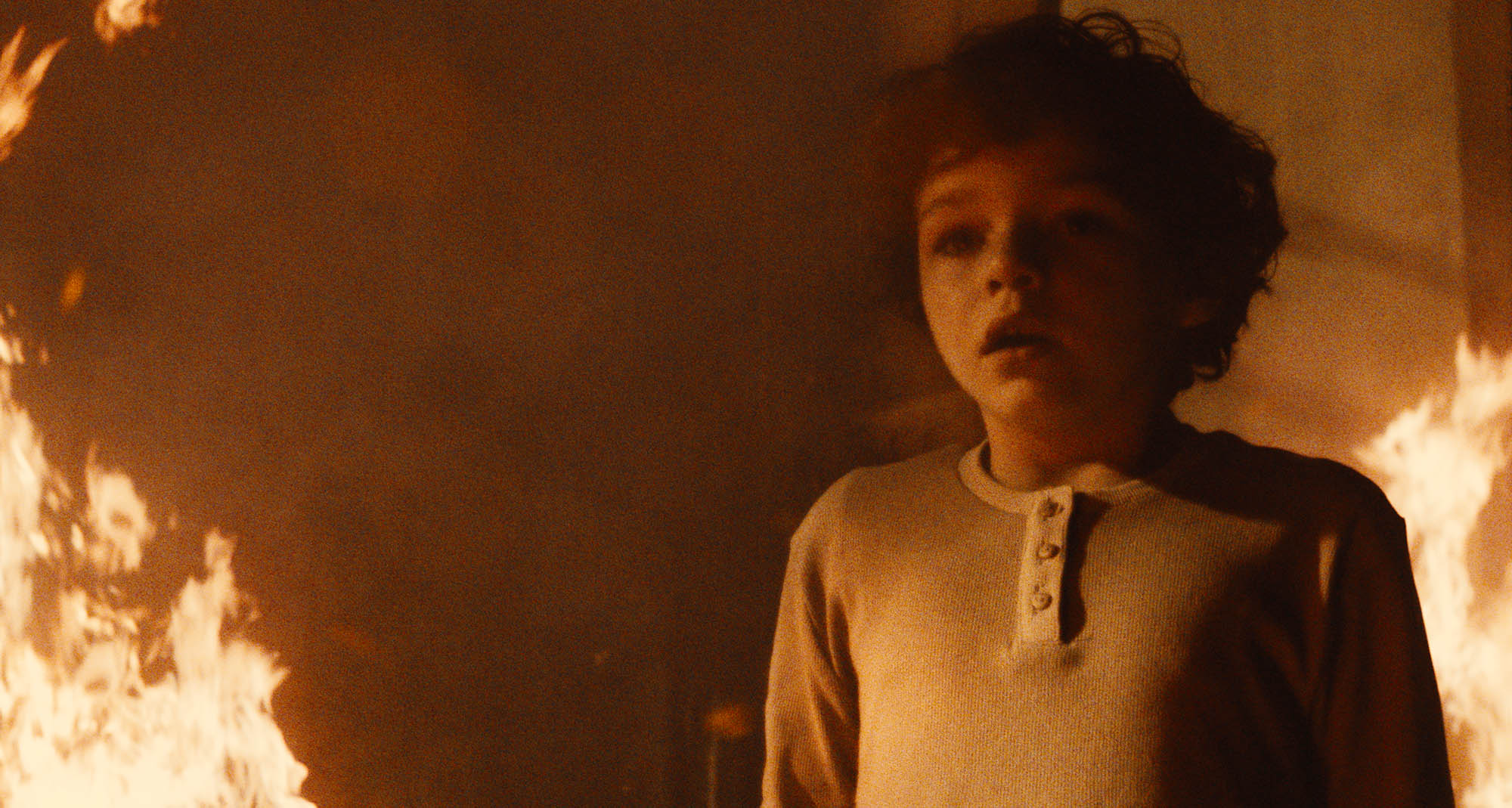
fxg: For Mason’s father, – how did you approach the image of a person engulfed in flames while still preserving the emotional read of the performance?
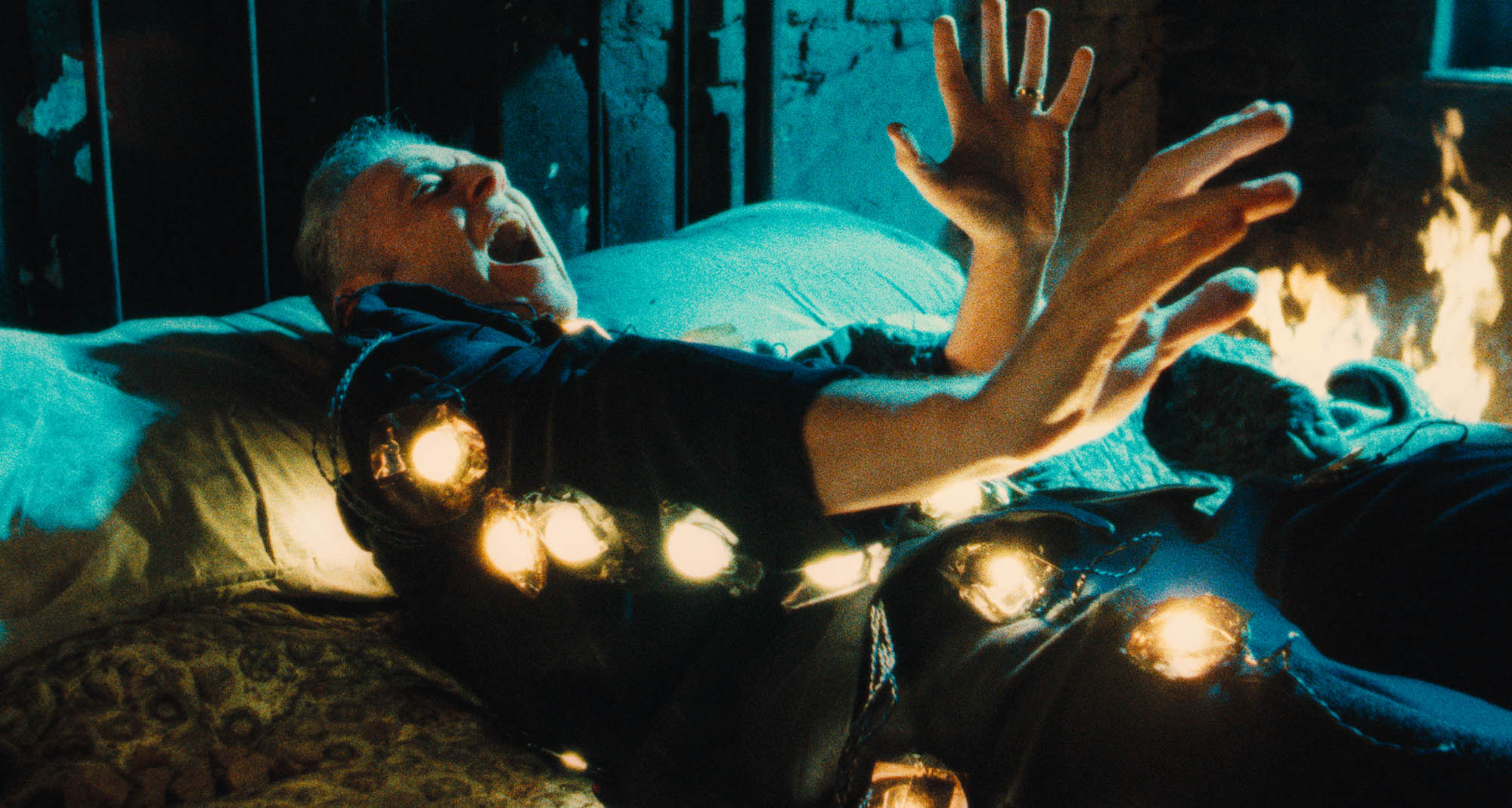
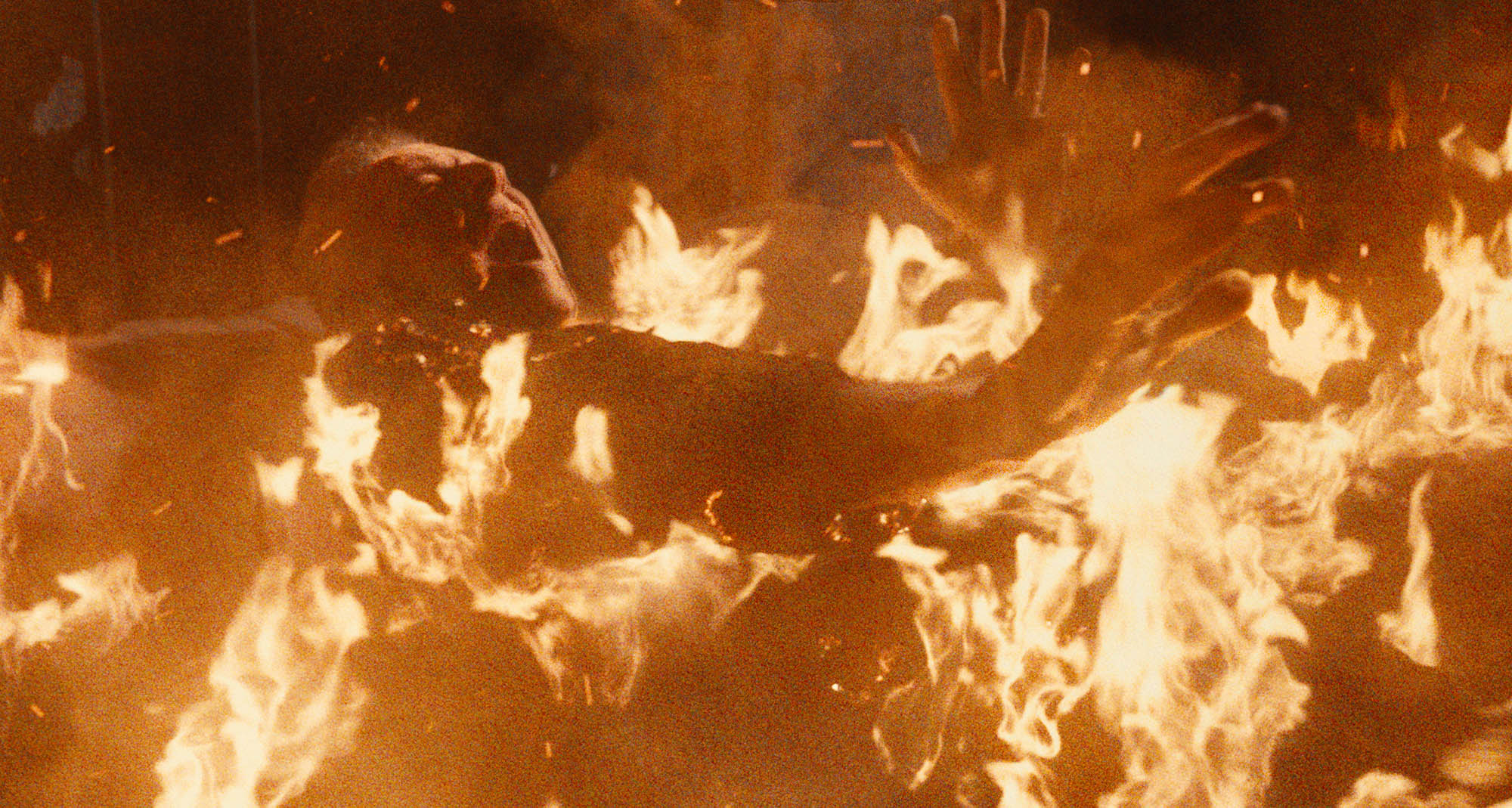
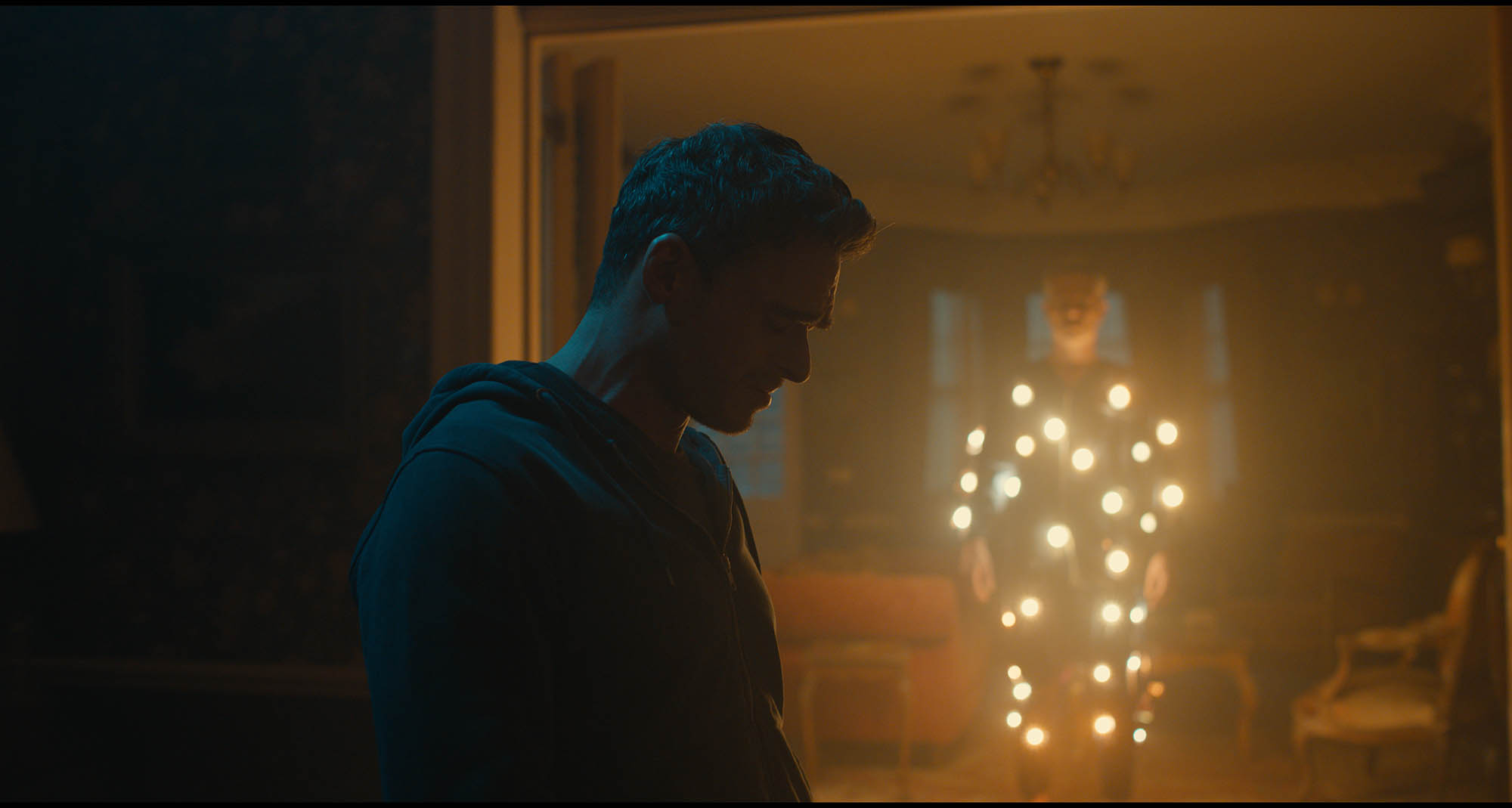
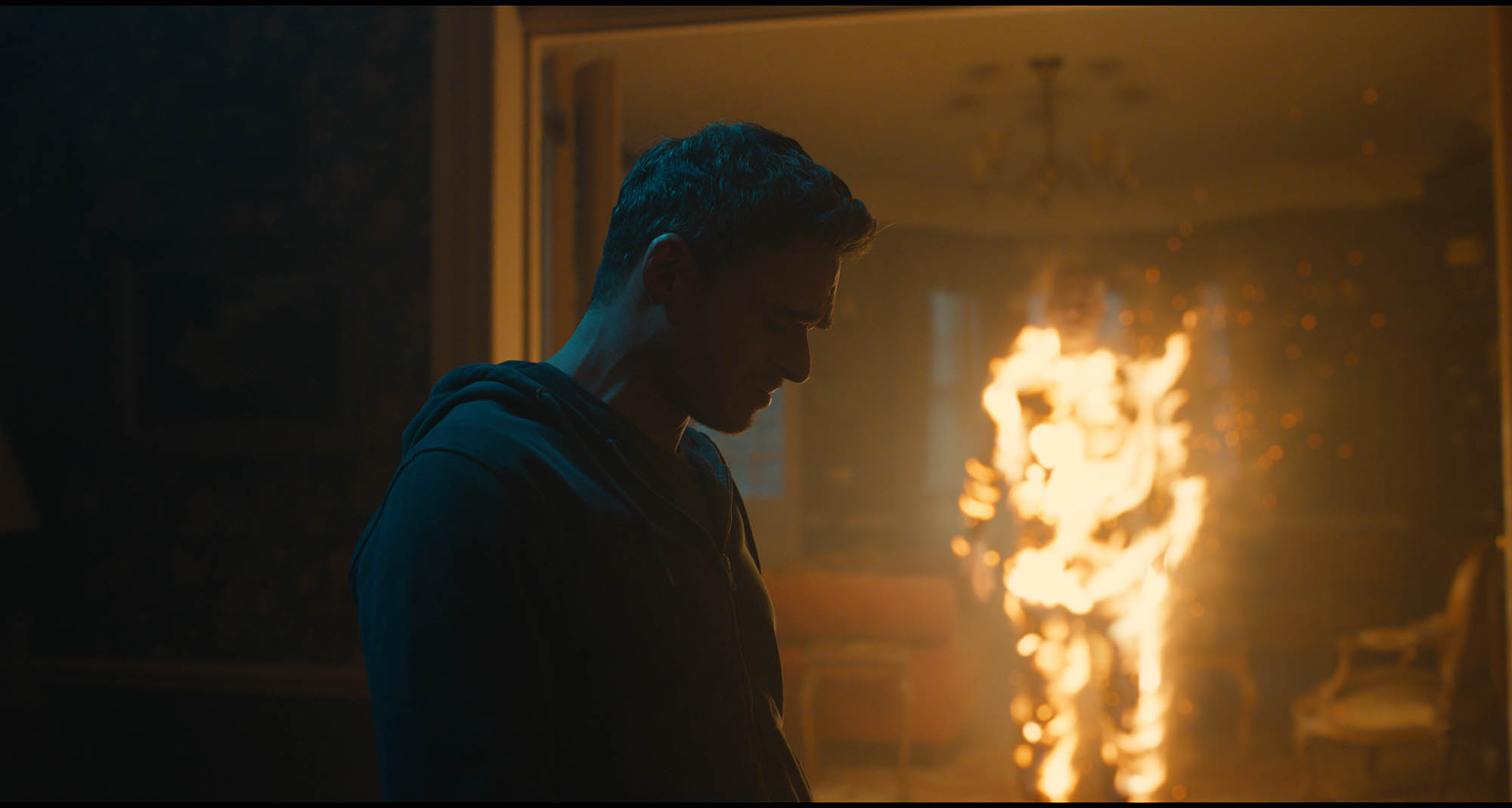
Daniel Baldwin: We spent a lot of time looking at old movie references of stunt men being set on fire to understand the dynamics of the simulations. Wes also filmed tests setting mannequins alight in the father’s pyjamas costume to understand how the material burnt, the size and amount of embers and smoke, and how the flames moved. This also helped the on-set team create an LED suit that the actor could wear to accurately recreate the interactive light on the environment, other actors and his own face.
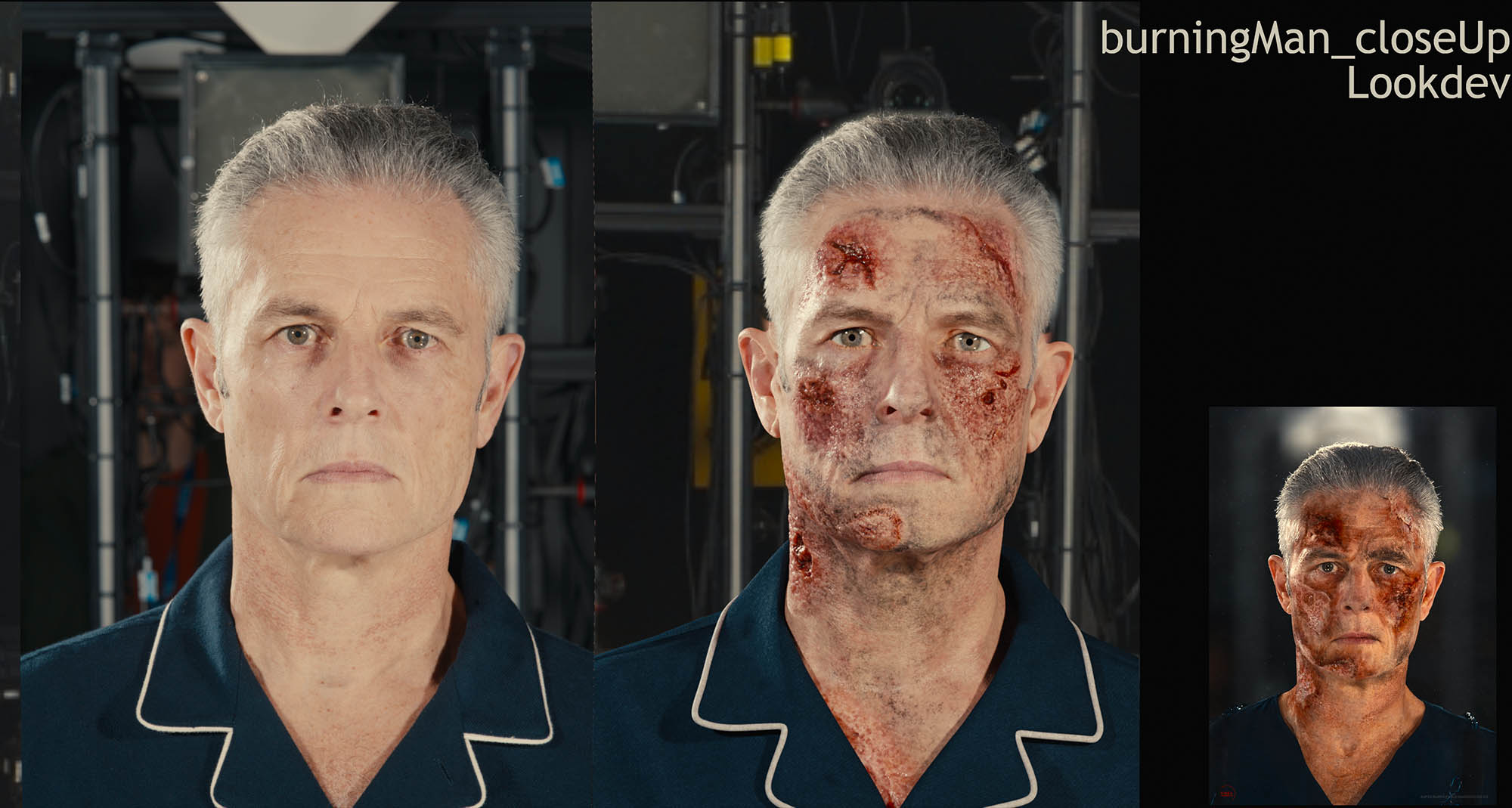
We went through a concept phase where we explored the amount of burning and scarring we would be adding to the father’s face and discussed at length if his hair should also be on fire or just his clothes. We settled on the decision that the flames should not cross his head whenever possible and changes to his face should be fairly minimal and additive, carefully tracked onto the actor’s movements and expressions. We agreed to never fully replace his head with CG, so that we’re always respecting the emotional performance.
fxg: Was the fire work primarily simulation, practical flame reference, plate elements, or a hybrid approach?
Daniel Baldwin: We had the burning mannequin tests as reference, which were done separately in a controlled environment, and the actor’s LED lighting suit. Wes also brought a small flame bar onto the set to give us real-world reference of how flames looked in the given environment with the chosen set lighting, camera settings and lenses.
Using all of these references, as well as traditional grey and chrome balls and HDRIs, we knew how the fire, embers and smoke looked, as well as the speed, size, colour and exposure of the flames.
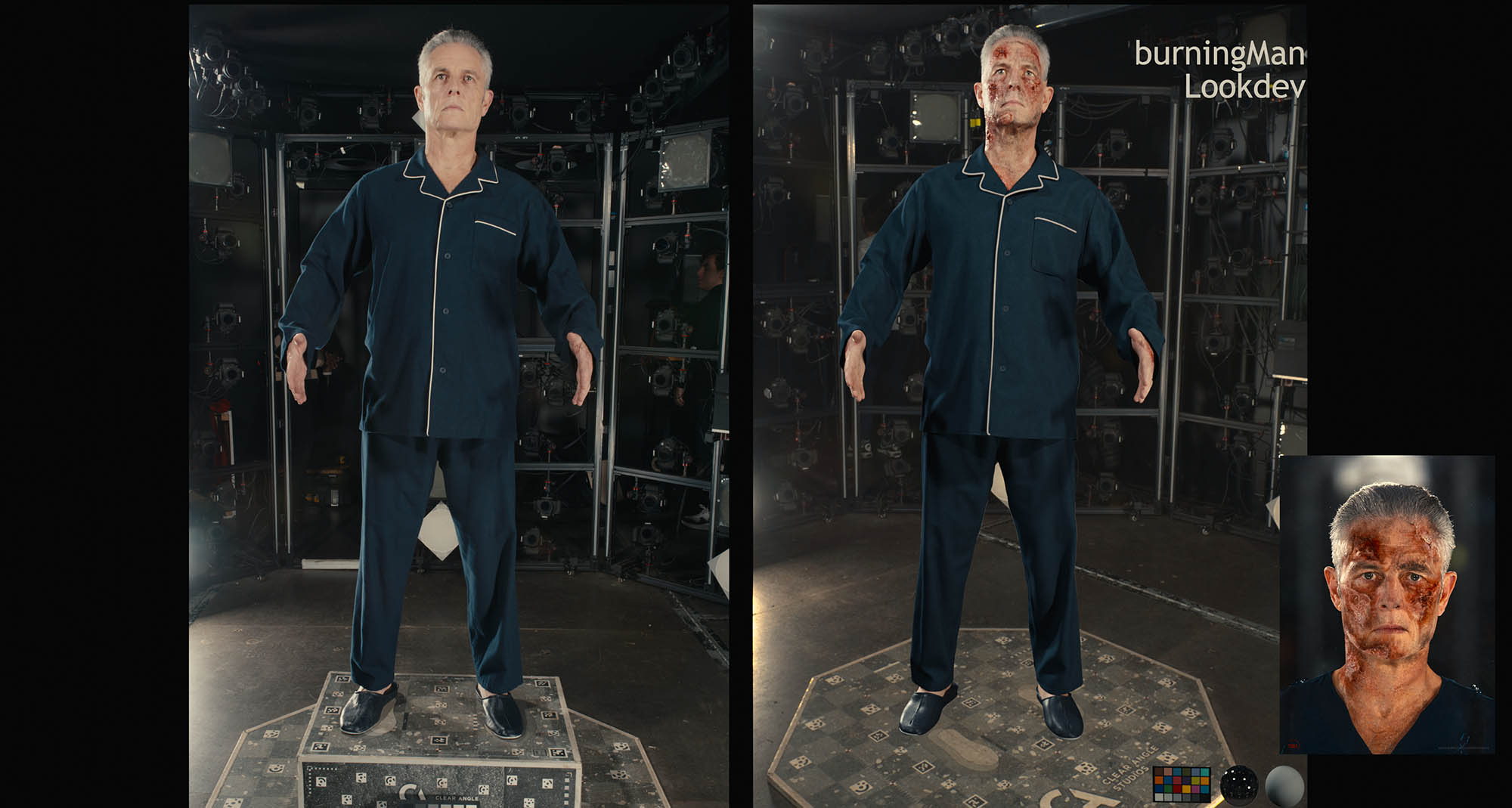
We scanned and body-tracked the actor and built the pyjama suit he wears in CG. We ran this through a CFX simulation and then added singeing and flames, fully recreating the fire using FX simulations. The wounds on his face and exposed areas of skin were mostly DMP reprojections tracked onto the performance. The lighting and comp teams in Sydney did a fantastic job under Renaud Madeline’s supervision to bring it all together.
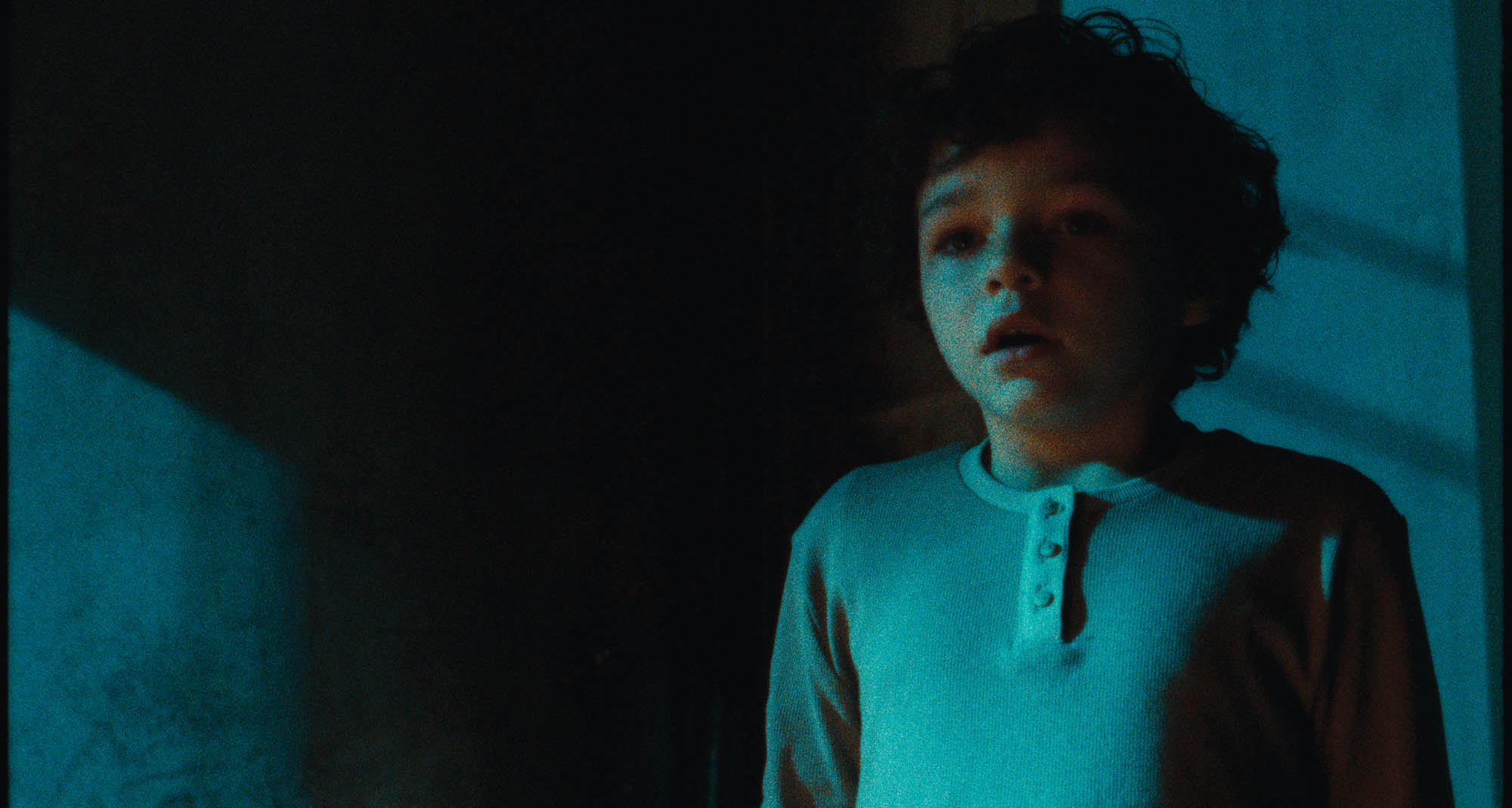
For the burning bedroom where the father lies in bed, we used a combination of FX simulations for the father, as they had to be tracked to his performance, and 2D fire elements shot on set.
fxg: The show includes extensive digi-double work across action sequences. What level of fidelity did the digital doubles need to reach, and how were the actors and stunt performers captured?
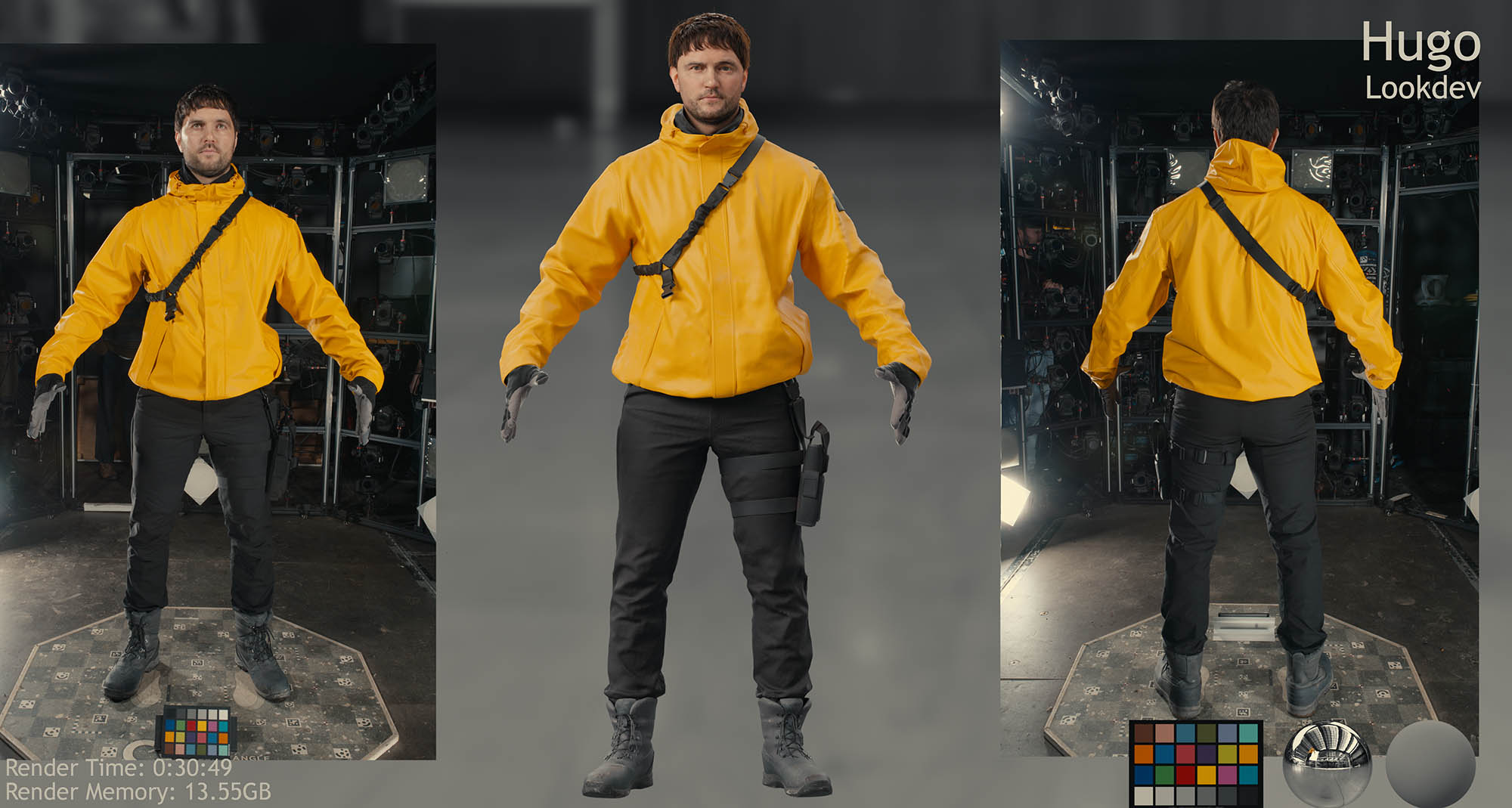
Daniel Baldwin: As well as the burning man, we had a full CG digi-double for the Swedish assassin, Hugo, who is hit by a car in the sequence where Abby gets abducted. For this, we scanned the actor and the car to build CG replicas, shot HDRIs, grey balls and chrome balls on set and shot an element reference of the actor on wires, which was invaluable for lighting and comp.
CG Vehicles, Gunplay & Digital Blood
fxg: What is DNEG’s current muzzle flash and bullet-hit pipeline? Are you still compositing photographed elements, or has that moved fully to procedural Houdini setups?
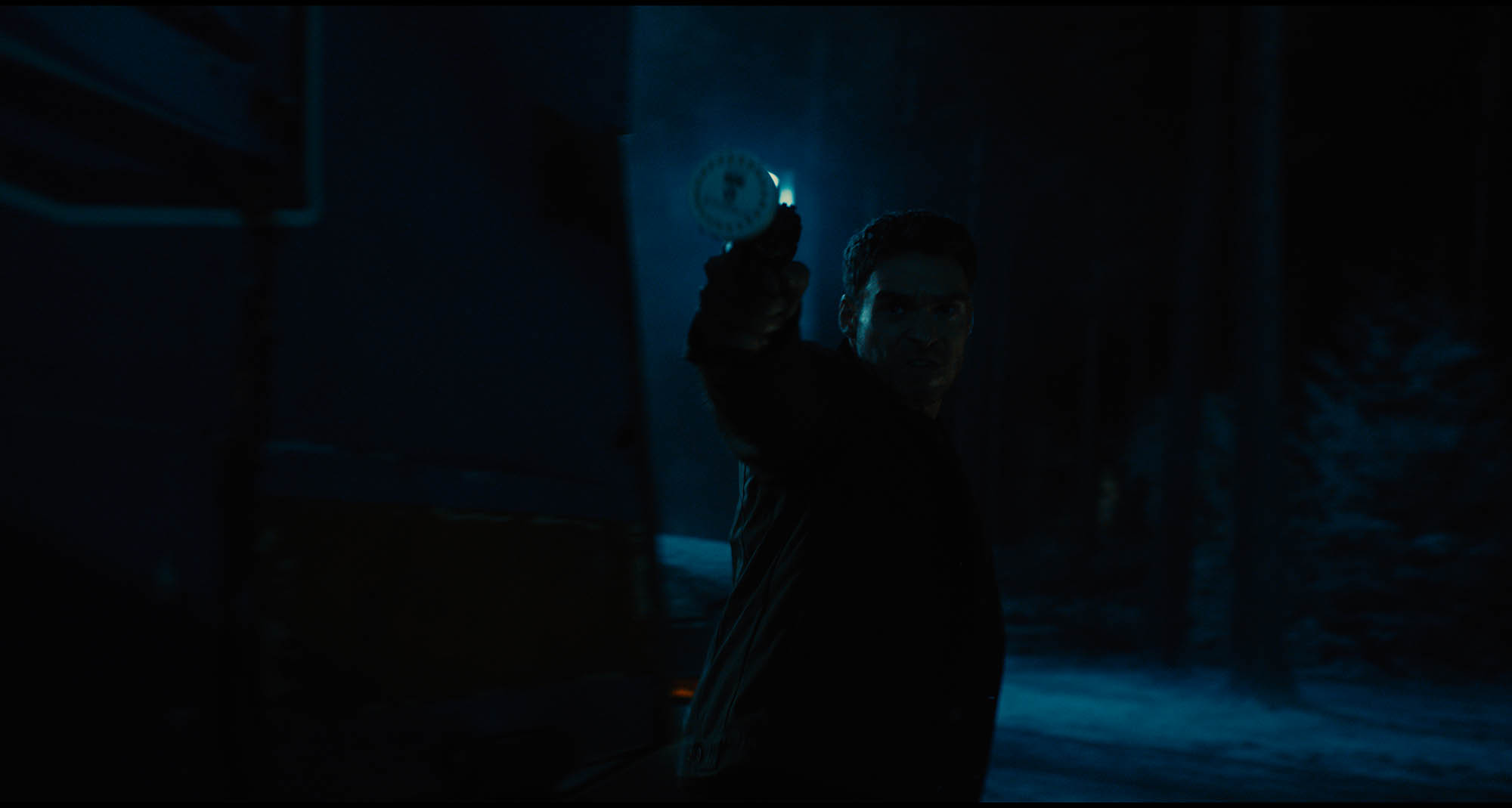
Daniel Baldwin: This largely depends on the design of the shot. We have our own extensive library of muzzle flashes and bullet hits, but Wes also shot specific elements of muzzle flashes from the exact weapons used on set and bullet hits in the real materials on our set environments. We used these 2D elements whenever the shots allowed it, but when there were significant 3D camera movements or extreme lighting conditions, we favoured FX simulations in Houdini.
As with season 1, the on-set team used LED lights on the end of the weapons to accurately recreate interactive lighting on the actors and environment from the muzzle flashes, so in these instances we had to prep out the light, replace the end of the gun with a CG replica asset and add the 2D muzzle flash element.
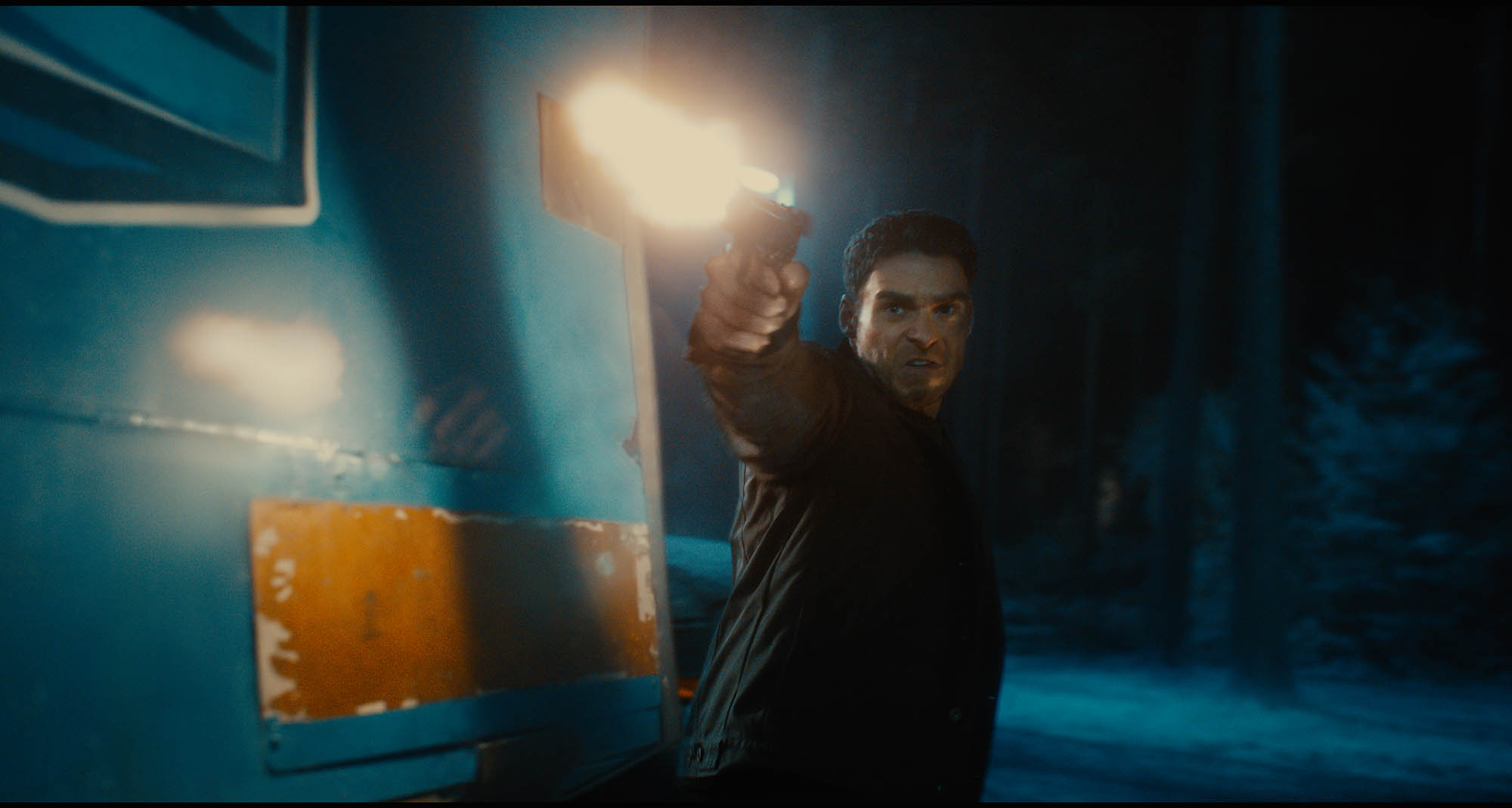
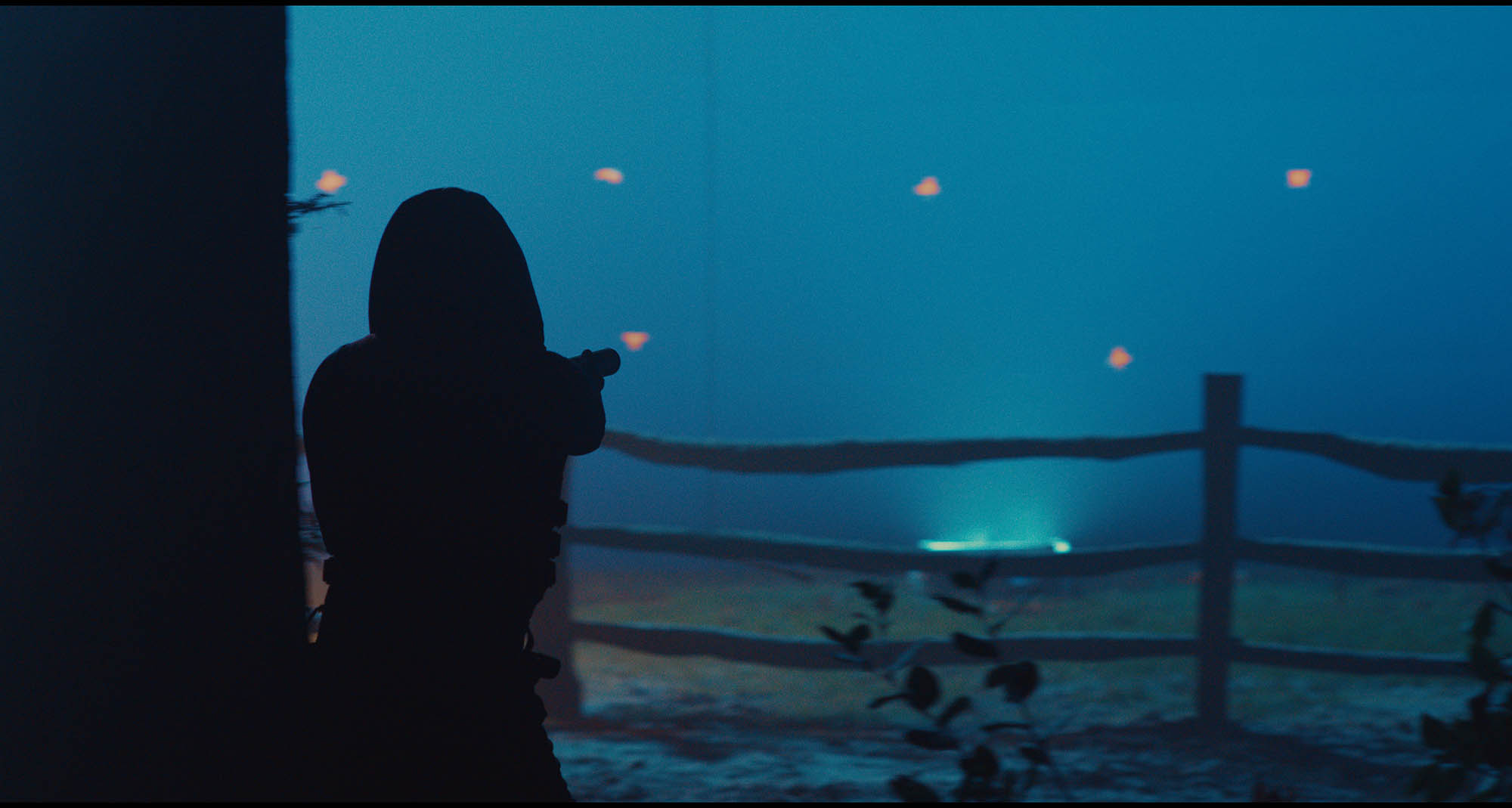
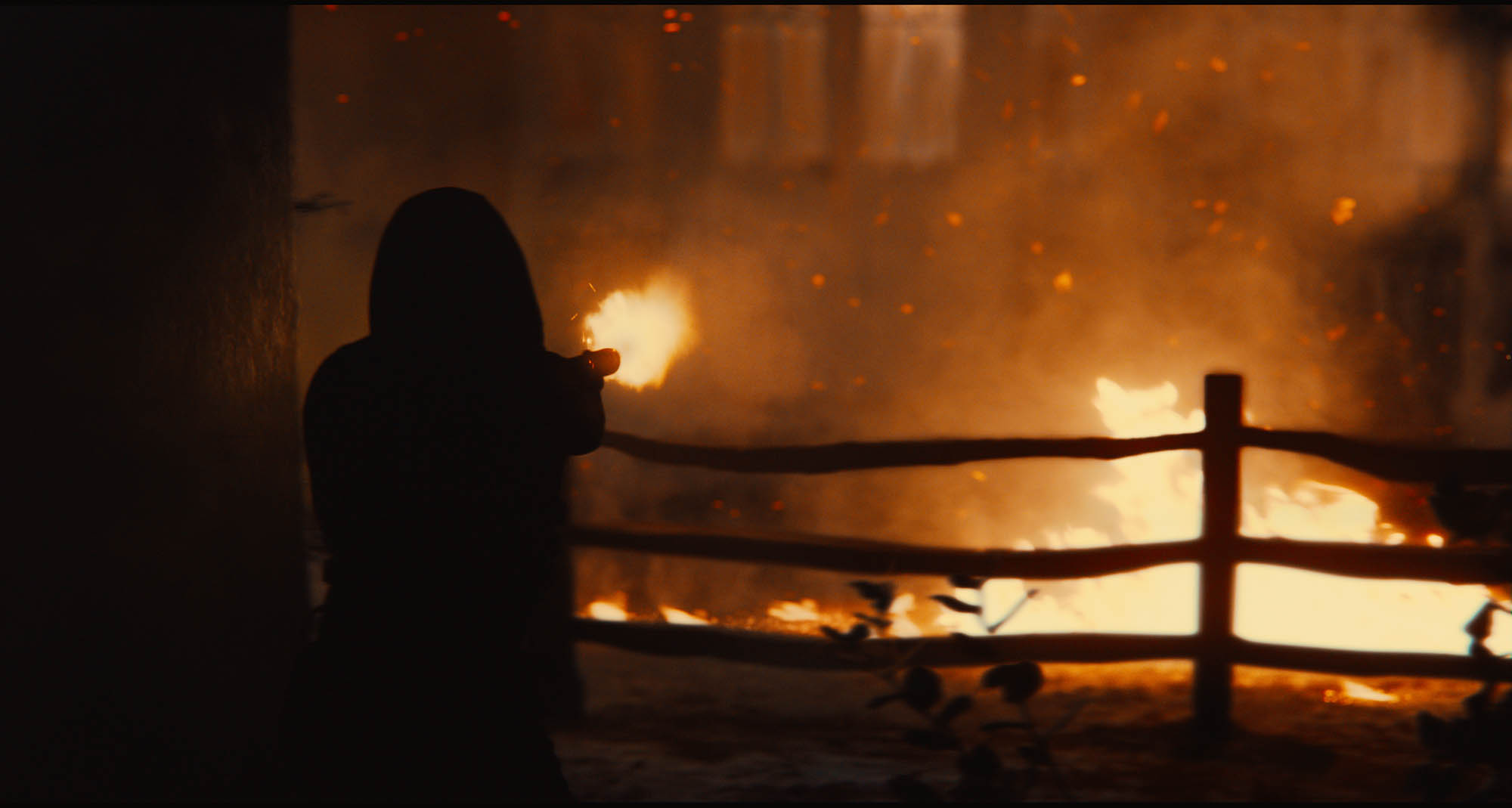
fxg: Digital blood is one of the hardest invisible gags to sell. What was the sim approach — and how do you hold photoreal under episodic schedules?
Daniel Baldwin: I’ve found there is no magic formula to FX blood hits, and filmmaker taste has a lot to do with it. Each and every shot had to be approached individually, and Wes and I dialled in the look. Some were 2D elements, others were bespoke Houdini FX simulations. This depended on the camera move, proximity to camera, time on screen and even the importance of the character who is bleeding or being shot.
A lot more revisions and finesse went into balancing the look of the digital blood on our principal actors than on generic bad guys. The goal was always realism, nothing too over the top, but also without specifically avoiding anything too gruesome if the action required it. As with all of our CG assets, we didn’t skip any crucial part of the pipeline; actors were digitally scanned so we could accurately track their performances, FX simulations were explored and refined over numerous iterations, HDRIs and grey balls were used to accurately inform lighting, and comp always referenced the look of real SFX and make up blood from similar shots in the same sequence wherever possible. The VFX process on this show never felt restricted by episodic schedule constraints; Wes and Lisa Kelly, the VFX producer, always gave us the time and space we needed to do things the right way.
CG Vehicles
fxg: For the major car crash, where did the practical stunt work end and the CG vehicle work begin?
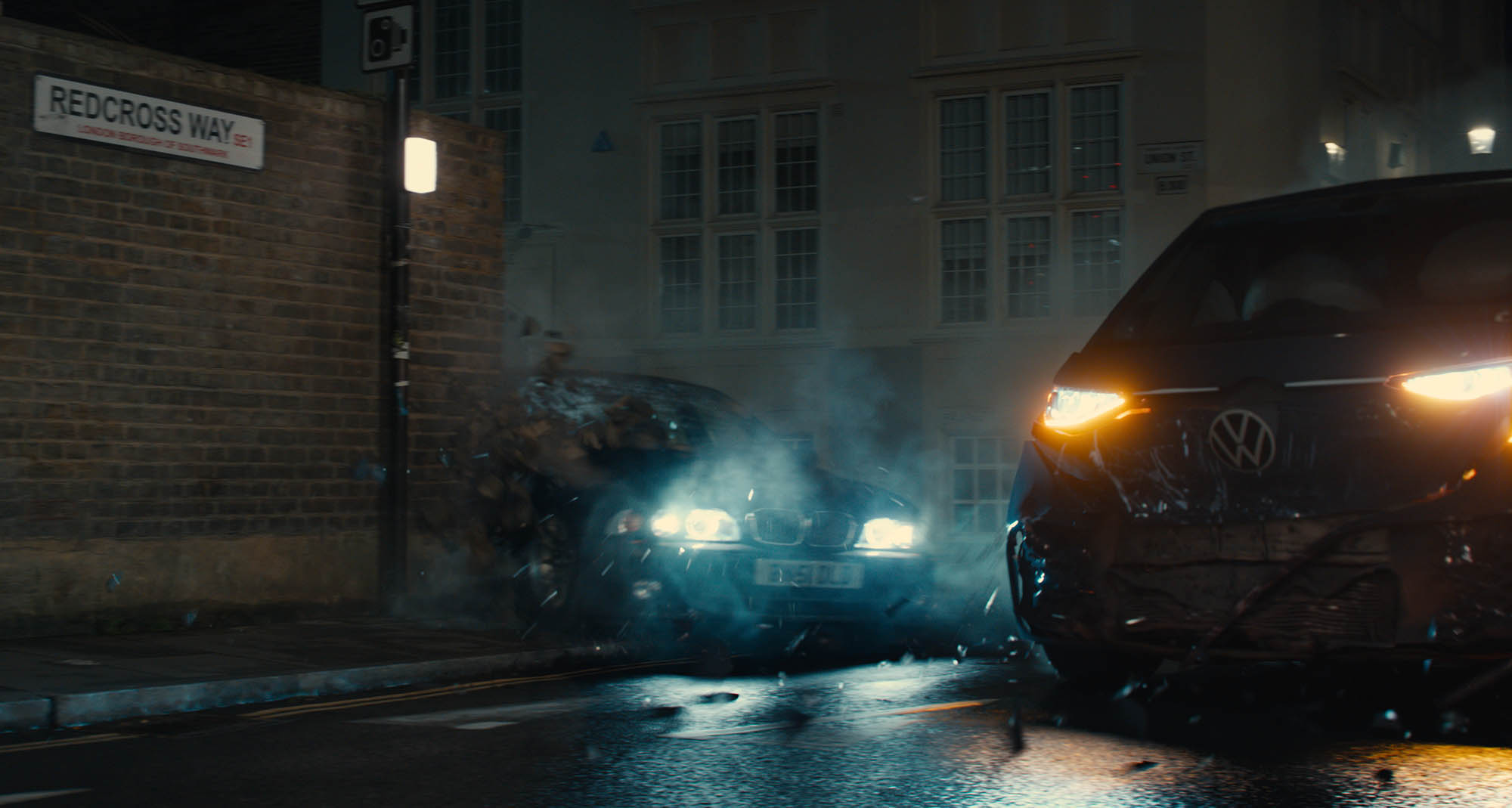
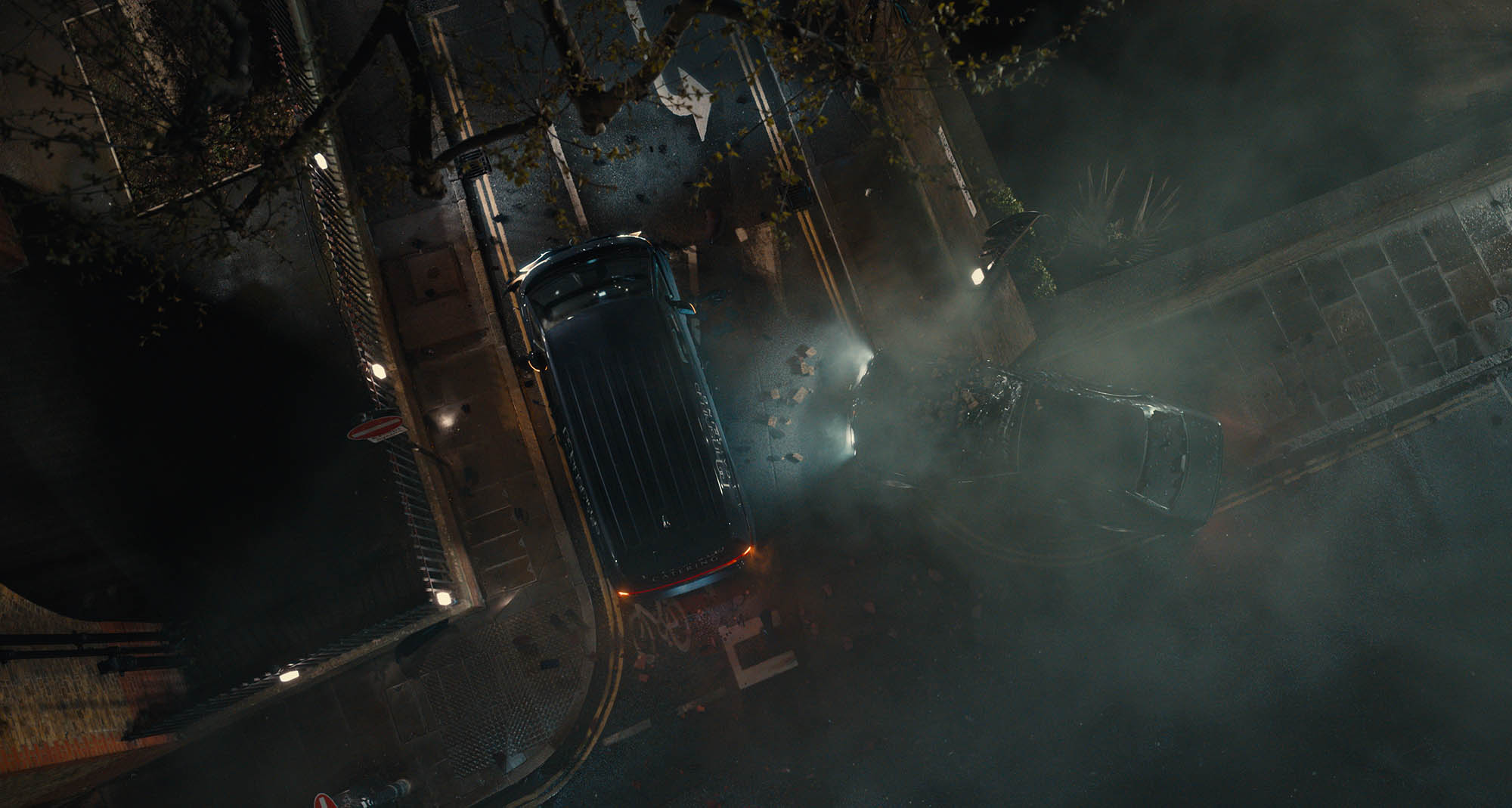
Daniel Baldwin: There was actually no stunt work for this car crash. Instead, we worked in prep, in advance of the shoot, to build an extensive reference library of real car crashes and used these to find the desired look Wes and the filmmakers wanted. We had options of cars spinning, rolling and shunting when hit and referred to car manufacturers’ crash test footage to see how the cars deformed and the glass shatters on impact.
Once we’d found our look, there was a previs anim stage to design the timing of the action, and only then did we go to shoot. Our plan for the shoot was to capture only the BG environment elements in camera, but we also brought the cars for invaluable lighting and comp reference. Rather than performing the stunt, we shot the empty plates to match the previs camera moves and then slowly drove the cars through frame as a separate reference pass.
A DNEG data capture team LiDAR scanned and photographed the environment, and we captured lighting HDRIs and scans of the vehicles to build full CG FX-ready assets. In post, we developed the anim and FX further and then referenced the real cars in lighting and comp to match as closely to the real thing as possible.
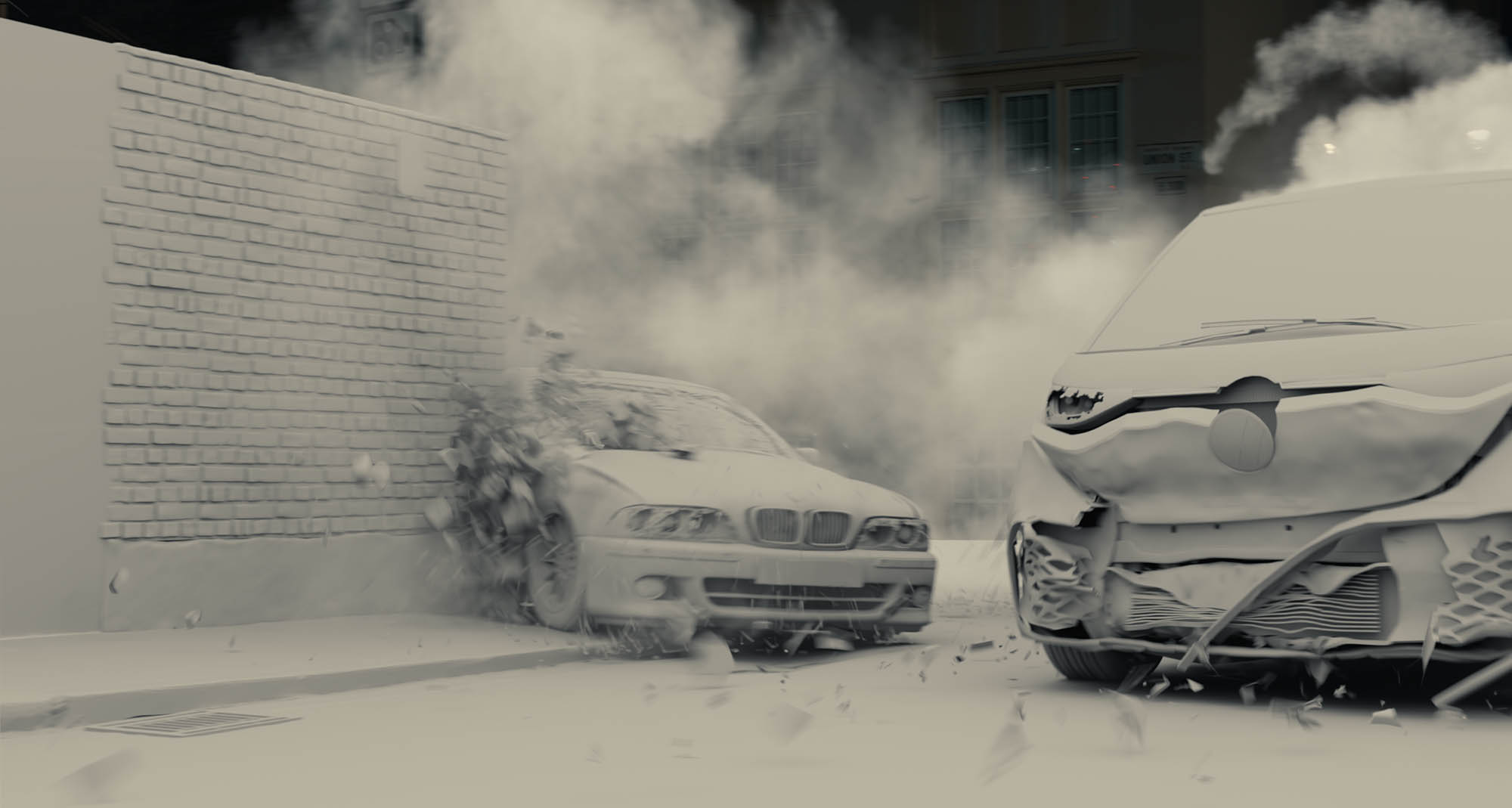
fxg: Vehicle crashes are unforgiving because audiences instinctively read mass, suspension, tyre contact, reflections, and speed. What were the biggest “tells” you had to avoid?
Daniel Baldwin: All of the above. References are crucial, and we were careful not to imagine or invent any part of what we were doing. Every decision in animation and FX was driven by a real-world reference footage, and we invested a lot of time understanding the weight and movement of the vehicles, building that into our vehicle rigs, animation and FX sims.
The 80-Second Continuous Sequence
fxg: What were the actual capture formats being stitched, -drone, Steadicam, techno? Were transitions baked in-camera in terms of design, – with visual handoffs, or fully comp-driven?
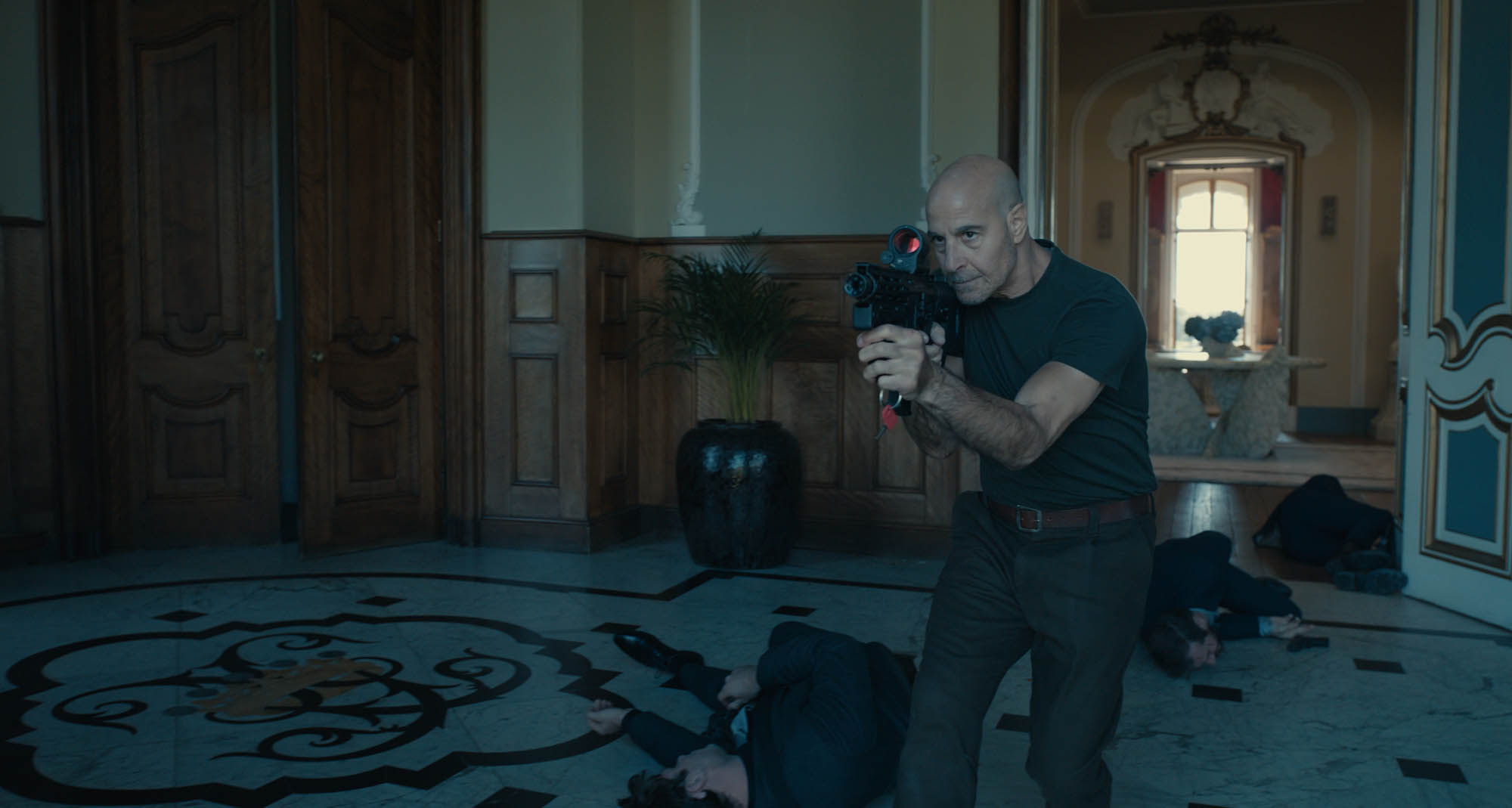
Daniel Baldwin: The stitch was a drone into a steadicam. All of the best efforts were made on set to align the cameras perfectly to a stitch point, but inevitably this couldn’t be a 2D-only stitch in the end. The biggest factors that moved us into needing a CG solution were slight changes in the camera position and the actor’s position on the stitch point, and the daytime lighting.
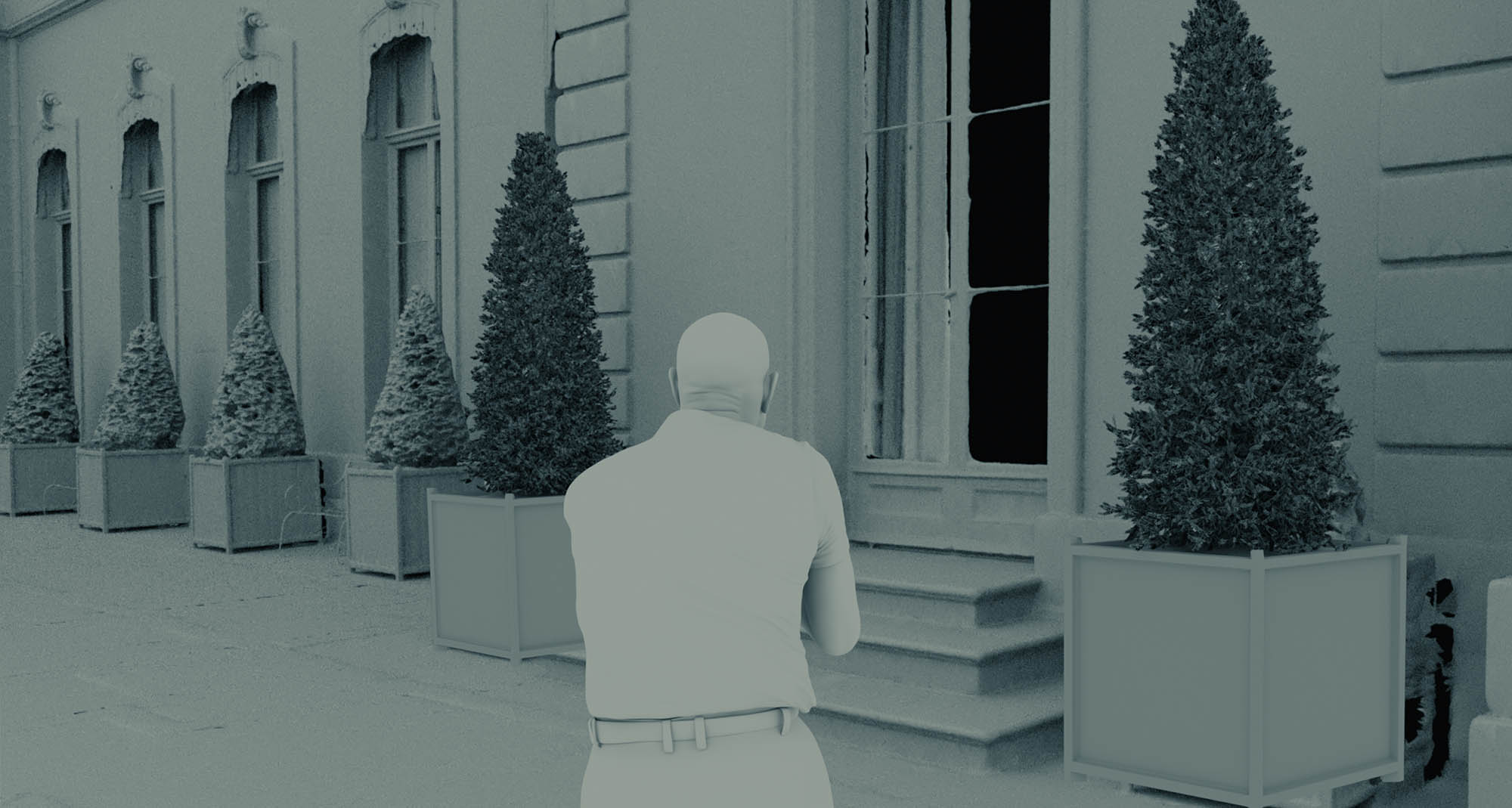
As both passes were shot with multiple takes outside in natural light, the chosen takes in the end had lighting from completely different times of day, with highlights and shadows moving significantly. We tracked both cameras, rebuilt the environment in CG and scanned and built a CG replica of the actor. Under Shailendra Swarnkar’s supervision, our layout team stitched the cameras in 3D, blending the move either side to make it seamless, and our animation team provided the same hidden switch for the actor’s performance.
We were careful to change as little as possible from what the actor was doing, so we only tweaked shoulder, elbow and head positions slightly, over a minimal number of frames to move him from plate A to B. We also had to run CFX simulations with shot sculpts to blend the cloth on the T-shirt to get the creases to deform correctly from the first to second plates. We relit the CG actor and reprojected the Plate A side onto the Plate B environment build, to maintain the lighting until a natural transition when he enters the building. It was a full CG solution but still required a lot of difficult comp work to fully integrate the two shots.
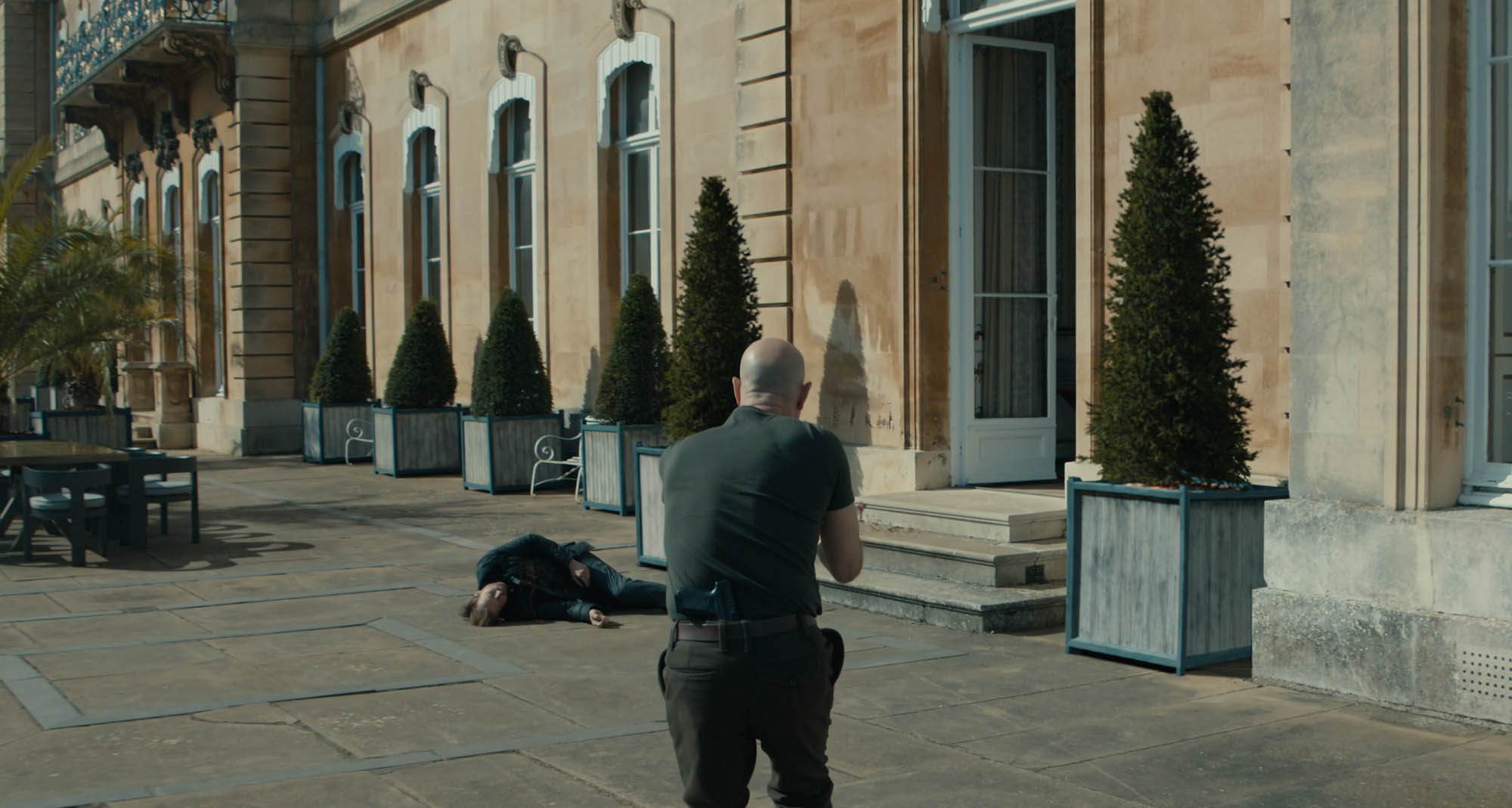
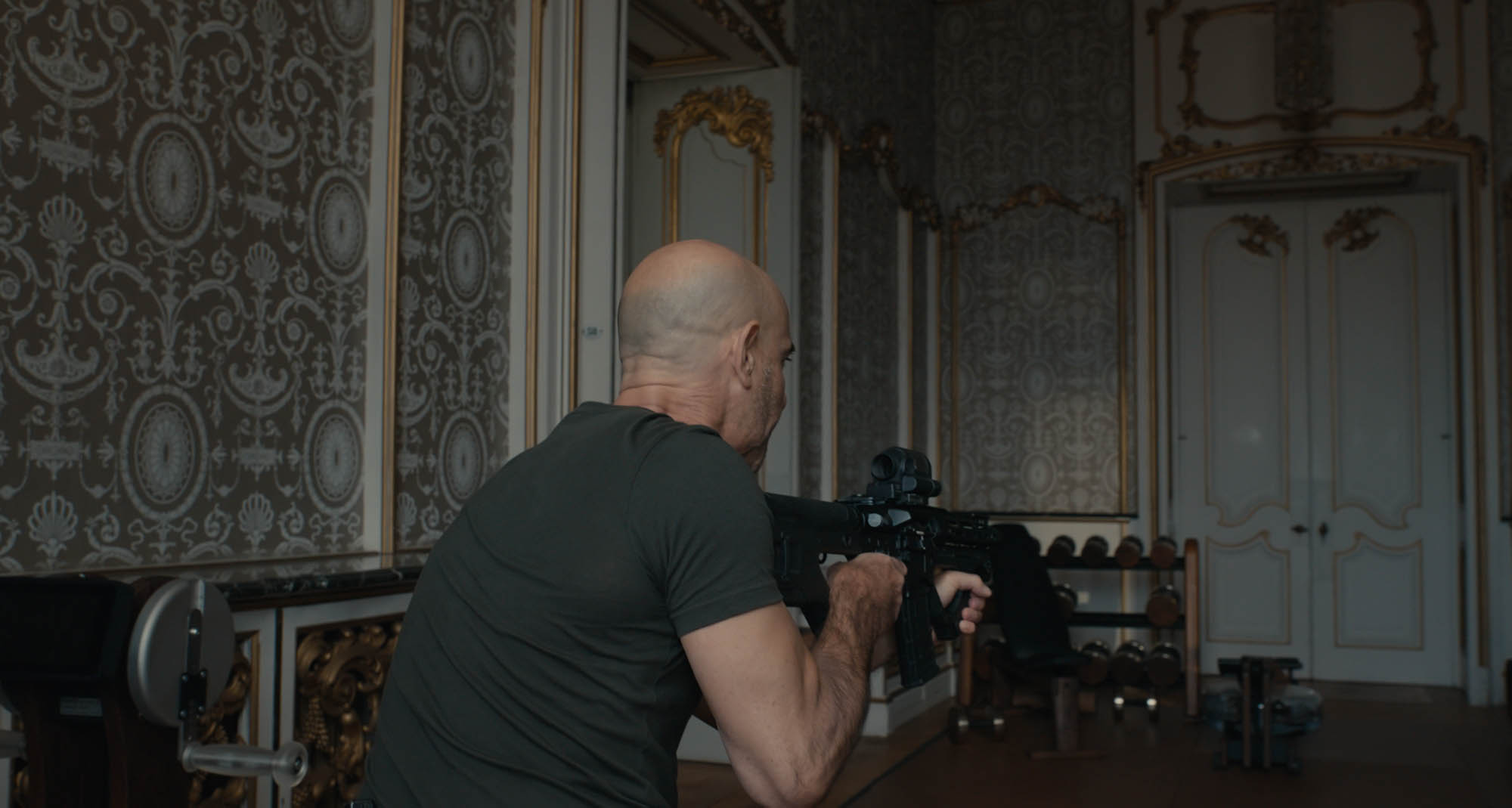
fxg: How was the sequence previs’d and techvis’d? Was there a master Unreal or Maya layout the on-set team worked to?
Daniel Baldwin: A lot of work was done in prep to visualise the stitch, and the on-set team worked to this as closely as possible, but inevitably there are factors that introduce additional complications in post, so once we had the footage, we had to rebuild the stitch point to work with what we’d captured.
fxg: What was the tracking and matchmove issues, and how did you handle parallax mismatches across the camera handoffs?
Daniel Baldwin: The lenses were relatively wide, and we had good witness camera footage, so the tracking wasn’t a huge issue, although it had to be perfect. The parallax difference was solved with the environment reprojections. Luckily, the stitch had to happen just before the actor entered the building, and then once we’re inside, the lighting all changed anyway, so the door frame became an ideal wipe for our lighting stitch.
fxg: Were any transitions done with 2.5D or projection setups versus full CG bridges? Where did you have to cheat the geometry?
Daniel Baldwin: The front facade of the building was all a 2.5D projection on proxy geo with DMP paint to help fix gaps, but there were some decorative plants that had to be rebuilt in CG because they had more noticeable and unforgiving parallax. The actor and the gun he holds also needed to be full CG takeovers from plate A and then blended into plate B.
Final Ep : The G8 Finale & Satellite Sequence
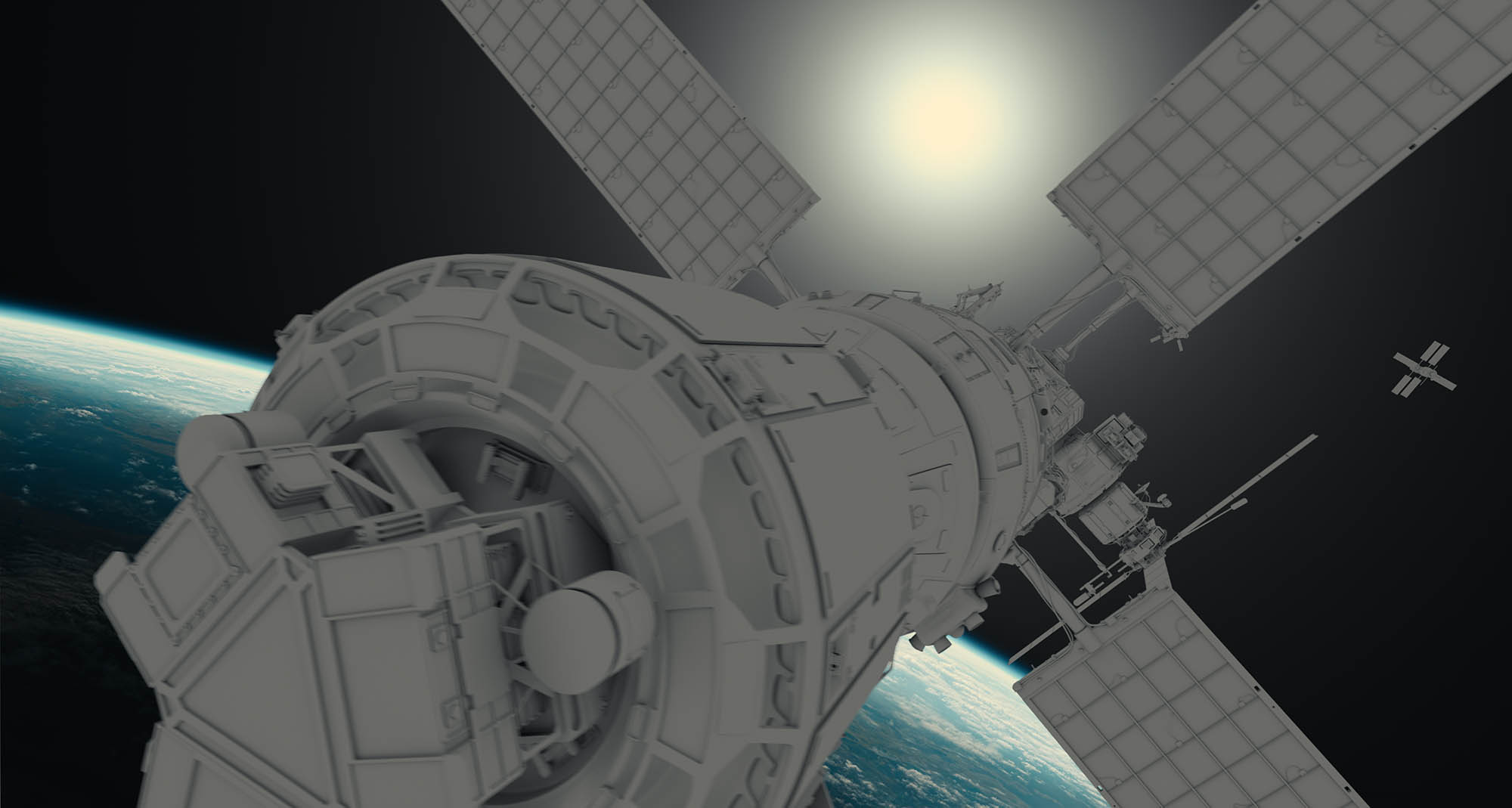
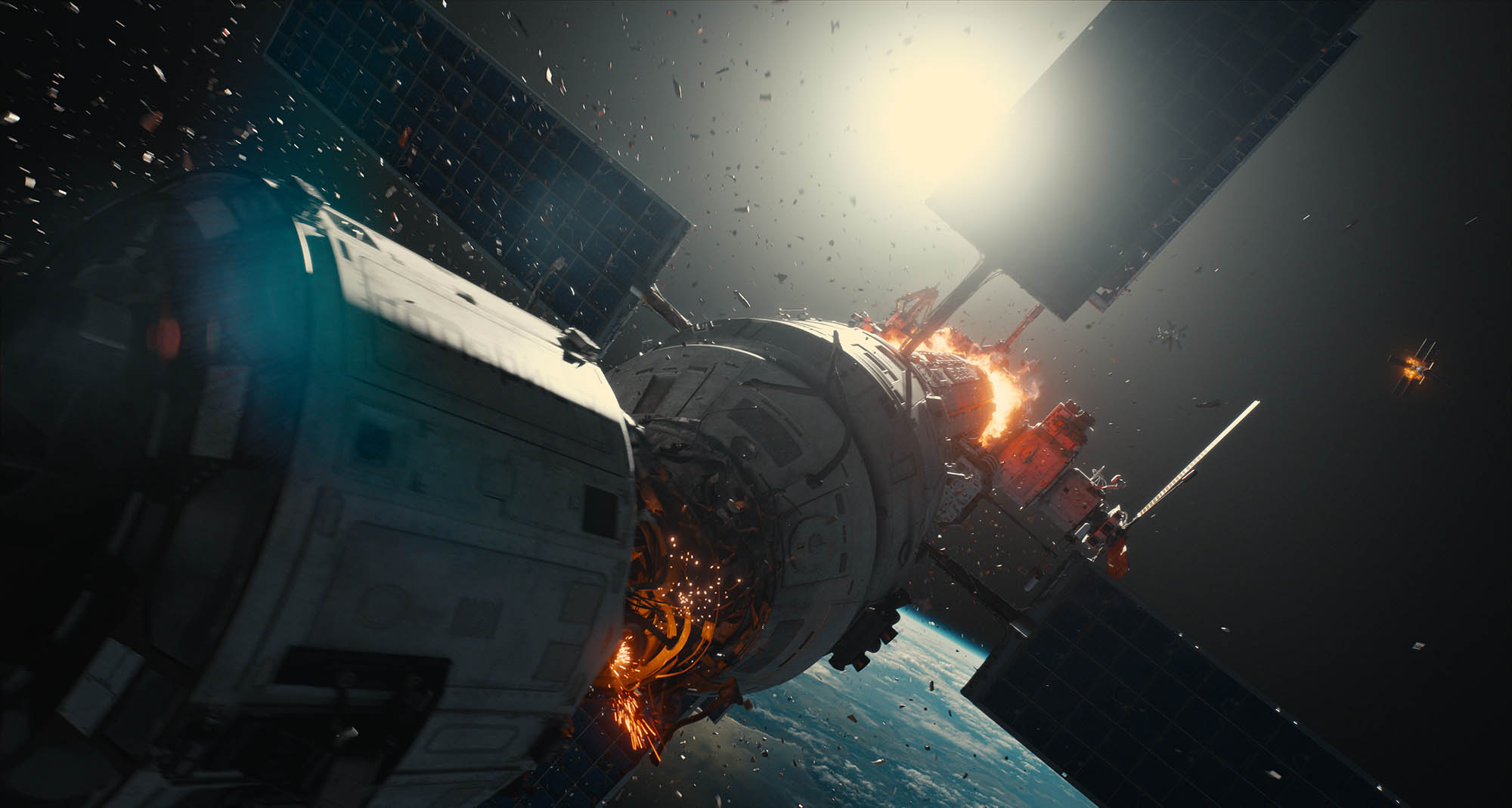
fxg: For the finale’s fully CG outer-space sequence, how did you approach Earth, the satellite network, and orbital scale so that the sequence felt credible rather than generic sci-fi?
Daniel Baldwin: DNEG has a really impressive proprietary Earth setup which provides a photoreal base for terrain, ocean and clouds, so the biggest creative questions for us were which part of Earth do we want to look at, how is it composed in the frame, what’s the cloud coverage and the lighting. As a story point, we considered both night and daytime looks and reviewed a lot of options for the position and rotation of Earth, considering where in the world the characters are supposed to be when we cut away from them. In the end, we settled on what we felt looked creatively believable, authentic and instantly recognisable, rather than being too specific about the details of the location or time of day in the rest of the sequence. For the look of the satellites and their orbit, we went deep into references, including previous famous space movies, many of which were DNEG’s own work, and real-world photography. Interestingly, the real stuff is usually not as cinematic as the movie references, and we wanted to find the balance between realism and cinematic storytelling as the climax of the show.
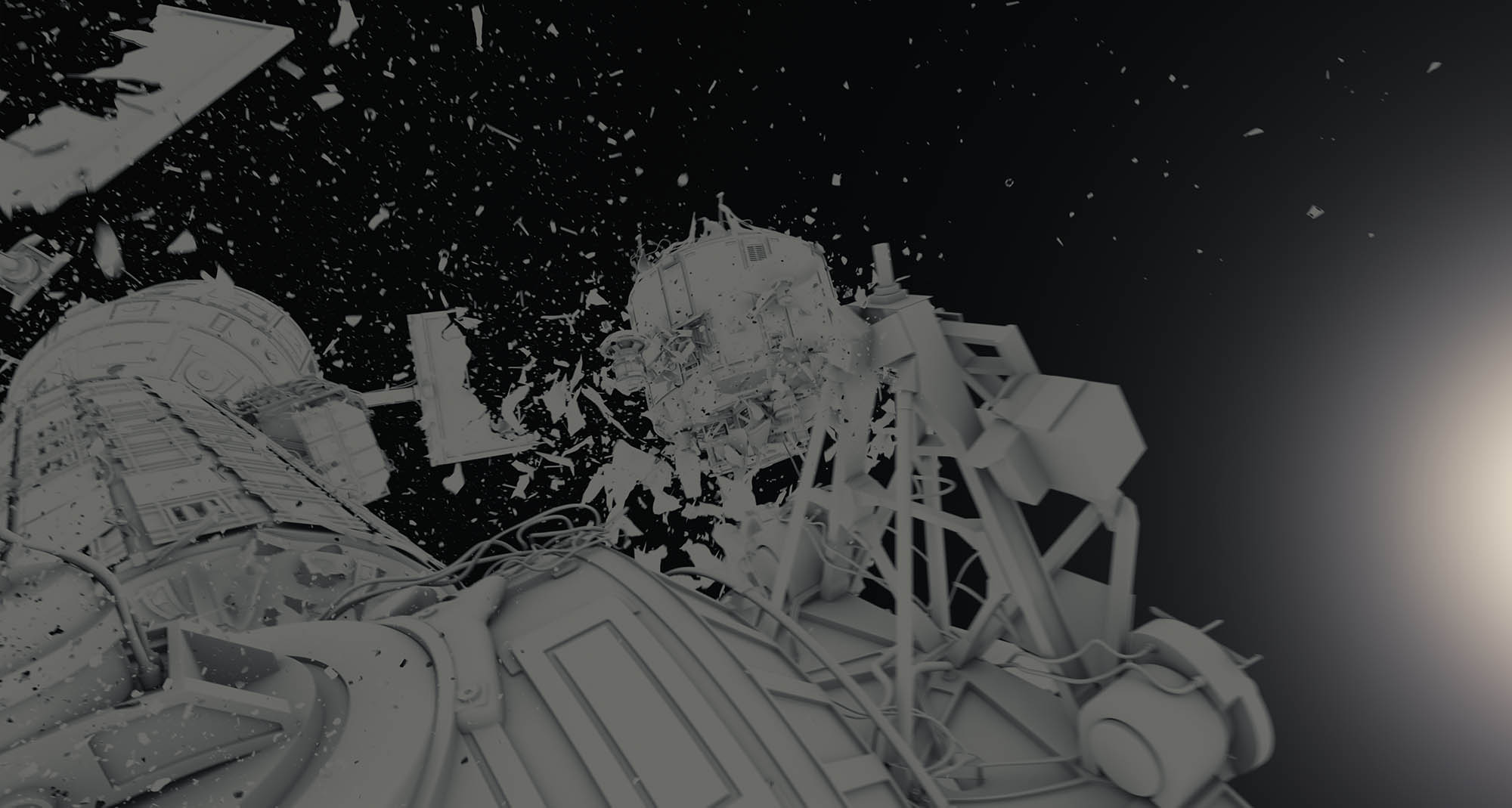
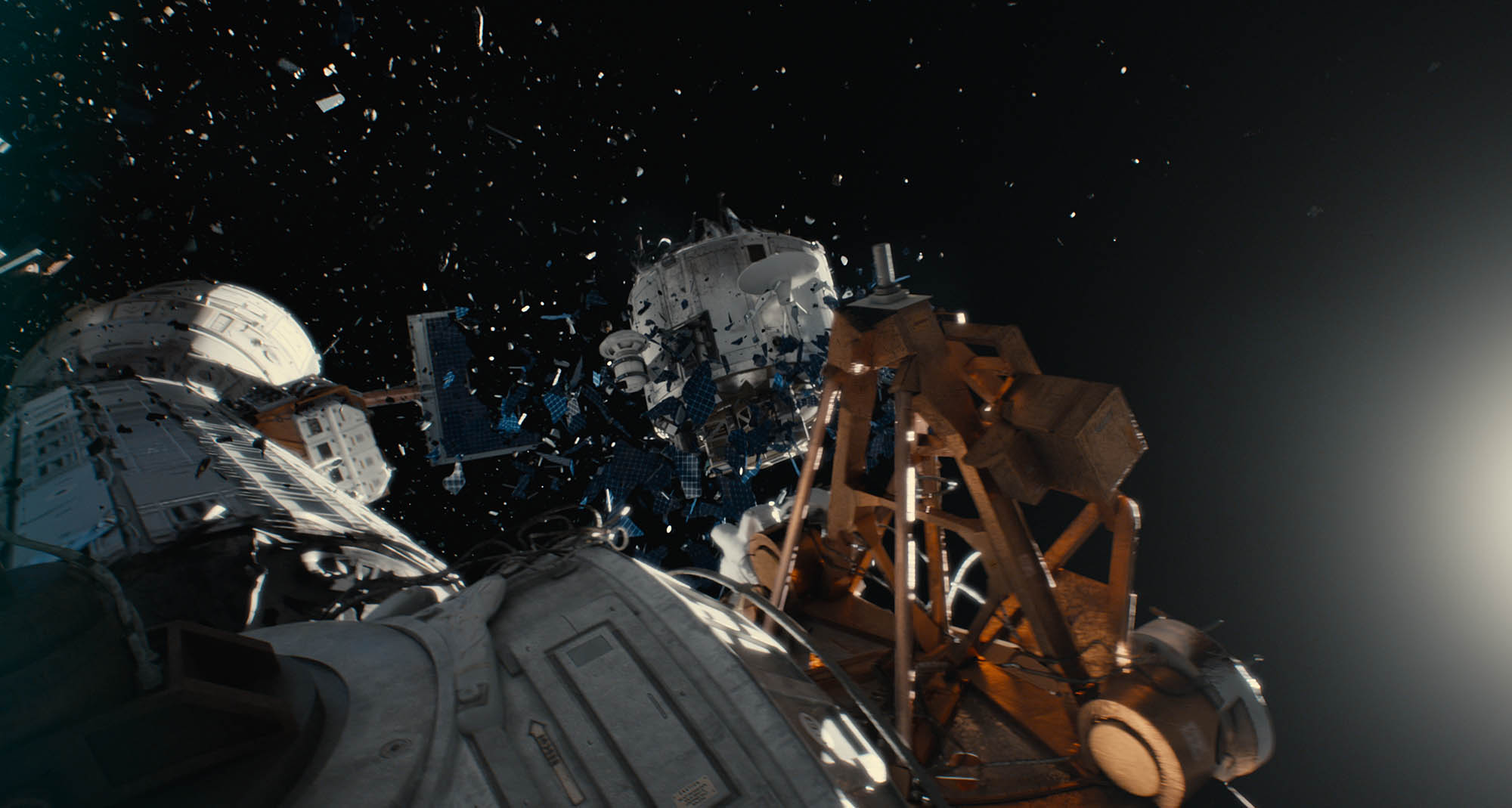
fxg: The satellite self-destruction required large-scale FX and dynamic destruction. How physically accurate did you try to be, and where did cinematic storytelling take priority?
Daniel Baldwin: There is no atmosphere in space, so you wouldn’t really see any fire from satellites exploding. We knew this and discussed it early on, but agreed we had to have some recognisable explosions for the audience to quickly understand what’s happening. You could excuse the fire as coming from internal fuel or gases inside the satellites themselves, so this was enough justification for us to go with more traditional explosions. We tried to keep them brief and made sure the fire extinguished fully rather than continuing to burn on the surface. We wanted to maintain the zero-gravity space feeling, so once the debris was projected away from the initial explosion, we made sure it continued at a consistent velocity in our FX sims until it began to get pulled towards Earth by gravity. Finding the balance in the final shot where the FX rains down behind the plane was also creatively tricky, as it had to look like a global-scale event while not appearing to be threatening to Earth.
fxg: Looking back, which shot or sequence best represents DNEG’s contribution to Citadel Season 2, either because it was technically difficult, creatively elegant, or largely invisible to the audience?
Daniel Baldwin: That’s a really difficult question. You’ve covered pretty much all of the most important contributions we made. From the very beginning of prep, the effect Wes and I were talking about most was always the burning man. We understood the emotional importance of the character, the impact on the story and Kyle / Mason’s character development and that the VFX had to look completely photorealistic and believable, so that the audience wouldn’t be taken out of the moment. I think our work really delivered on all of those aspects. Thanks to the collaboration with multiple on-set departments from the start and our team’s expertise, we were able to deliver a very realistic result that was technically difficult, creatively elegant, and hopefully invisible to the audience.