
Autodesk Flow Studio is moving beyond prompt-driven video generation with a new workflow designed to give filmmakers something generative AI has often lacked: directable control.
In the latest fxpodcast, we speak with Nikola Todorovic, co-founder of Wonder Dynamics and now part of Autodesk, about Flow Studio’s new 3D Editor + Canvas. The system combines interactive 3D scene construction with the visual power of generative 2D video models.
The system is not designed to ‘make a movie from a single prompt’ but rather allow the integration of Ai into a production workflow. The platform targets everyone from individual filmmakers with teams of three to five people through to much larger studios. Todorovic sees a familiar adoption curve: new filmmaking technologies begin in social content and experimentation, then move through commercials, music videos and independent productions before reaching major studio pipelines.
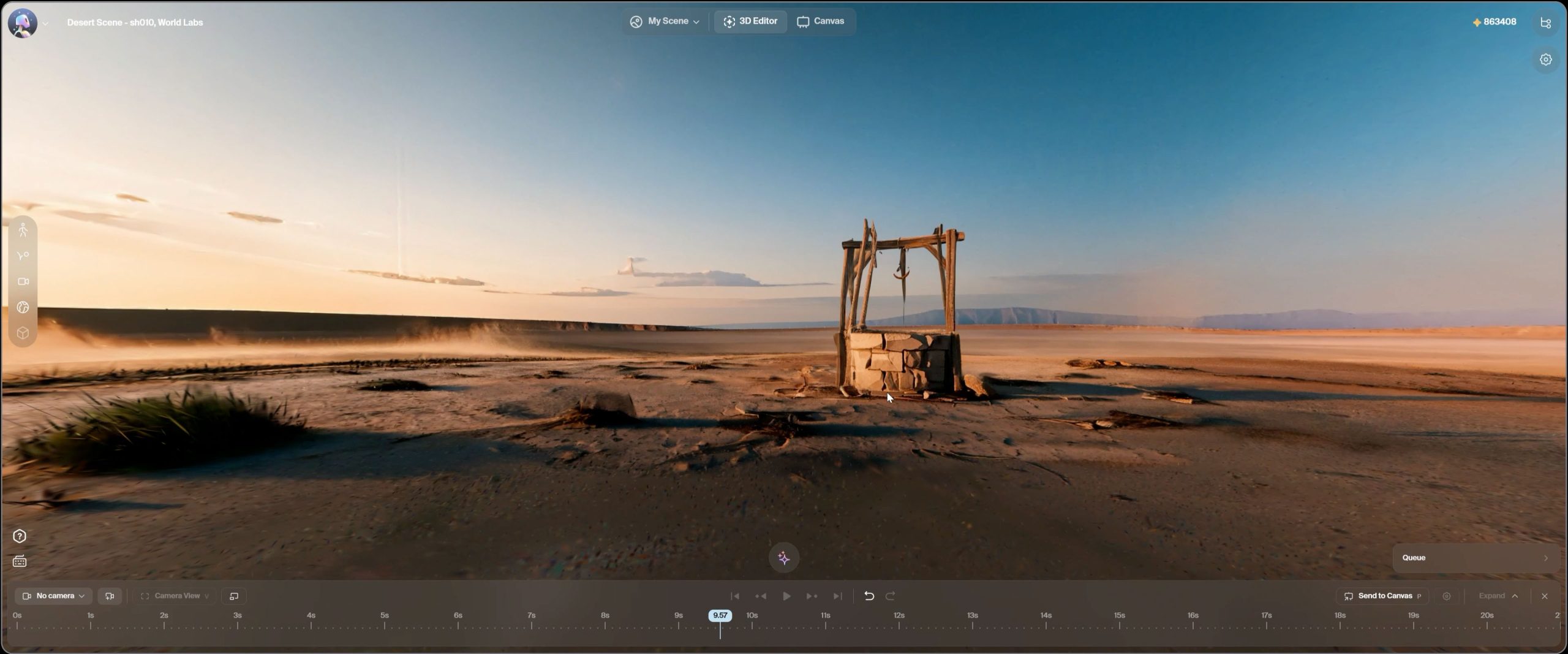
The premise is simple: filmmakers direct in three dimensions. They position cameras, block actors, shape performances and decide exactly where a shot should land. Communicating all of this through text prompts or marks on a flat 2D image is inherently limiting.
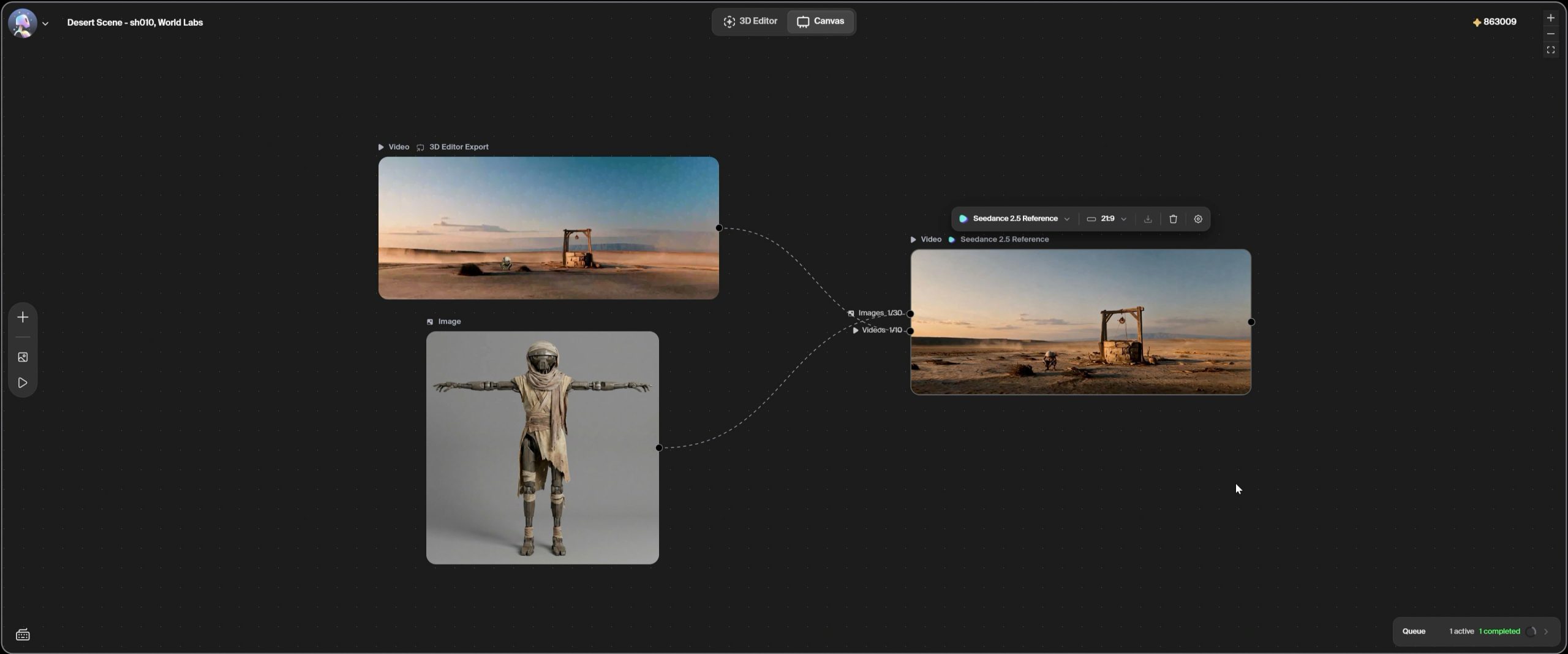
Flow Studio’s 3D Editor lets creators assemble shots using characters, animation, motion-capture data, camera tracks and generated environments. A performance can come from one reference video and the camera movement from another, or the camera can be keyframed directly. Spatially coherent environments, including Gaussian splat-based worlds created with World Labs’ Marble, can be used for blocking, layout and camera design.
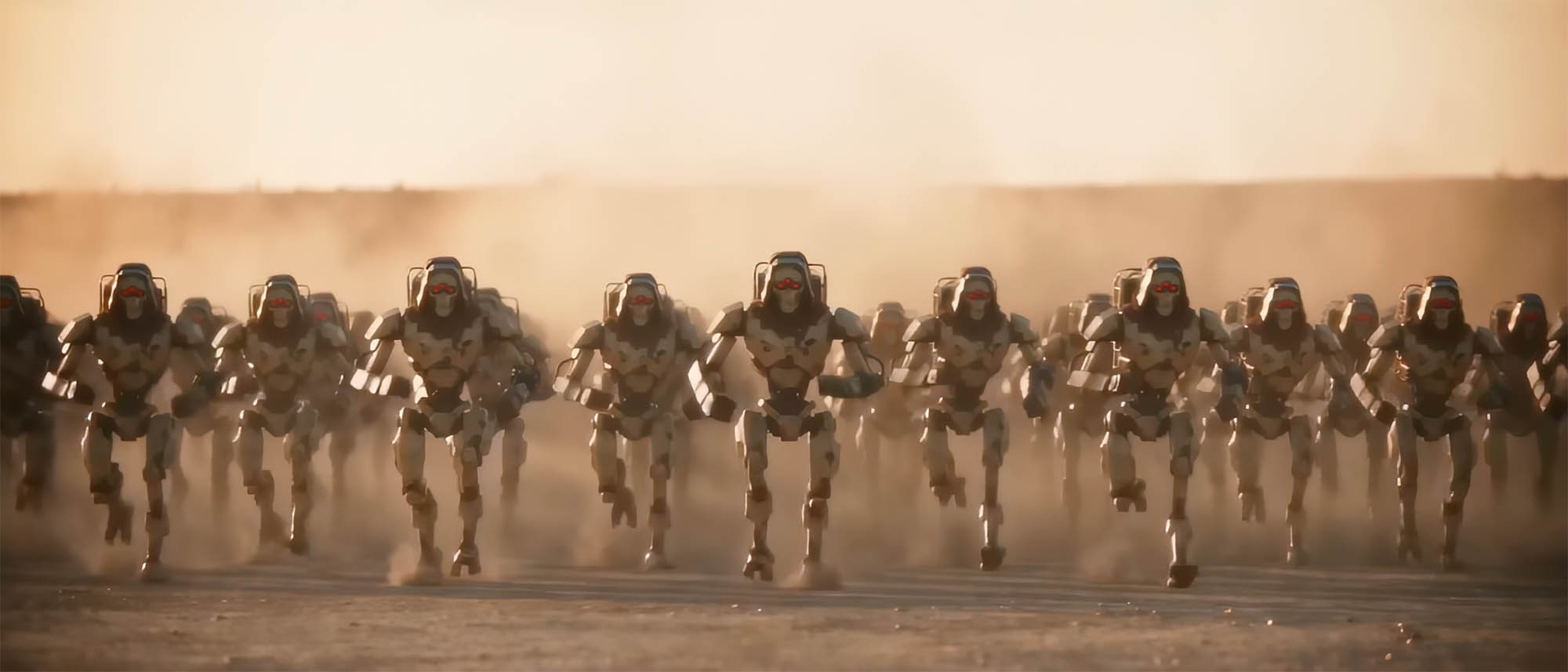
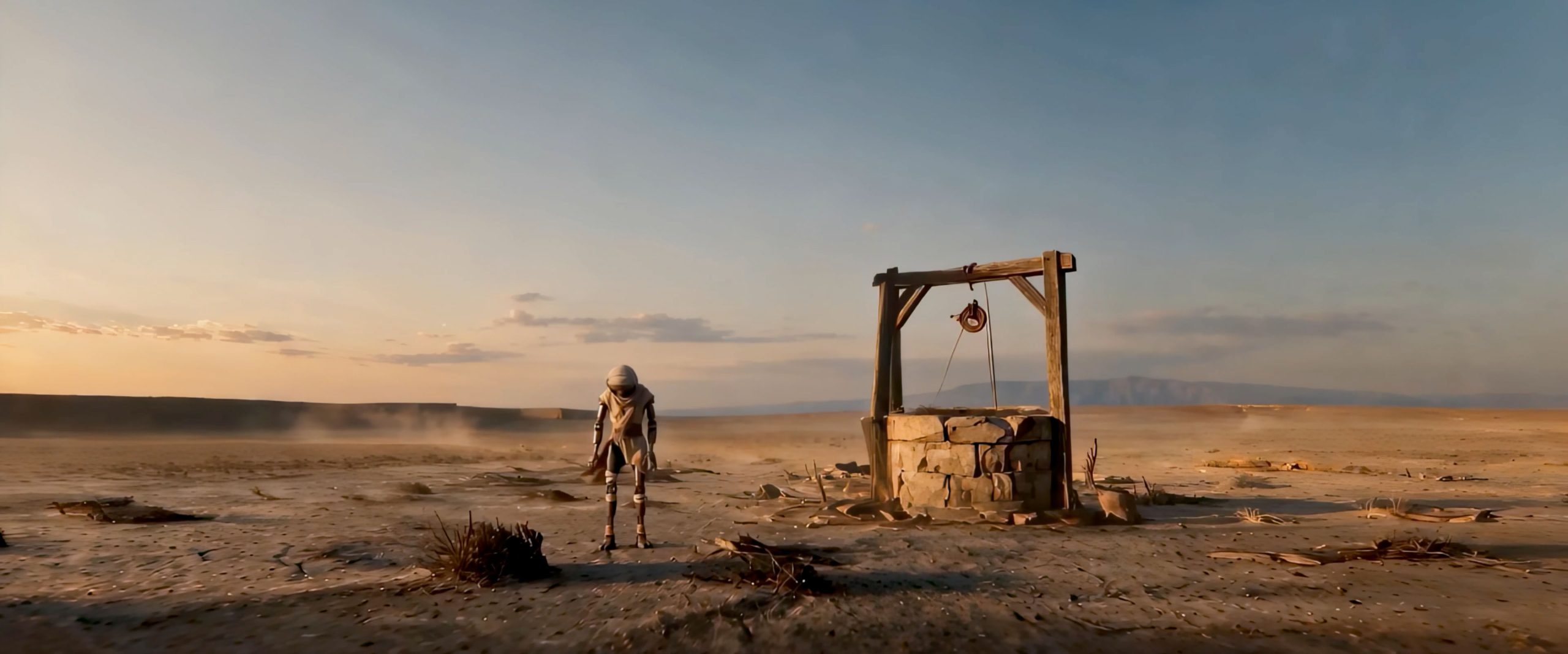
Artists can then move into Canvas, Flow Studio’s node-based 2D environment, to generate and refine the final image. Current state of the art AI video models contribute what they already do particularly well: lighting integration, atmosphere, simulation effects and cinematic finishing.
The 3D scene does not necessarily produce the final pixels. Instead, it establishes the performance, staging, composition and camera movement that guide the generative result. Users can stay entirely within Canvas when speed is the priority or move into 3D whenever a shot needs more exact direction.
Solving the final 20 percent
Todorovic describes generative AI’s “80/20 rule.” Prompting and AI can produce the first 80 percent of an image remarkably quickly. The difficulty begins when a director asks for a precise revision: move an object, alter the performance or refine a camera path without losing everything that already works.
That final 20 percent is where prompt-only workflows can become annoyingly unpredictable. Flow Studio’s combination of 3D direction and 2D generation is intended to make those iterations controllable.
This also relates to the criticism of generic “AI slop.” Without direct control, artists are more likely to receive a model’s statistically safest interpretation. Creative specificity comes from being able to reach into the shot and make deliberate choices.
Performance before prompting
We also discuss why Flow Studio emphasizes recorded human performances. Todorovic is unconvinced that audio alone, or a prompt describing a performance, can consistently produce distinctive acting. Audio-driven animation can also work, but it often creates generalized gestures and expressions.
Todorovic preferred workflow begins with an actor. Video and audio from the recorded performance can drive the character, preserving the performer’s timing and intent before generative models reshape the final appearance.
Audio integration is still evolving. Current video models can generate sound during finishing, while Autodesk is working toward carrying more source-performance audio through the wider workflow.
Building less, directing more
Traditional CG pipelines often require artists to construct far more than the camera ultimately sees, partly because the shot may change. AI-assisted workflows offer a different possibility: solve more technical complexity in the background and focus effort on what contributes to the finished frame.
This is not about replacing filmmaking with a prompt. Filmmakers have always relied on specialists without personally solving every physical equation involved. The opportunity is to give more storytellers access to complex techniques without requiring mastery of every layer of the underlying mathematics.
The original Wonder Dynamics platform combined around 25 machine-learning, computer-vision and generative systems to place CG characters into live-action footage. Flow Studio’s 3D Editor is the next step, bringing those previously separate outputs together in a more approachable directing environment.
From individuals to studios
Flow Studio is cloud-based, with the 3D Editor designed to remain highly interactive. Canvas generation time varies with the selected model, shot length and resolution, while world generation currently takes several minutes.
The platform targets everyone from individual filmmakers and teams of three to five people through to larger studios. Todorovic sees a familiar adoption curve: new filmmaking technologies begin in social content and experimentation, then move through commercials, music videos and independent productions before reaching major studio pipelines.
The release represents an important shift. Generative video is no longer only about producing a wildly inferred image from just a few words. It is increasingly about turning that image into a shot, but giving filmmakers real tools to direct it.
Watch our video or listen to the full fxguide podcast interview with Nikola Todorovic for an in-depth discussion of Flow Studio, performance capture, generated environments, camera control, audio and the future of AI-assisted filmmaking.