Virtual production has given filmmakers an extraordinary amount of control, but it has also made the stage itself part of the VFX imaging pipeline. A cinematographer can arrive with a carefully tested camera, lens package and colour workflow, only to discover that the LED volume has poor calibration, compromised dynamic range, mismatched panels or an unexpected interaction with the camera.
StEM3 is designed to identify those problems before the first day of principal photography.
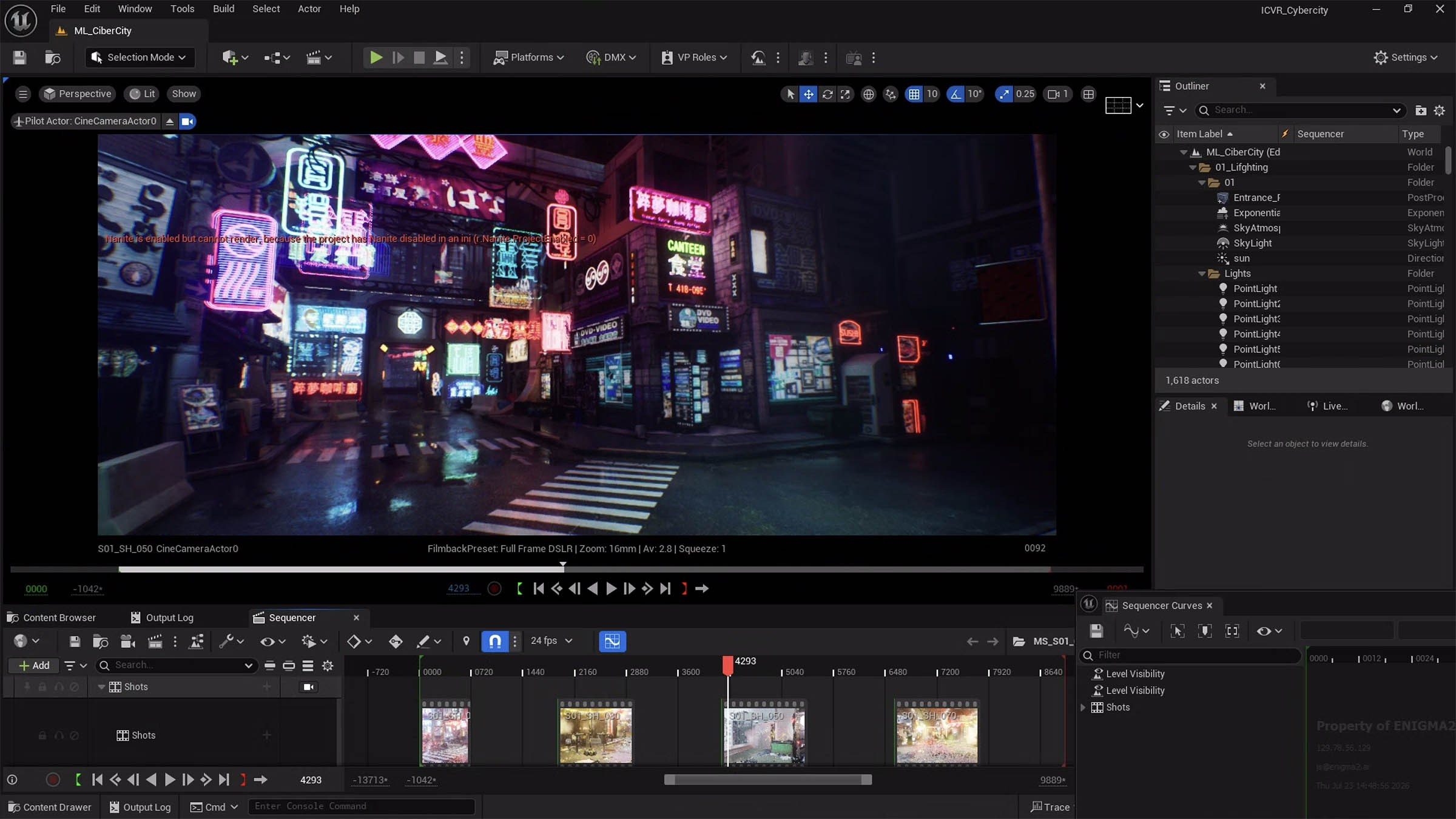
The American Society of Cinematographers’ Motion Imaging Technology Council, or ASC MITC, has released StEM3, a free collection of standardised evaluation material created specifically for in-camera visual effects and LED-volume production. The assets are hosted by the Academy Software Foundation as part of its Digital Production Example Library and can be downloaded for testing, education and production preparation. The files include videos and UE5 scenes.
At its heart, StEM3 addresses a simple but surprisingly difficult question: when a cinematographer walks onto an unfamiliar virtual-production stage, how can they determine whether the volume is actually working correctly?
A known image in an increasingly complex pipeline
An LED volume is not merely a large background display. It is a system formed from real-time content, (often UE5), render nodes, synchronisation, LED processors, individual panels (of various pitches), camera tracking, colour transforms, lenses, filters and the camera itself. A fault or poorly understood transform at any point in that chain can affect what is photographed.
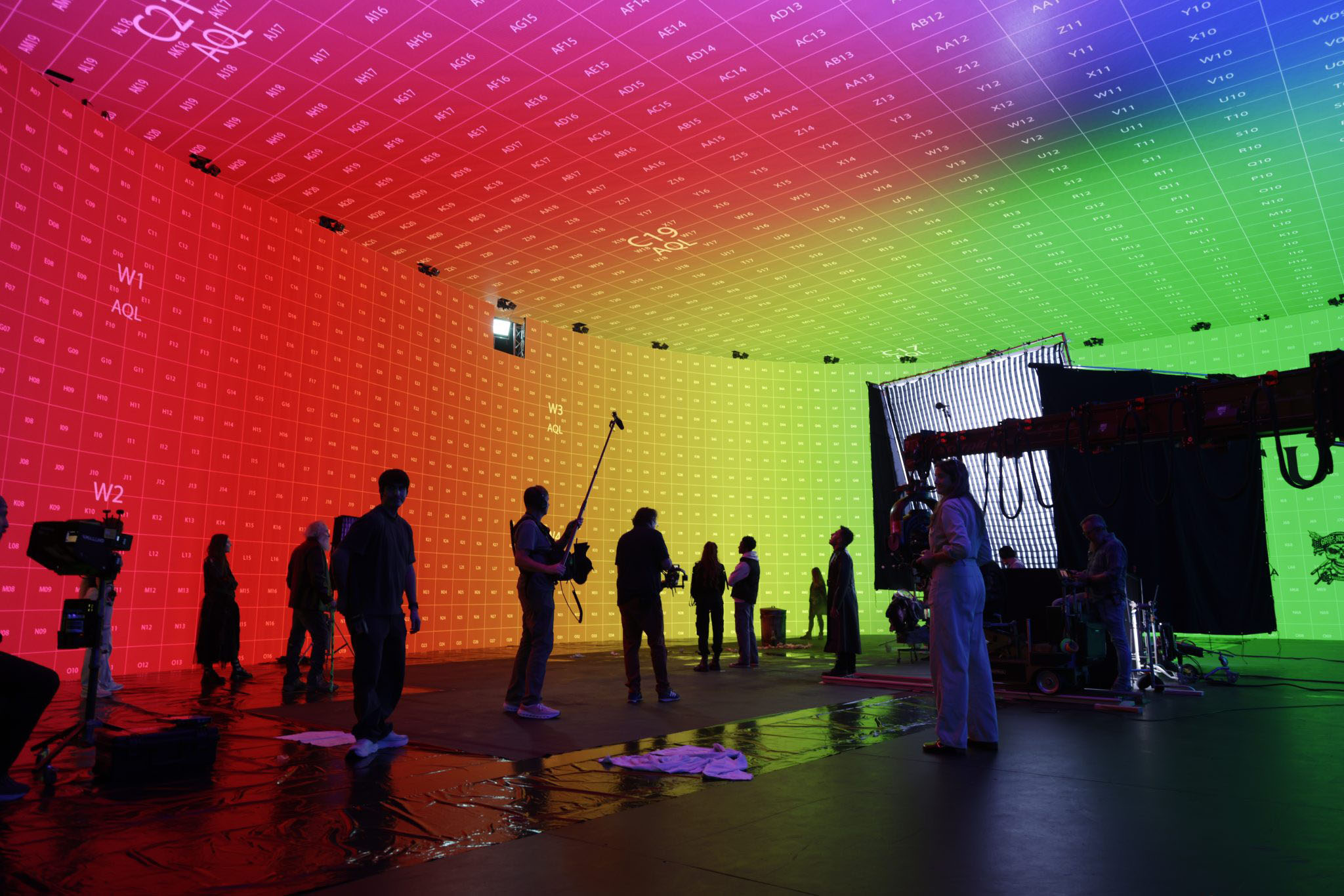
This is why conventional display calibration is necessary but not sufficient. A wall can appear acceptable to the eye and still photograph incorrectly. Individual panels may respond differently near black, colours can shift once seen through a particular camera, refresh or scan behaviour can interact with the shutter, and the useful highlight range of the photographed wall may be quite different from its quoted specification.
StEM3 provides known material that can be loaded onto the volume and examined through the production camera. Instead of every stage or cinematographer inventing a different test, the industry now has a common – and open source – starting point.
Michael Goi, ASC, ISC, co-chair of ASC MITC, explains that cinematographers have encountered stages where “colour rendition was off” and “dynamic range was sketchy.” The aim was therefore to establish evaluation material that shows how a correctly configured system should begin to look. The ASC and ASWF have thus announced the public release of StEM3.
StEM3 is not intended to impose one creative look. It establishes a baseline. Once the volume, camera, and colour pipeline have been shown to behave predictably, the cinematographer is free to deliberately depart from that baseline, and the VFX team can be confident that their material will produce the desired result in camera.
What is in StEM3?
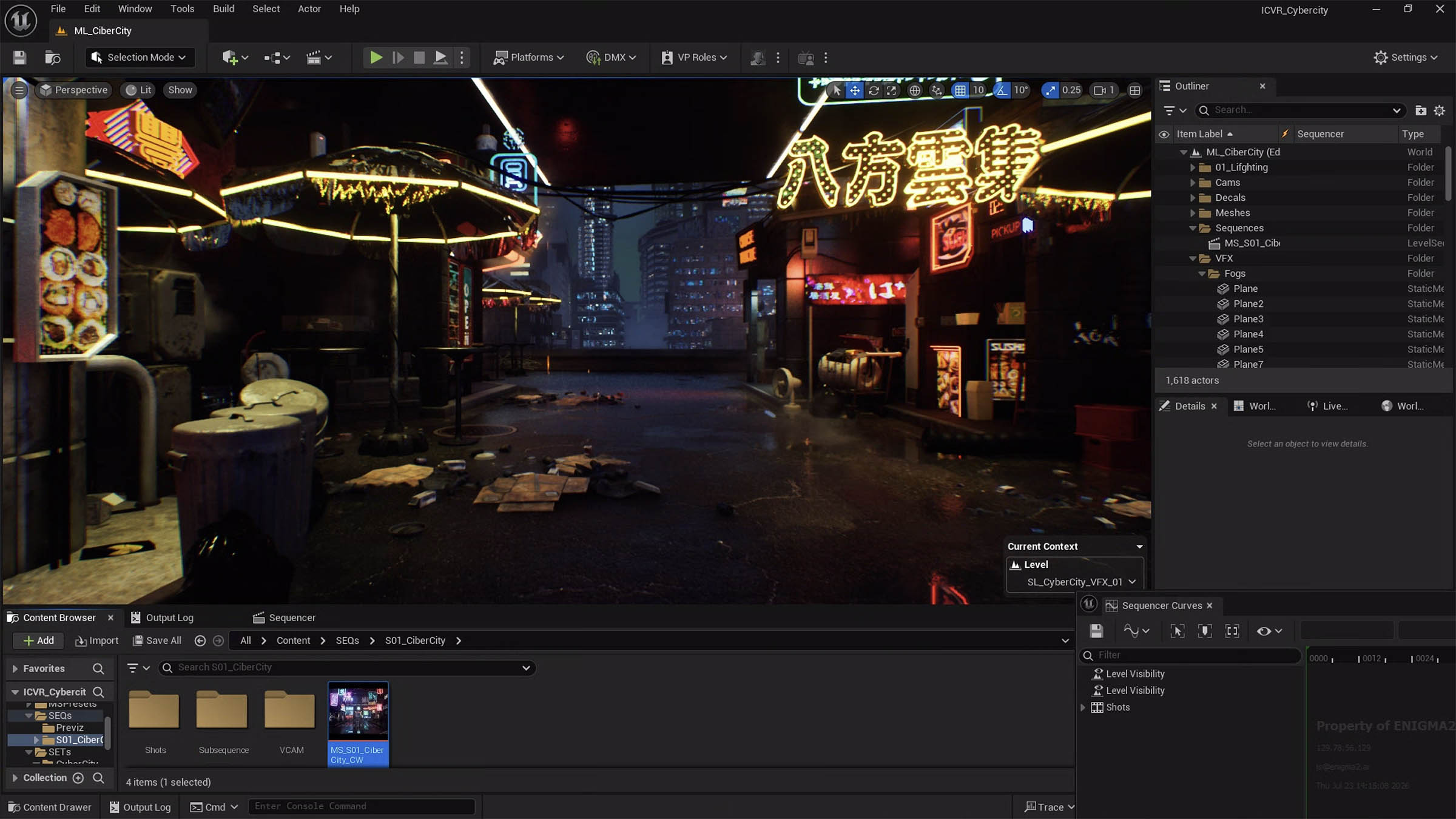
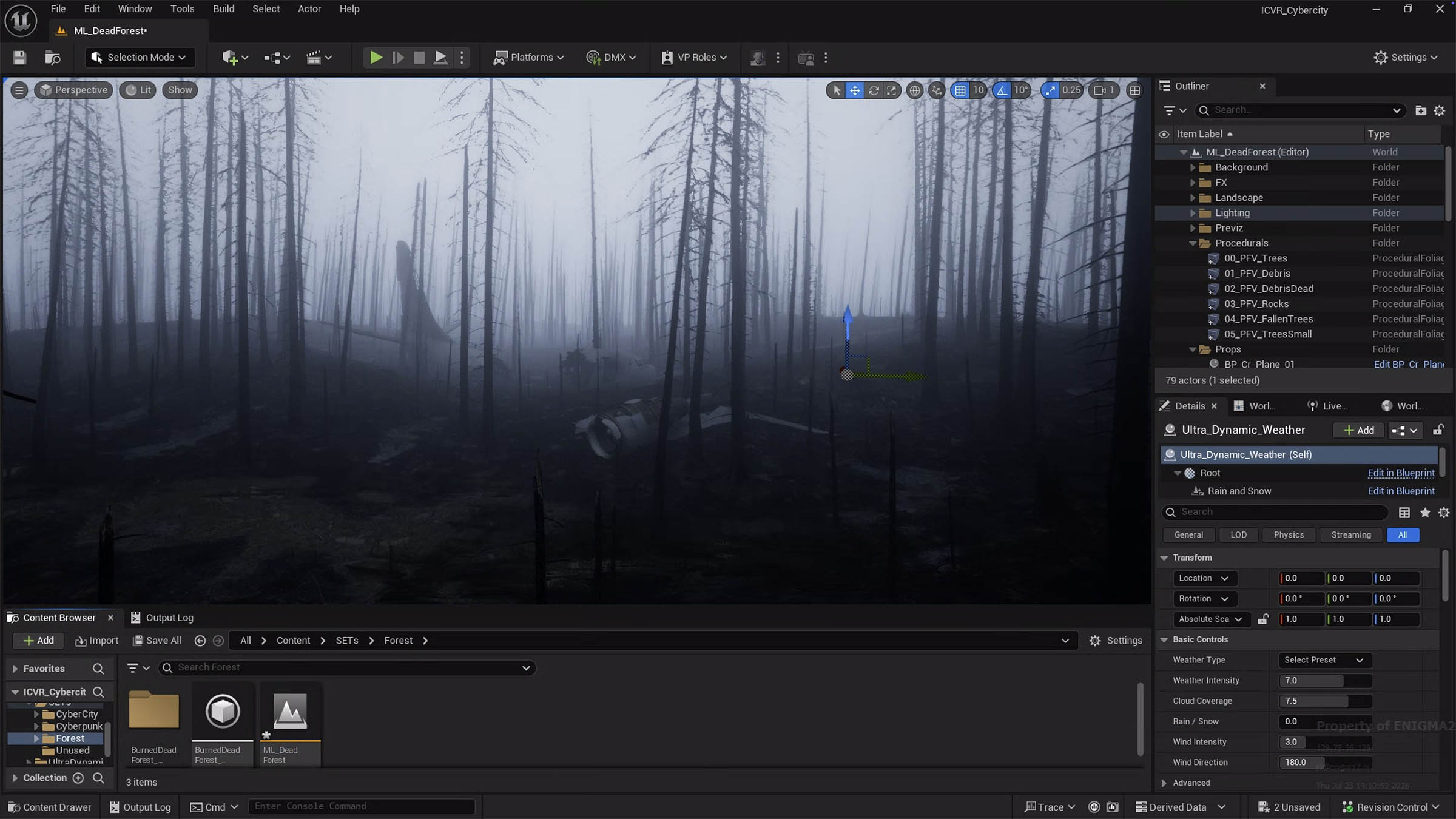
StEM3 contains a mixture of pre-built Unreal Engine environments, 2D driving plates and dedicated 2D test elements. The virtual environments were donated by leading virtual-production companies and cover a deliberately broad range of photographic problems.
There are interiors and exteriors, day and night environments, different weather conditions, urban locations and natural landscapes. The collection includes a saloon, forest, back alley, subway, Himalayan base camp and Western town, as well as driving material and more conventional test imagery.
The point is not merely to place cool or attractive content on the Volume wall. These environments allow a production to ask practical questions:
- Does the stage reproduce colour consistently across its panels?
- How does it handle saturated colour and subtle colour separation?
- What happens in deep shadow or near the upper limit of the wall?
- Do panel seams, moiré or scan artefacts become visible through the chosen lens?
- Is every panel synchronised?
- Does camera tracking hold as the camera moves?
- How does the content respond to the production’s exposure, shutter and colour pipeline?
- Does the environment provide convincing interactive light on the actors and physical set?
These tests become particularly valuable when a show moves between stages. If the same StEM3 scene is loaded at two facilities, the production has a shared reference rather than relying on memory, screen grabs or subjective descriptions of what the first stage looked like.
The assets have been gathered, tested on multiple LED volumes and packaged under the ASWF Digital Assets License v1.1. They are available through the ASWF Digital Production Example Library, which already hosts production-scale material including StEM2, ALab, Sole Mates, Adobe’s OpenPBR Shader Playground and the AWS Airship asset.
Continuing the StEM legacy
StEM3 follows two earlier ASC Standard Evaluation Material projects, but each generation has addressed a different stage in the evolution of digital cinematography.
The original StEM was developed during the film industry’s transition toward digital acquisition and projection. StEM2 expanded the idea for contemporary colour pipelines, high dynamic range, wide colour gamut, higher-resolution displays and modern image processing. It provided carefully produced reference imagery that manufacturers, post facilities and filmmakers could use to stress-test an imaging chain.
StEM3 moves the test onto the virtual-production stage.
This is a logical but important progression. With traditional post-production, many image decisions and technical corrections occur after photography. In ICVFX, a substantial part of the final composite is created and photographed on set. The LED volume is simultaneously a display, background, lighting source and part of the colour pipeline. Errors can therefore be baked directly into the photography.
The production needs to know that the system is behaving correctly while there is still time to fix it.
The ASC’s involvement is also significant. There are many excellent test procedures devised by LED manufacturers, stage operators and display engineers, but StEM3 evaluates the system from the point of view of cinematography. It asks what happens when the wall is photographed, not simply whether it meets an isolated display specification.
As David Morin, executive director of the Academy Software Foundation and an ASC associate member, explains, the project keeps the cinematographer’s contribution central as the industry moves through another major technological change.
Cinematographers do not need to become motion-imaging scientists. They do, however, need material that enables them to work effectively with the engineers, colourists, VFX teams, and virtual-production supervisors around them.
“Warped: CyberCity”
Technical charts are useful, but the ASC has always understood that cinema technology must ultimately be evaluated in the context of a story.
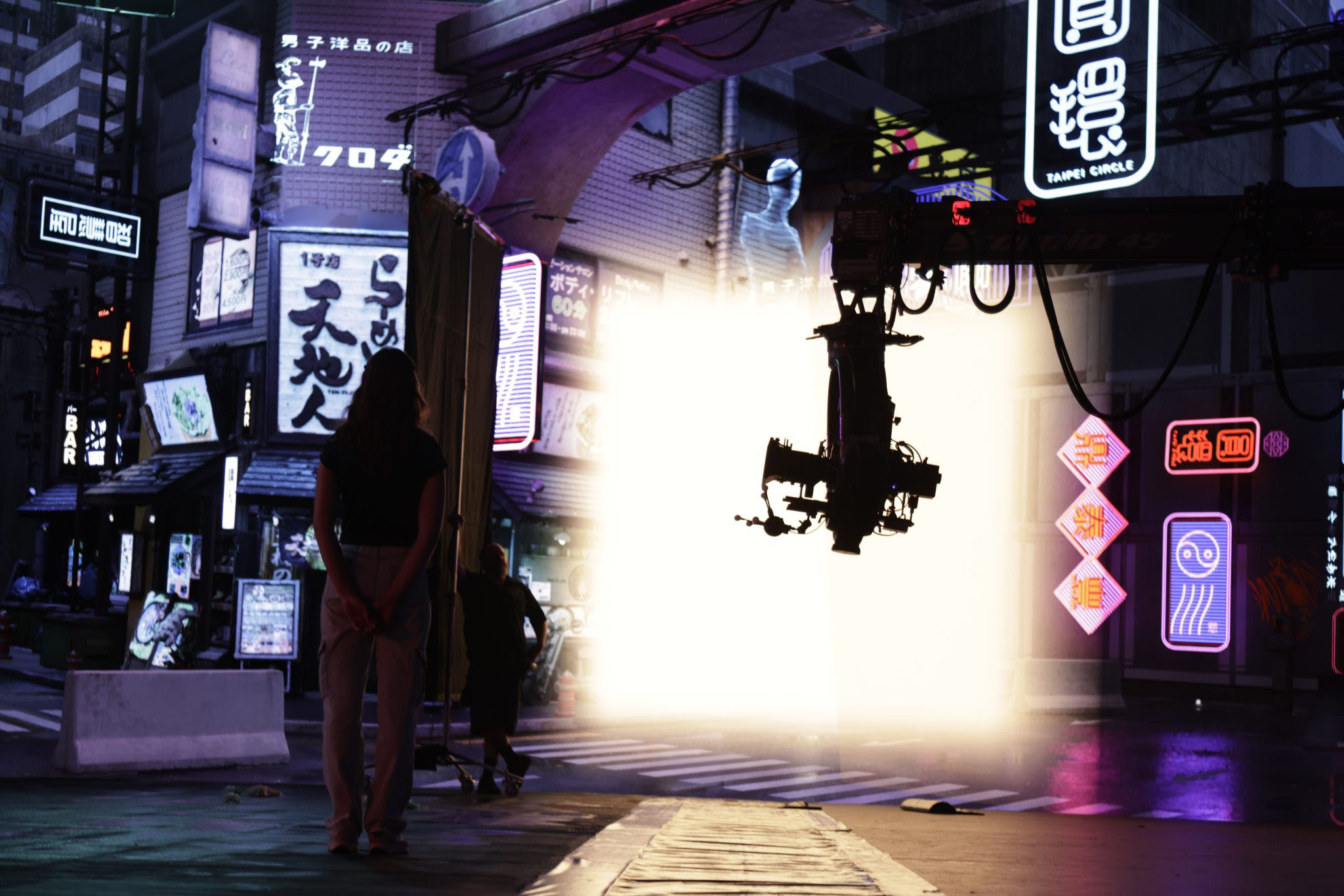
StEM3 therefore includes Warped: CyberCity, a short dramatic scene photographed by David Klein, ASC. It was written by Michael Goi, ASC, ISC, and ASC associate member Jay Holben, with Holben also directing.
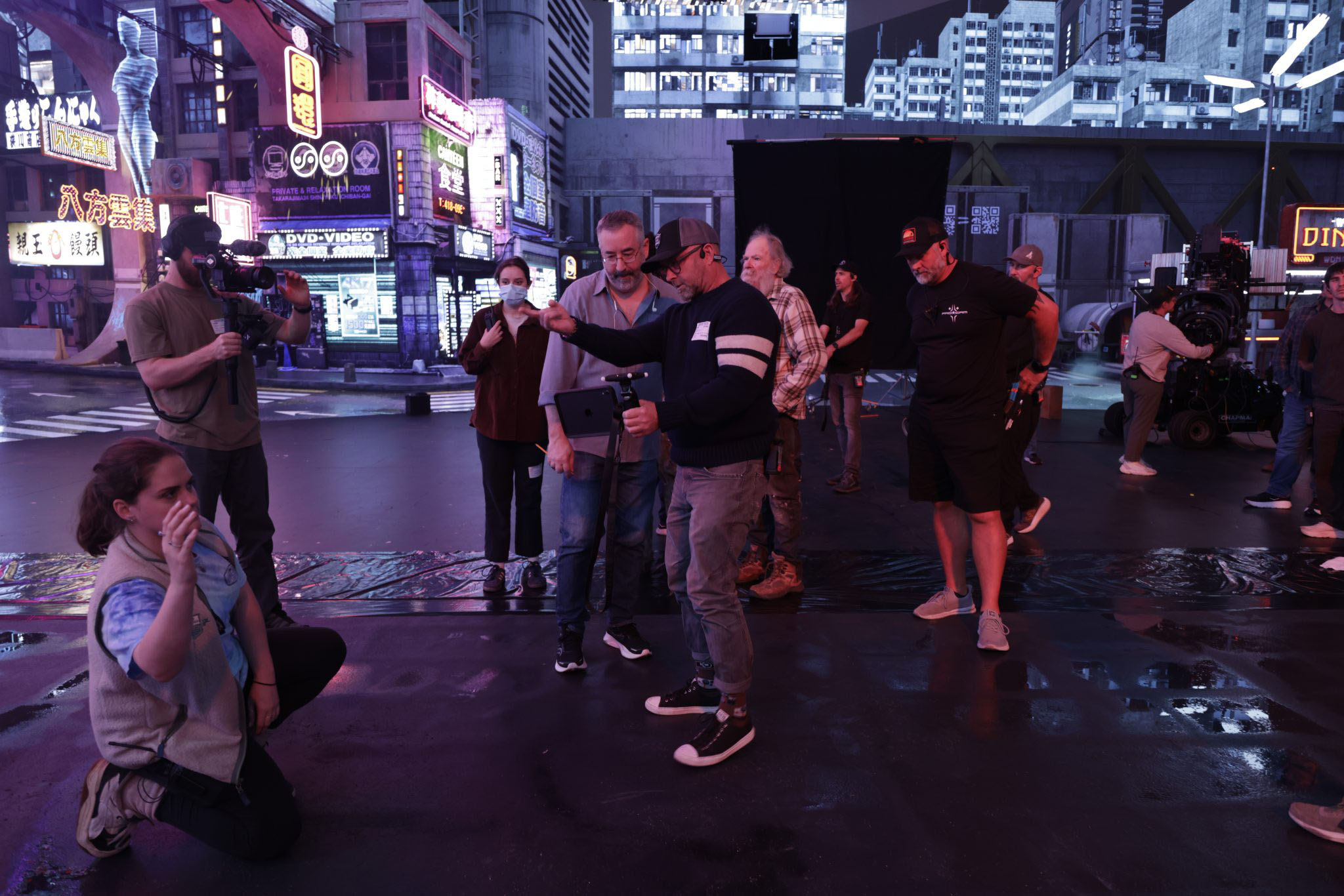
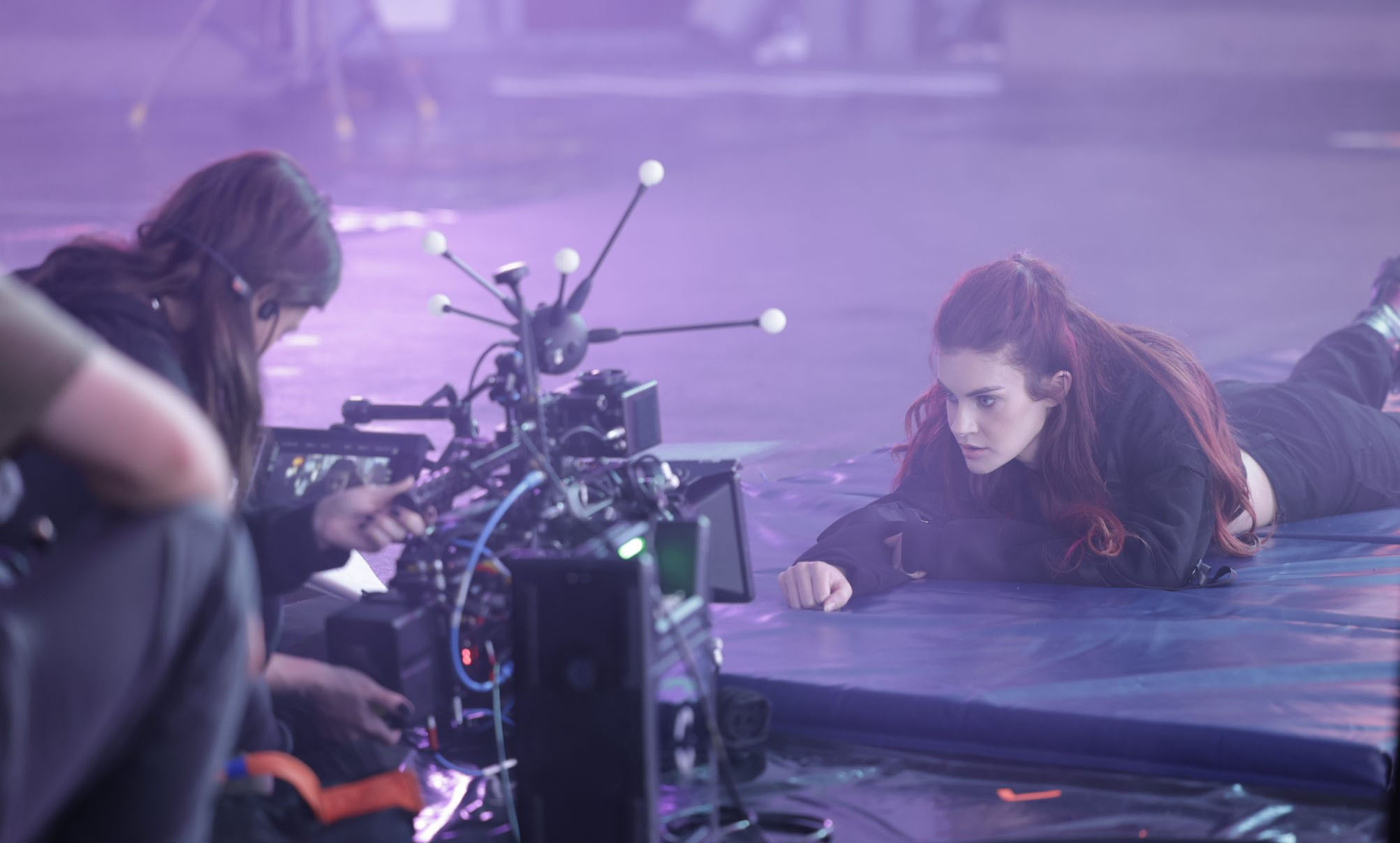
The film uses one of the donated CyberCity environments to demonstrate the asset under real production conditions, with actors, props, camera movement, practical foreground elements and interactive lighting. It is both a visual example of what the environment can produce and a reference for crews loading the same material onto another stage.
This is more valuable than a beauty reel. A controlled reference scene lets cinematographers examine how the system renders skin, costume, production design and the transition between the physical foreground and virtual world. It reveals whether the background is sitting naturally behind the actors and whether the wall is contributing plausible light rather than simply displaying a convincing image.
The accompanying making-of film repeatedly returns to one of the central advantages of ICVFX: immediacy. On a green- or bluescreen stage, the cinematographer must imagine how the foreground will eventually sit within a background that may not be completed for months. On an LED stage, the composition, lighting and composite can be judged together, with the hope of ‘final pixels’.
If a background object is distracting, it can be moved. If the virtual sun is falling in the wrong place, it can be repositioned. The physical lighting, virtual lighting and camera can be adjusted as parts of a single image.
DOPs have described volume capture as “the most exciting, fun, frustrating colour-correction suite you’ve ever been in, driven by computers.” (quite an accurate description). The rules can be bent, but only if the filmmakers and crews understand which rules they are bending.
Moving decisions forward
Virtual production does not remove work from filmmaking. Much of the time, it relocates that work earlier in the schedule.
Decisions that may often normally happen months after principal photography now need to be addressed during prep. The virtual environment must be constructed, approved and optimised before the actors arrive. Camera tracking, wall configuration, colour management and playback must all be proven. Costume, makeup and production design need to understand how their work will photograph in combination with the LED wall.
The virtual-production supervisor has become a key connection between these departments. The role sits between the director, cinematographer, production designer, visual-effects team and operators responsible for the real-time environment. Depending on the stage, the underlying tools may be Unreal Engine, ILM’s Helios or another proprietary system, but the photographic questions remain largely the same.
Where is the light coming from? Does it match the physical set? Is the perspective correct? Is the lens metadata accurate? Is the wall being photographed inside its useful focus and exposure range? Are the blacks, highlights and colours believable through the selected camera?
StEM3 does not answer every one of these questions automatically. What it does is reduce the number of unknowns. A crew can load a familiar environment, frame it through the actual camera and determine whether the stage performs as expected. If it does not, everyone has a common piece of material with which to discuss the problem. This is considerably more productive than debating whether an unfamiliar production image merely “feels wrong.”
Standards do not remove creativity
There can be a concern that standardisation leads to uniform images. In practice, the opposite is normally true.A reliable standard tells the creative team see where neutral is. From there, the image can be made warmer, cooler, darker, more saturated or deliberately less realistic. Without that reference, it is difficult to know whether the result is an intentional creative decision or an undocumented fault in the pipeline.
This is particularly important as LED technology continues to change. Panel resolution, colour reproduction, brightness and processing have all advanced rapidly, but stage configurations still vary enormously. Different walls may use different panels, processors, render systems and colour workflows. Even two facilities constructed from similar components may photograph differently.
The value is not that every volume will become identical. The value is that their differences can be seen, measured and discussed.
Technology in service of story
New technology has not changed the central objective. The job is still to tell a story through characters, environments, light and composition. What has changed is the point at which many of those decisions are made, and the range of people who need to make them together.
The project was made possible by a broad group of contributors providing environments, technical knowledge, stages, equipment, software and post-production services. Participants and supporters include Amazon Studios, Dolby, Epic Games, Sony, Walt Disney Studios, ETC, ICVR, MELS, Nant Studios, Pixomondo, ROE Visual and Vū Studios, among many others. The ASC’s StEM3 project page lists the participating organisations and shows examples of the supplied environments.
Virtual production will remain complex. It should be complex: it brings together cinematography, VFX, display engineering, real-time rendering, colour science and physical production. What StEM3 hopefully offers is a practical way to stop that complexity from overwhelming the creative process, and requiring the in-camera images to all be replaced or fixed later in post.
The Academy Software Foundation aim seems simple: Load the material. Look through the production camera. Establish what the stage is doing. Then start making cool and interesting choices.