
A giant stands inside a Greek cave.
He is sixty feet tall, surrounded by sheep and terrified soldiers, his single eye fixed on Odysseus. Yet the creature isn’t simply a digital creation. He is part actor, part prosthetic, part puppet, and part carefully crafted 70mm IMAX illusion.
The world of Christopher Nolan’s The Odyssey.
For his 2026 adaptation of Homer’s epic poem, Nolan takes his passion for tactile realism into the realm of gods and monsters. Shot entirely with IMAX 70 mm film cameras, the first feature ever to do so, the $250 million production follows Odysseus, played by Matt Damon, on his perilous journey home from the Trojan War.
The film’s mythical world posed a fascinating question: how do you make the supernatural feel physically real?
Visual effects supervisor was Andrew Jackson and the majority of the VFX were provided by DNEG who united live action photography, plates and invisible effects together into one of the year’s most successful films.
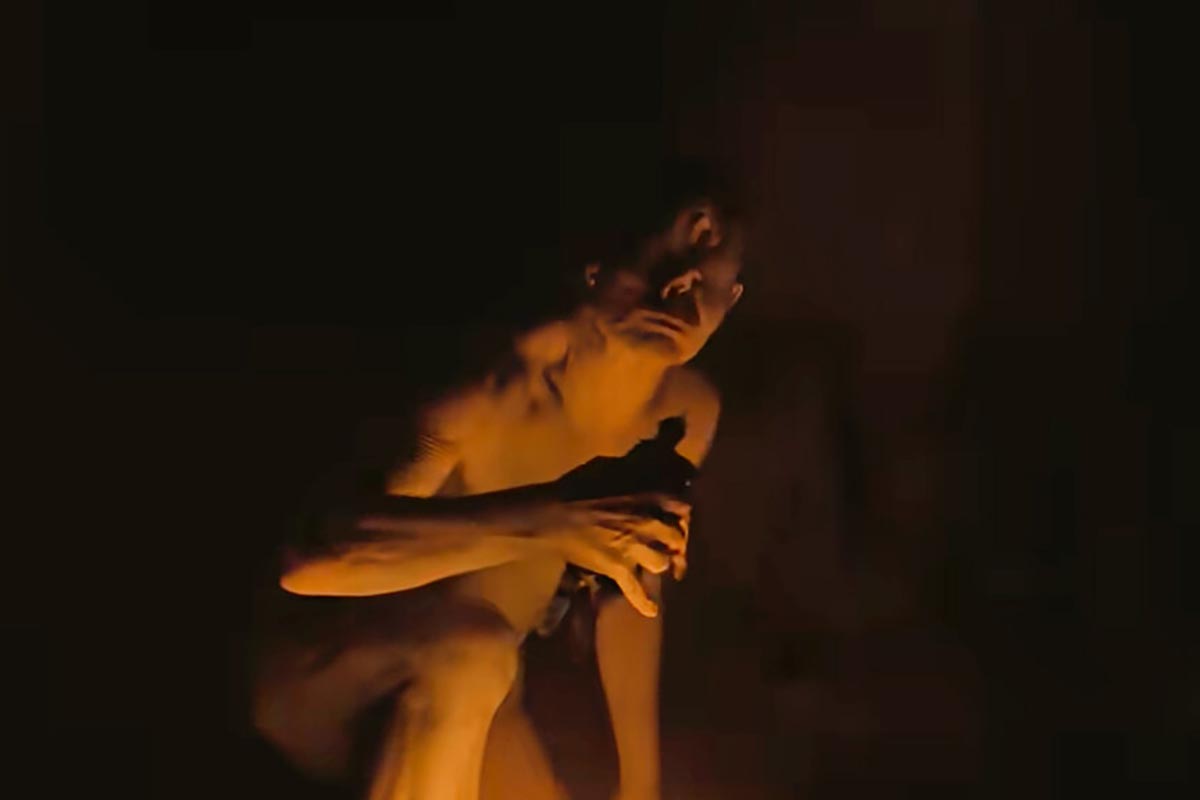
For Polyphemus, the answer was with actor and theatrical clown Bill Irwin, who previously helped bring the robots of Interstellar to life. Irwin performed the Cyclops in full-body prosthetics, filmed separately and from below to create an immense sense of scale. At Nestor’s Cave in Greece, the cast performed alongside a colossal puppet while Irwin supplied the creature’s voice in real time. That practical photography gave the actors a physical presence to fear.
The Laestrygonian giants demanded another kind of cinematic sleight of hand. Forced perspective, seven-foot stunt performers and undersized doubles transformed real bodies and locations into a mythic clash of scale.
It’s an approach that runs throughout The Odyssey: build the impossible in front of the camera, then use visual effects to complete the illusion. Even the influence of the gods is grounded in natural phenomena that ancient people might once have understood as supernatural, a creative approach that allowed Nolan to reconcile Homeric fantasy with physical reality.
On this week’s VFXShow, do we agree on whether all of this works? Of course not!
That will surprise absolutely nobody, since we have yet to ever agree about a Christopher Nolan film. At this point, our Nolan disagreements are less a difference of opinion and more an fxpodcast tradition, (possibly one requiring its own IMAX release).
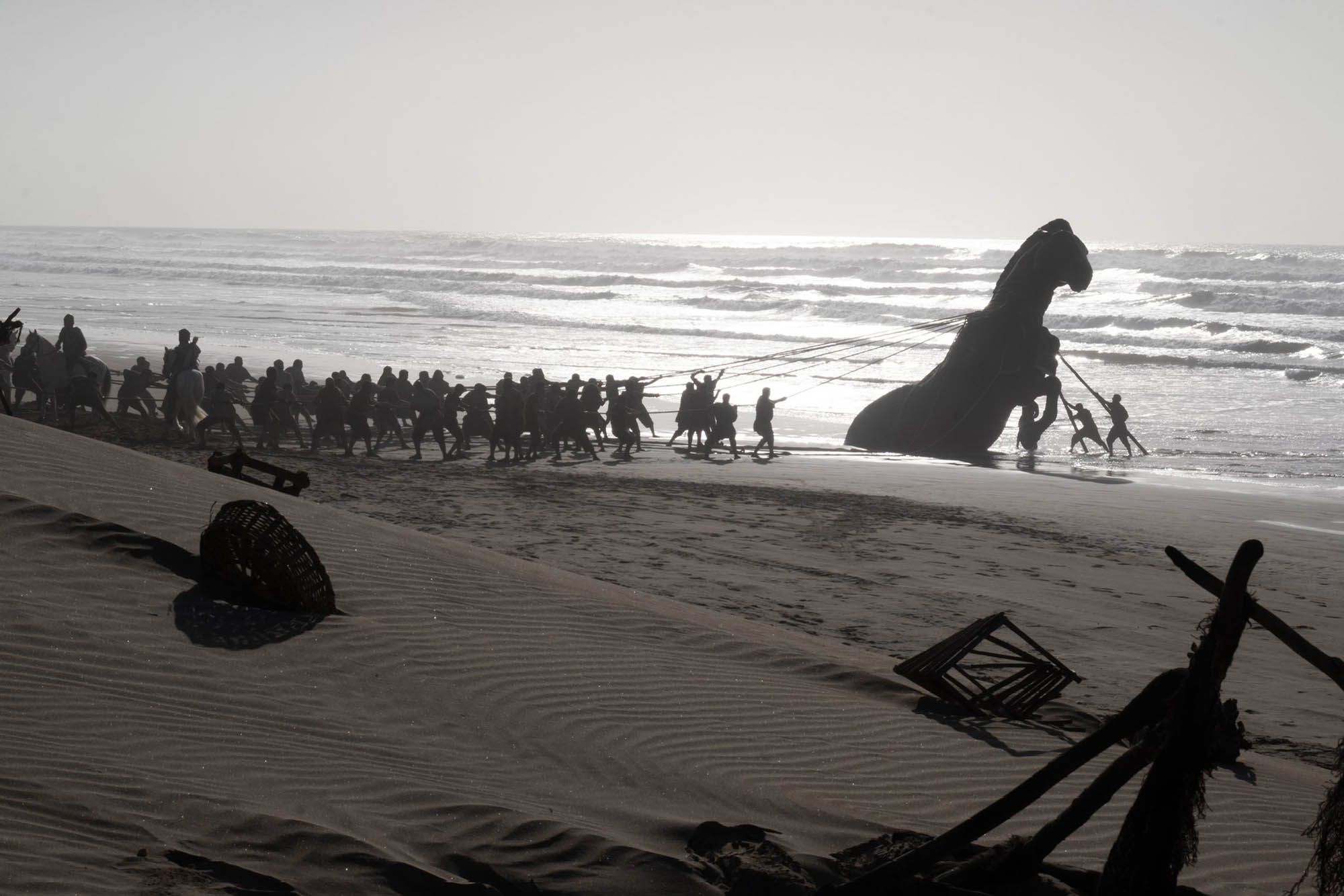
In this episode, we journey behind the images of The Odyssey to explore how puppetry, prosthetics, performance, forced perspective and invisible digital work brought Homer’s monsters to the screen. Along the way, we debate what succeeds, what doesn’t and which of us has completely misunderstood the film. Again.
Where does practical filmmaking end and visual effects begin? And can a ten-year voyage finally bring us to a shared opinion about Director Christopher Nolan?
Probably not.
Join us for the latest fxpodcast: our most mythic disagreement yet.
The three suitors of this week:
God of Mischief : Matt Wallin @mattwallin www.mattwallin.com
Follow Matt on Mastodon: @[email protected]. and letterboxd.com/mattwallin/
God of Thunder: Jason Diamond @jasondiamond www.thediamondbros.com
Oarsman number #3: Mike Seymour @mikeseymour www.fxguide.com. + @mikeseymour
Special thanks to Jim Shen for the editing & production of the show.
Be sure to subscribe to the podcast in your favorite app — links are above for Apple, Spotify, and RSS. Also be sure to subscribe to our fxguide YouTube channel.