
We spoke with Emma Kolasinska (Executive VFX Producer) and Tav Flett (Compositing Supervisor) from Lux Aeterna to discuss how they used invisible VFX to support the unscripted television of Netflix’s Squid Game: The Challenge, without breaking emotional or visual authenticity.
When Netflix announced Squid Game: The Challenge, it sounded like reality TV’s most impossible brief: take one of the most iconic scripted series in the world, where almost everyone dies competing, and scale it up to 456 real contestants, and somehow keep it immediate, tense, and emotionally authentic to the original drama… without turning it into a VFX showcase or losing the unsettling appeal of the original Korean series.
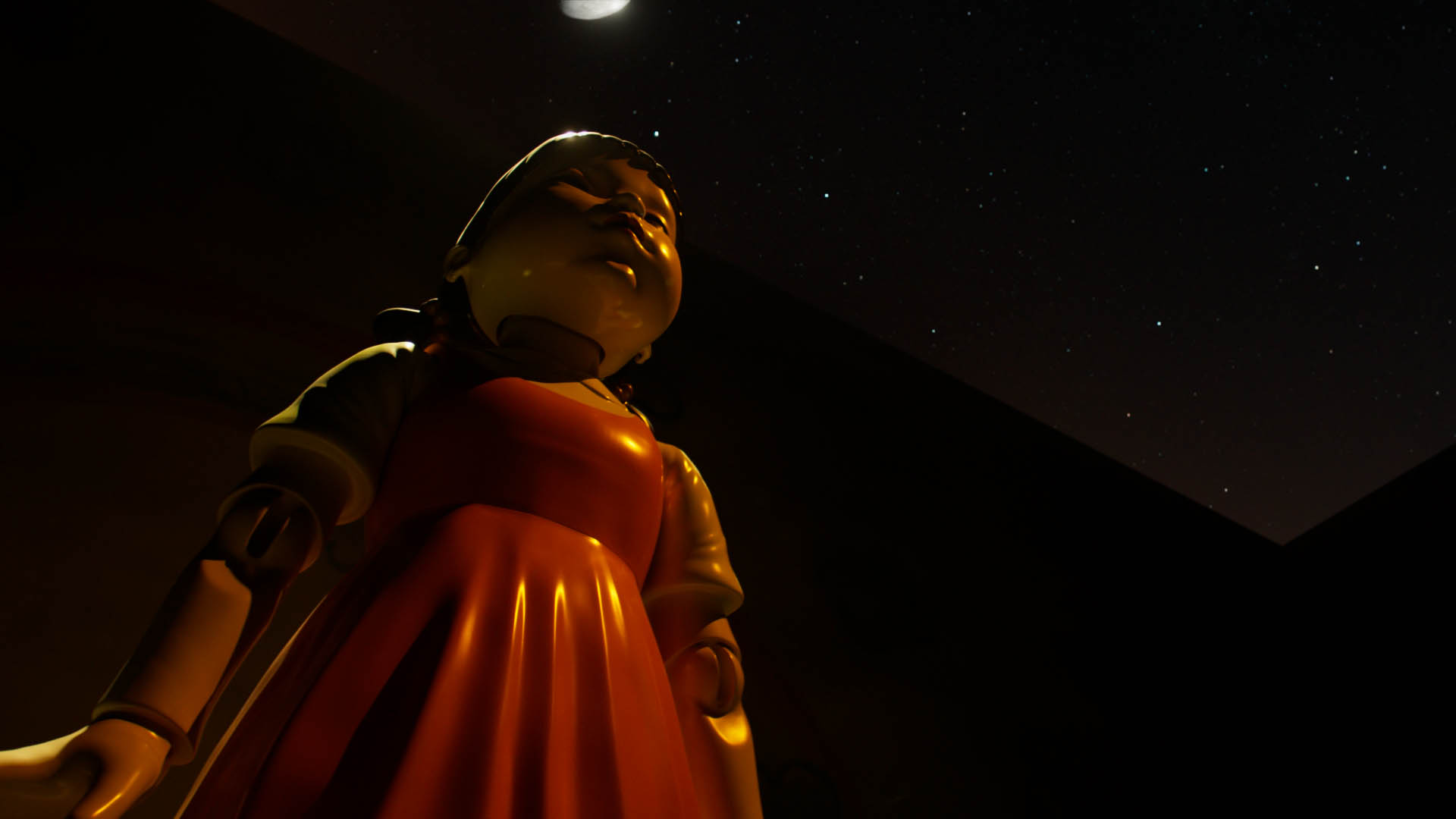
The original Squid Game environments have a very specific visual language: clean graphic geometry, brutal scale, and a strange, childish playfulness, – under the constant threat of violence. But unscripted television doesn’t behave like a drama. The “cast” doesn’t hit marks. There’s no blocking. People react, move, panic, and compete. And yet the show was still expected to feel like Squid Games.
With more than 200 cameras rolling and a massive editorial operation shaping the story in post, the UK production leaned heavily on careful pre-production planning, creating the conditions for VFX to be integrated into the series without breaking the documentary-style authenticity.
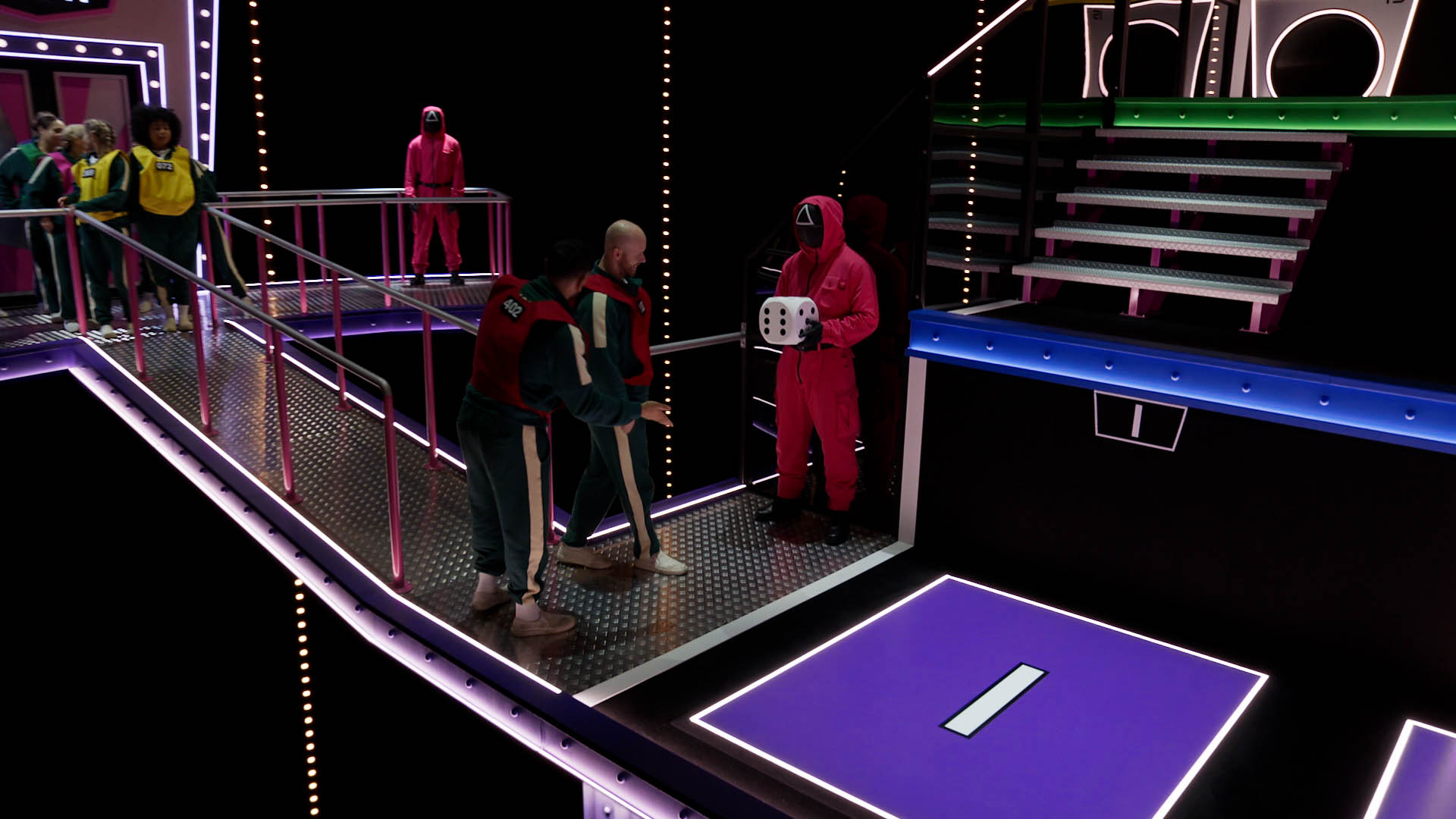
Lux Aeterna delivered 168 shots across four episodes, built on LiDAR scans, extensive on-set photography, and a fast-turnaround pipeline designed to keep up with reality-TV deadlines. The emphasis was on restraint rather than spectacle: rebuilding iconic spaces, extending sets photorealistically, and keeping shots flexible for editorial and DI as the cut evolved. And with an edit that was always evolving.
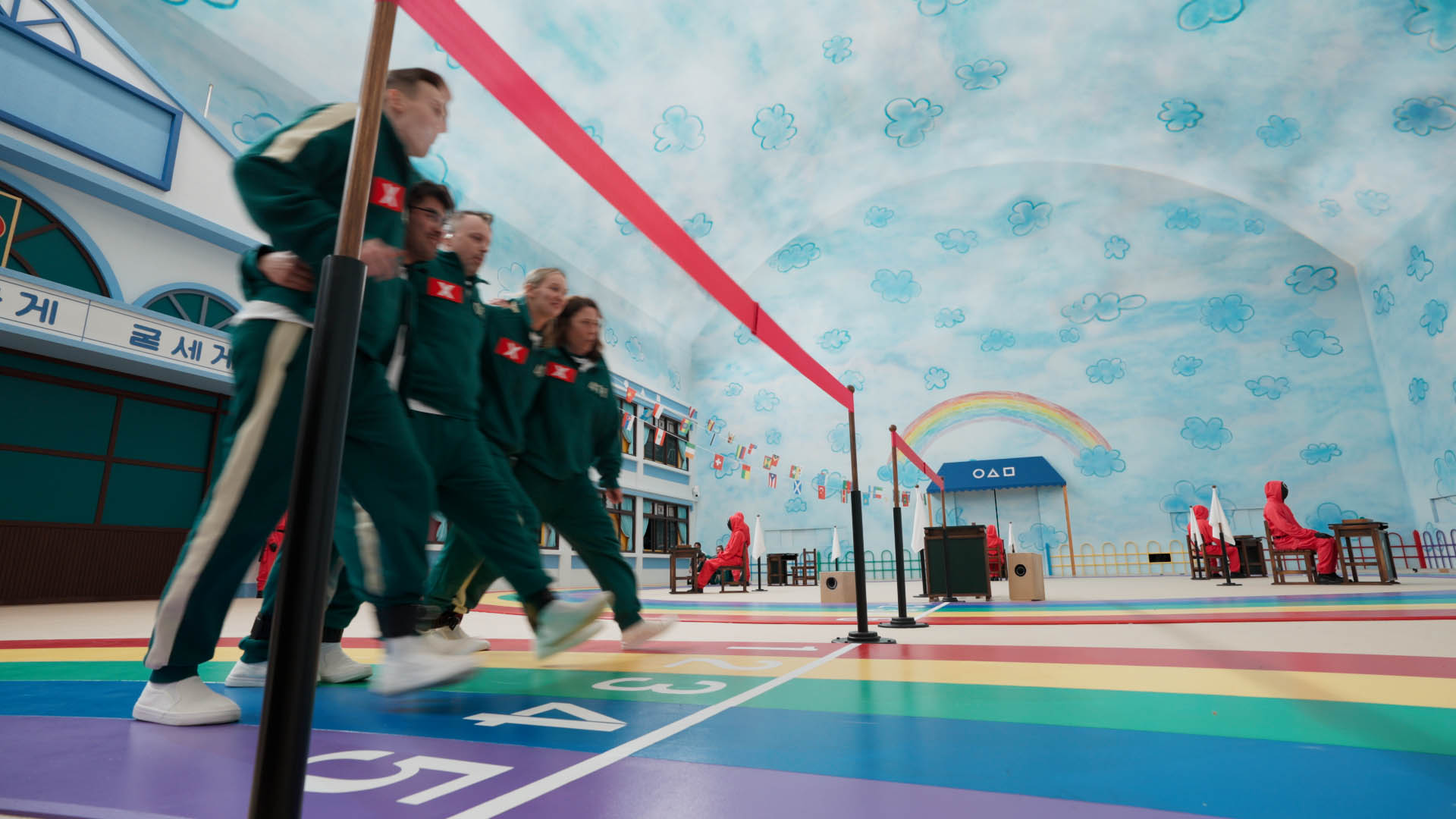
“In terms of the original drama series, we unfortunately weren’t able to resume the environmental assets, because the legacy VFX work was produced elsewhere,” says Tav Flett. “But we had lots of footage to work with from the Squid Game: The Challenge shoot – and LiDAR scan data, which was invaluable to our work.”
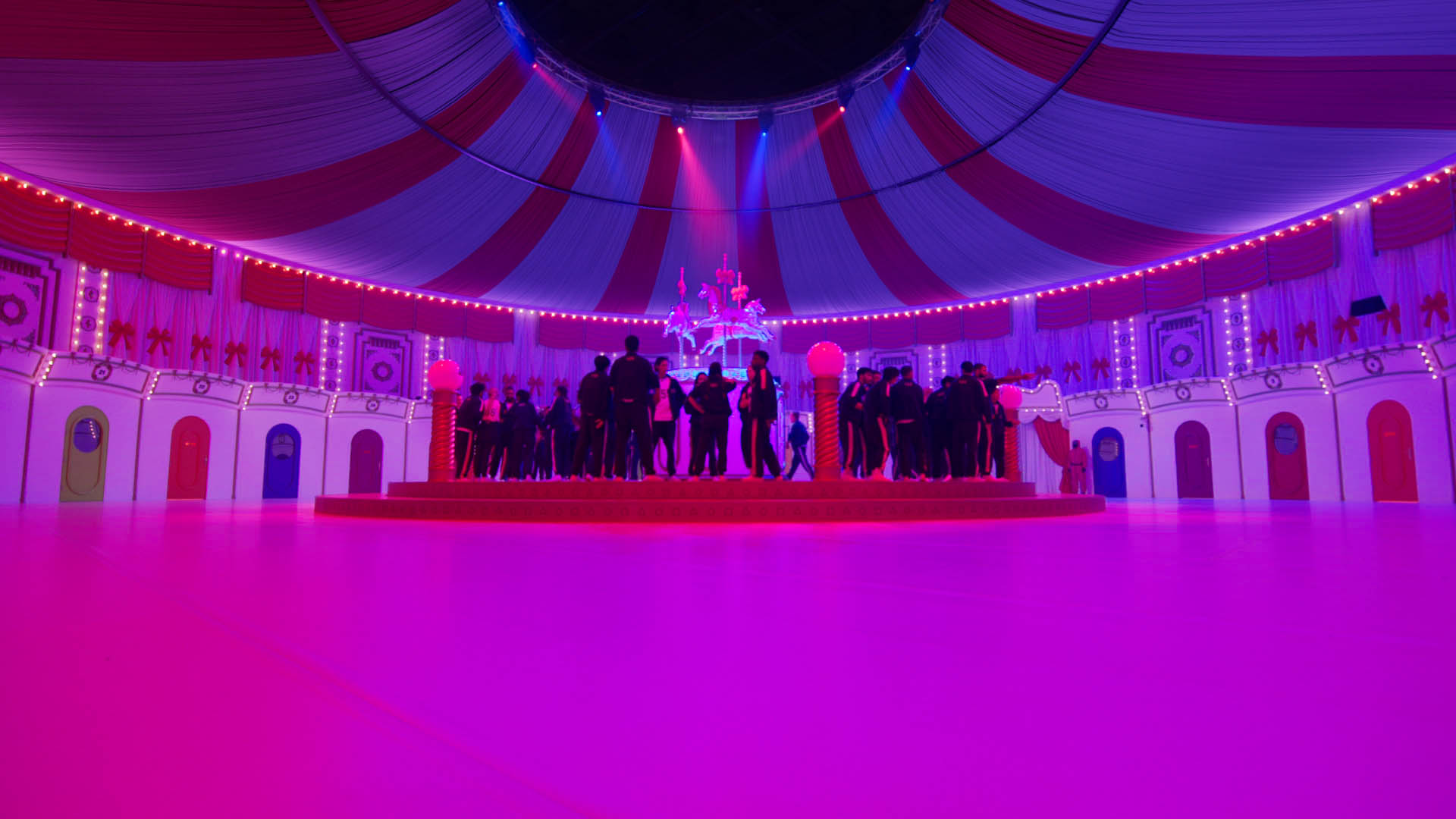
The LiDAR footage enabled the team to create depth maps, resulting in photorealistic set extensions. One scene in particular focused on the ‘Mingle’ challenge, where a tannoy called out a number, and the corresponding number of players needed to run into a room. Those remaining were eliminated. The shoot captured the raw emotion and high stakes, but missed a key feature from the original series: the circus big-top-style roof.
“The set extension work we carried out for ‘Mingle’ was the most challenging yet satisfying shots we produced,” Flett continues. “Despite the dynamic, complex onset lighting, we were able to match our CG asset to what was happening in real life. I thought our comp team did a great job turning this around in the little time we had.”
Reality TV moves at a pace that can feel closer to news than drama, and the editorial demands are relentless, especially when the material itself is unpredictable. Lux Aeterna’s team built a workflow that could pivot quickly, handle footage from a vast range of different camera systems and profiles, and still deliver invisible, high-end composites that held up all the way through DI final grade.
“We tried to give the editing and colour grading teams as much flexibility as possible,” adds Flett. “We did this by providing them with a wide range of DI mattes per shot, as well as pre-rendered global assets from compositing and DMP, to support any online VFX tweaks needed later in the process.”
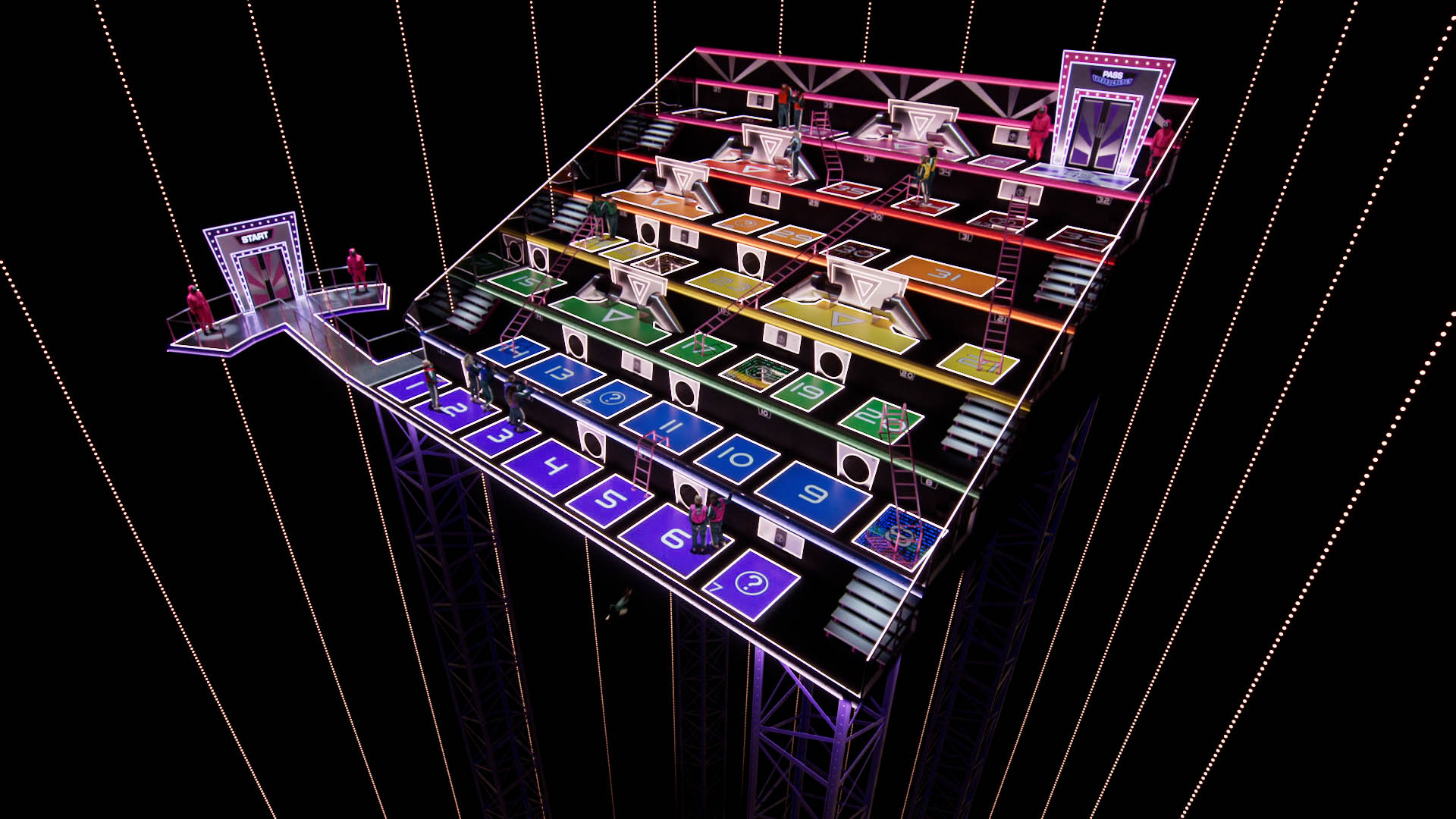
Series two of Squid Game: The Challenge extends the original show’s legacy, bringing its visual world into a format driven entirely by real human emotion.
“This series has been a great example of the value VFX can bring to unscripted television,” concludes Kolasinska. “We’re able to blend CG assets into the real footage to keep the real emotion intact and still deliver the kind of visual impact audiences expect from Squid Game.”