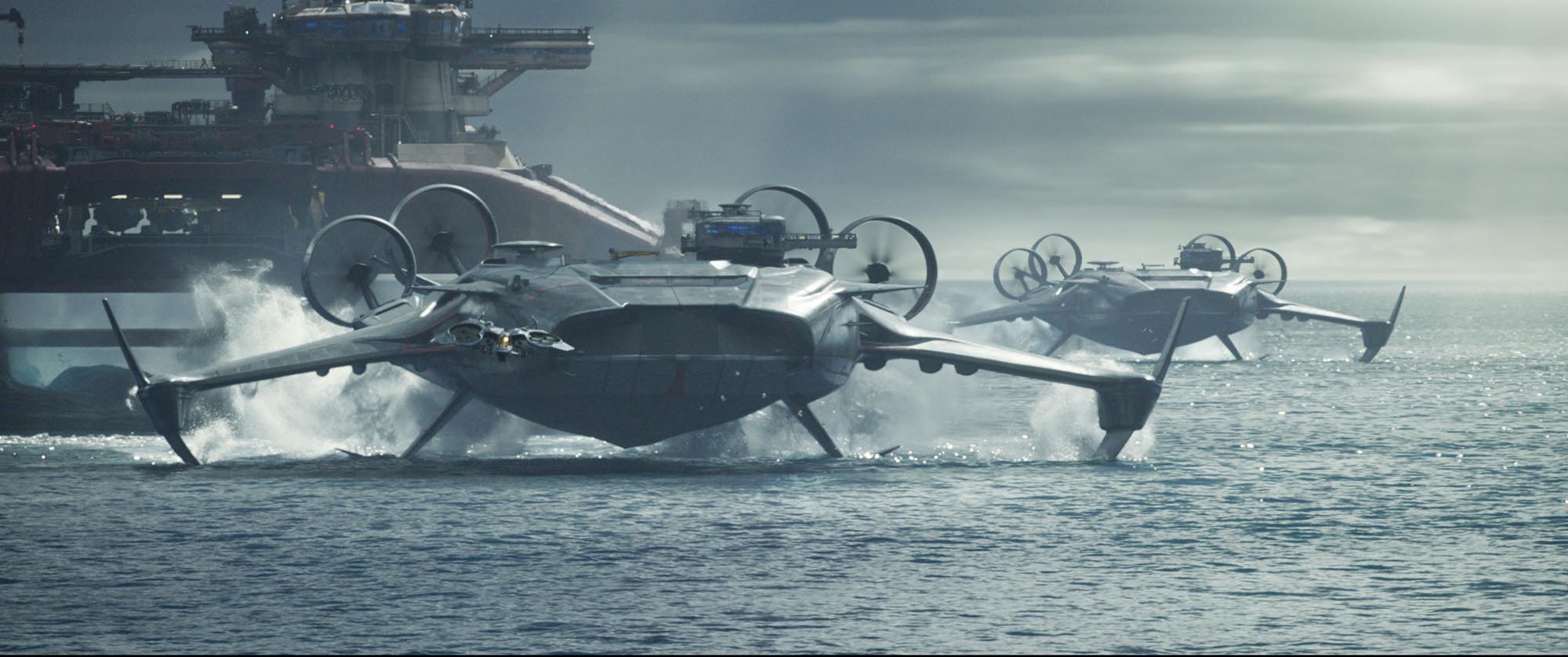
James Cameron has never treated technology as an add-on to be included only late in the filmmaking process. On Avatar: Fire and Ash, that philosophy is more explicit than ever. This is a film engineered from the ground up as a technical system, in which frame rate, simulation, lighting, performance capture, and continuity logic are tightly coupled. Talking with Wētā FX’s Visual Effects Supervisor Eric Saindon and Senior Animation Supervisor Dan Barrett, it’s clear that Fire and Ash is less about inventing one headline-grabbing breakthrough, and more about systematically removing friction between filmmaking intent and computational reality.
Designing for high frame rate from day one
Roughly 40% of Fire and Ash was delivered at 48fps, shot natively in stereo. The choice wasn’t stylistic experimentation for its own sake; it was a practical response to stereo photography breaking down during fast motion. Cameron was particularly concerned with vertical parallax artifacts, where dense jungle elements would “crack” across the screen during pans at 24fps.
Early experiments tried automated analysis to determine when shots should be upgraded to HFR, but the team quickly abandoned that approach, Eric Saindon explained. Instead, they approached all shots as 48 fps shots, but made decisions about which would be finalled as 48 fps, shot by shot, by eye. Crucially, the pipeline itself evolved: everything, animation, simulation, lighting, was authored at 48fps by default. While Eric points out that Cameron still “thinks and provides notes like a filmmaker, – as in make that 2 frames later” in 24p, the technical teams would ended up always thinking and working on 4 frames later (assuming 48), as they never wanted to be in a position where a late creative decision forced a costly re-simulation of fluids, muscles, or camera tracks. Working natively at 48fps meant flexibility without penalty.

Performance fidelity at unprecedented scale
The sheer computational scale of Fire and Ash borders on the absurd: Wētā FX estimates that final rendering alone would have taken over 140,000 years on a single processor. Yet neither Saindon nor Barrett framed this as a numbers game, or even that the rendering was a limiting factor. The focus was always on the actor’s performance and the craftsmanship of the Wētā FX artists.
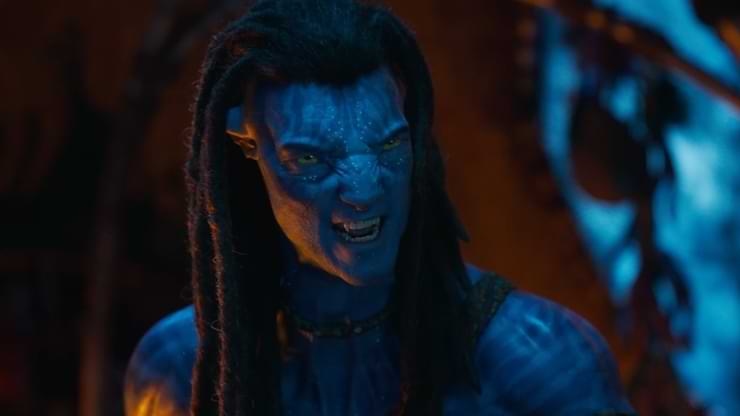
Wētā’s APFS (Anatomically Plausible Facial System) remains the backbone of facial animation, but its evolution here is as much about usability as raw accuracy. Dan Barrett stressed that the biggest gain was letting the system “get out of the way.” Animators could focus on emotional beats rather than wrestling interface complexity. Interestingly, the team found that faces with more wrinkles and surface detail, characters like the Wind Trader leader Peylak, often translated better into digital performances. The micro-structure of wrinkles provided richer reference points for motion and strain, improving legibility and emotional clarity.

From bones to muscles: rethinking the digital body
One of the most significant shifts since The Way of Water is the move to a muscle-driven body system. Rather than bones driving deformation with corrective sculpting layered on top, muscles now drive bones, and skin responds naturally through sliding and volume preservation.
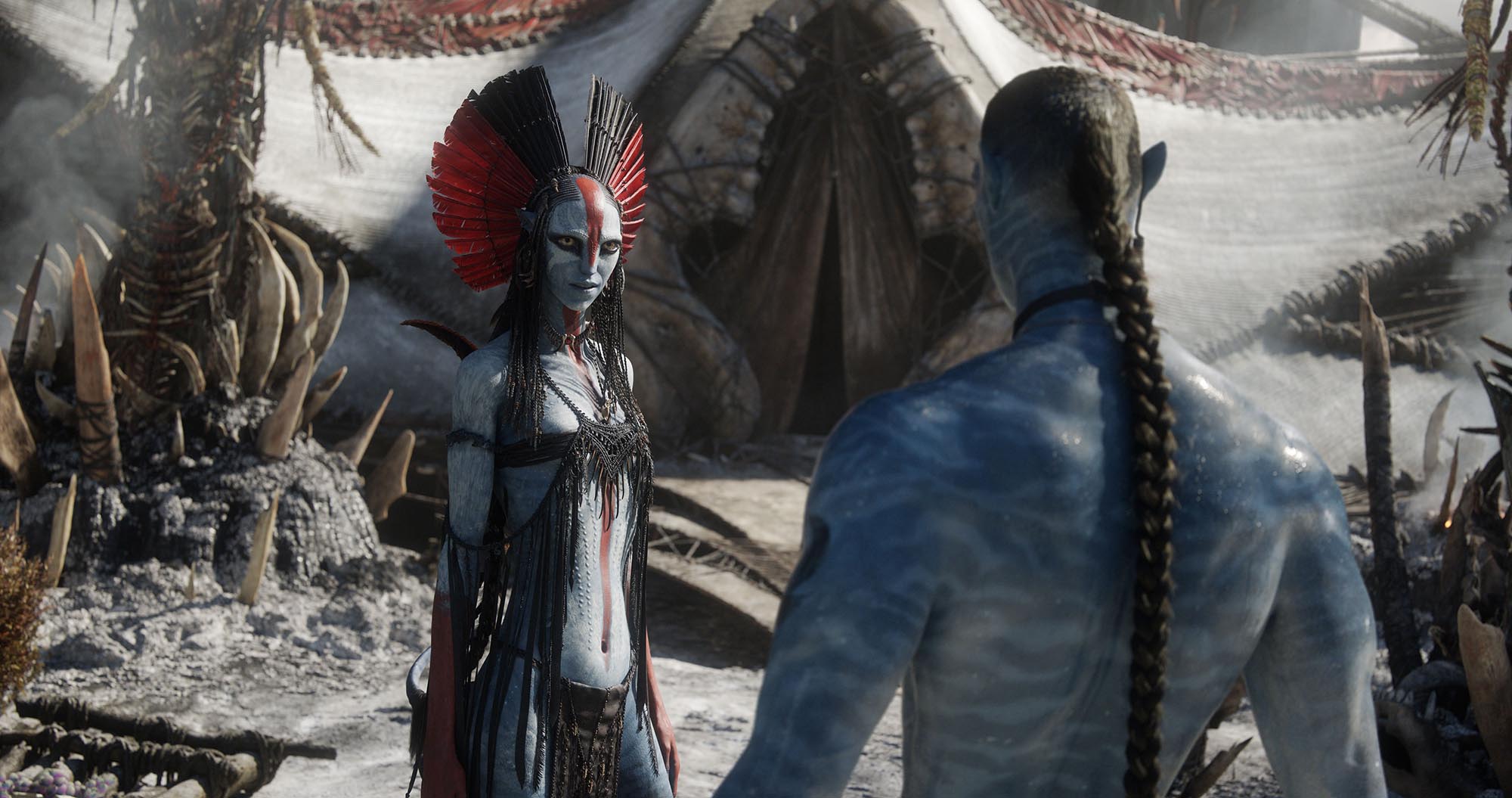
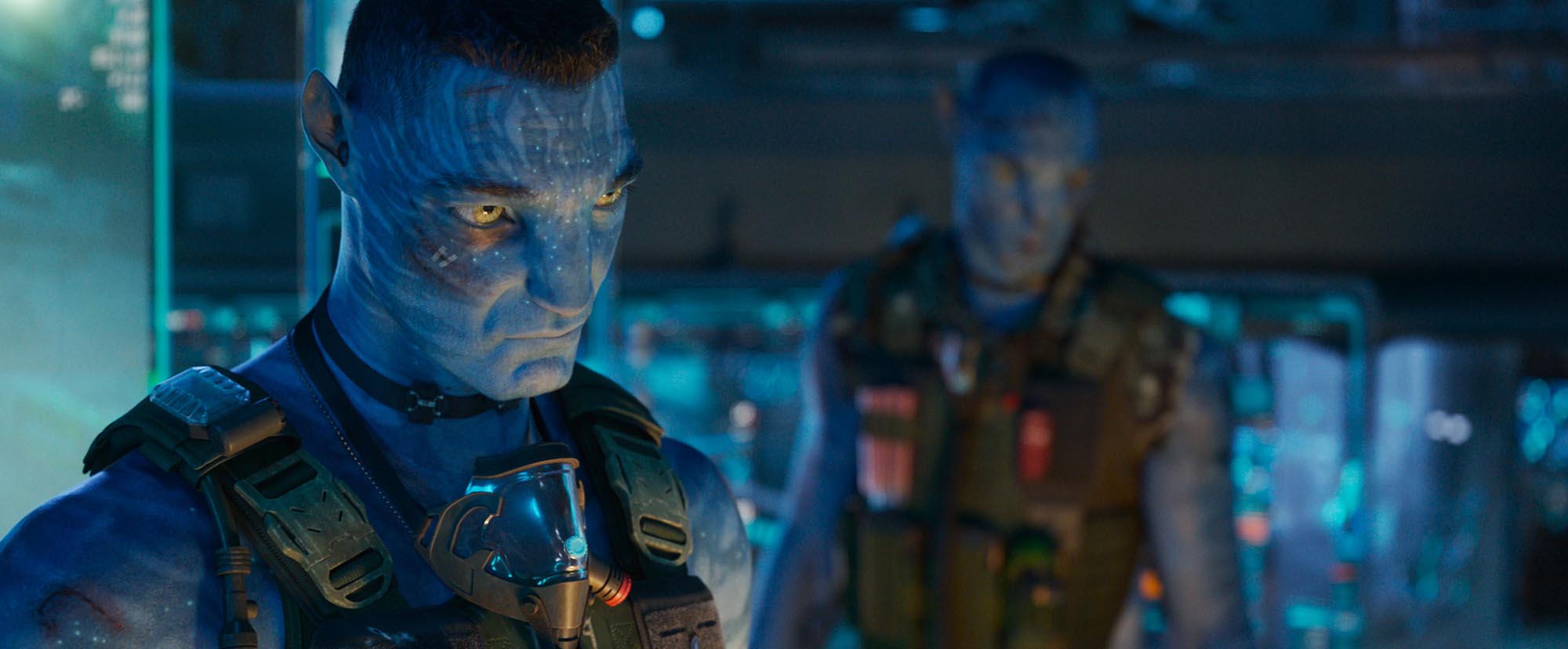
The result is subtle but profound: elbows, knees, and shoulders no longer require armies of fix-it per-shot sculpts. Skin behaves like skin. Neck muscles fire under tension. Micro-adjustments emerge from simulation rather than animator intervention. Neural networks trained across multiple films helped accelerate this process, allowing the team to capture physical nuance without sacrificing predictability.
Continuity as a technical vonstraint
Cameron’s reputation for logic-driven storytelling extends deeply into the VFX pipeline. Injuries, scars, and healing timelines were tracked meticulously. If Jake Sully took a wound in The Way of Water, that injury had to age, fade, or scar consistently as time progressed in Fire and Ash.

This rigor sometimes triggered expensive consequences. Entire sequences were re-rendered because a character appeared “too bloody” for ratings compliance, or because a late script change introduced an arrow wound that now had to be visible to be consistent, across multiple scenes. Continuity here wasn’t a note; it was a highly detailed and documented process.
Lighting the impossible: Medusoids and bioluminescence
Among the film’s most challenging elements were the Medusoids (or fpxafaw in Na’vi), vast, translucent, balloon-like creatures used by the Wind Traders. Lighting them required complex internal light transport, with rays bouncing, refracting, and scattering through semi-transparent volumes. Cameron’s references ranged from jellyfish to fish scales, but achieving the right iridescence meant physically accurate solutions that were some of the most complex in the film.


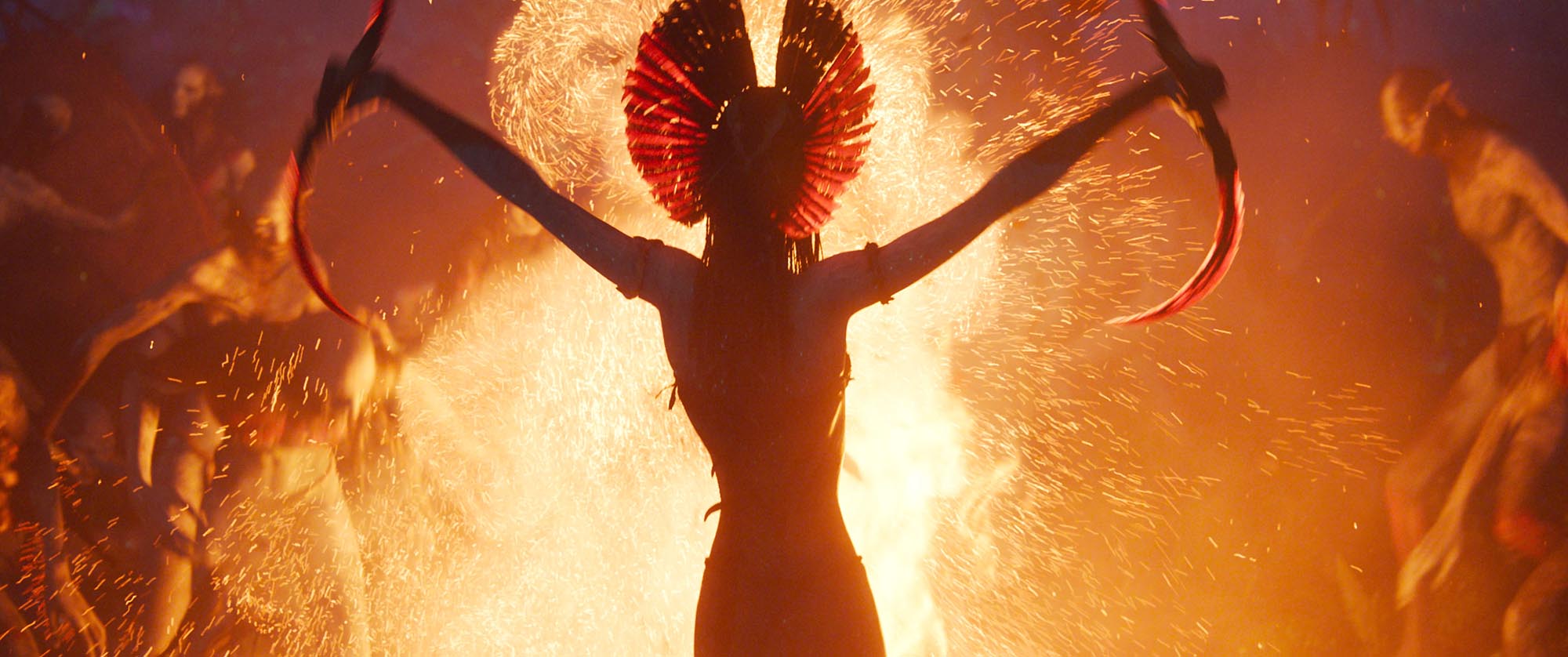
Bioluminescence was treated just as seriously, building on the earlier films. For example, rather than being a simple glow pass, the bio-dots on Na’vi skin emit real light into the scene and directly affect the skin. This ensured proper depth, falloff, and interaction with surrounding geometry, especially critical in stereo and HFR.


Spider: live action in a digital world
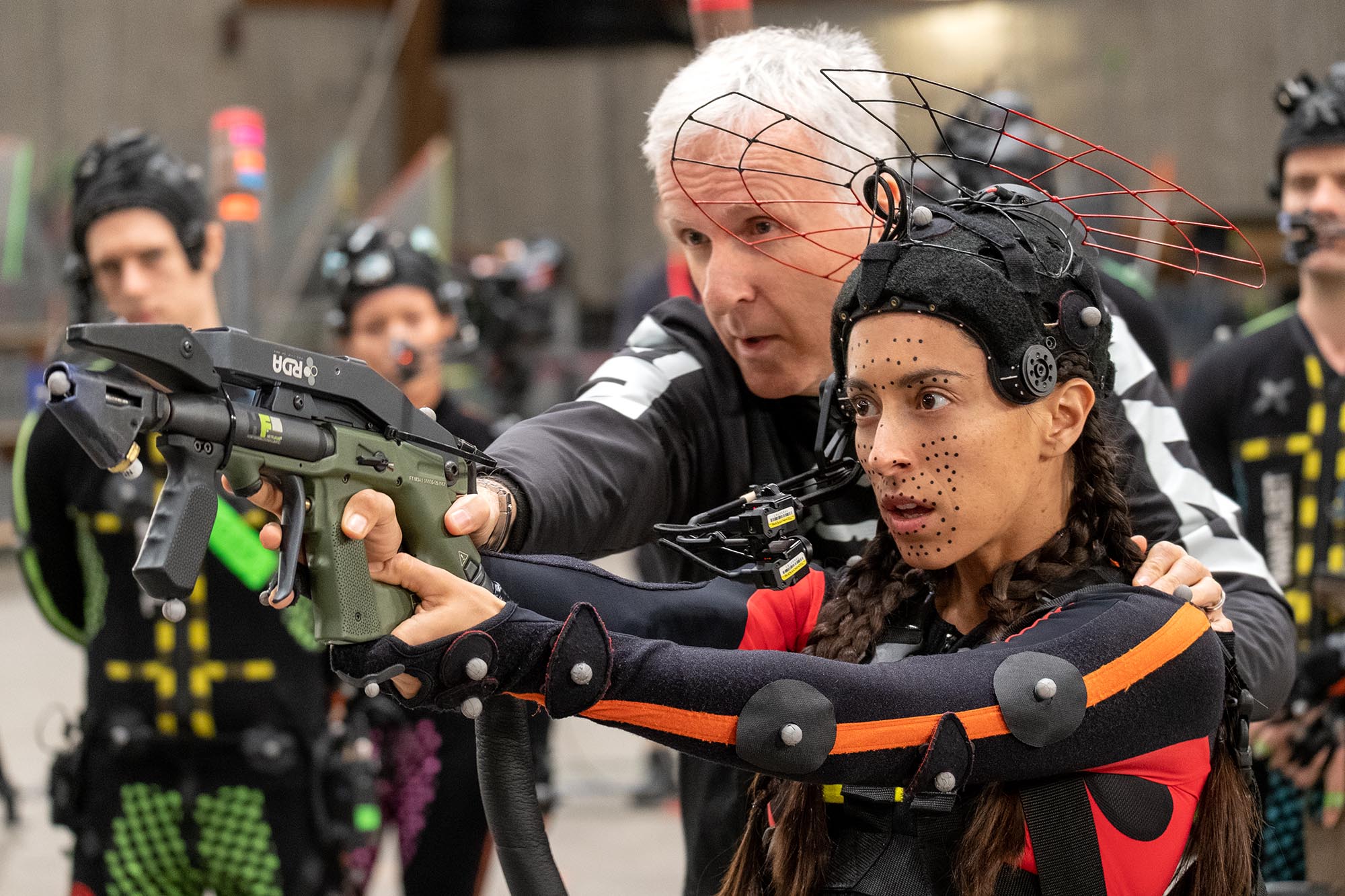
Only about 11 seconds of Fire and Ash contain no visual effects. Even Spider, played by Jack Champion, often exists in a hybrid state. His real hair frequently failed to behave correctly on motion bases or in underwater tanks, so it was replaced with fully simulated CG dreadlocks that responded accurately to wind, water, and movement.
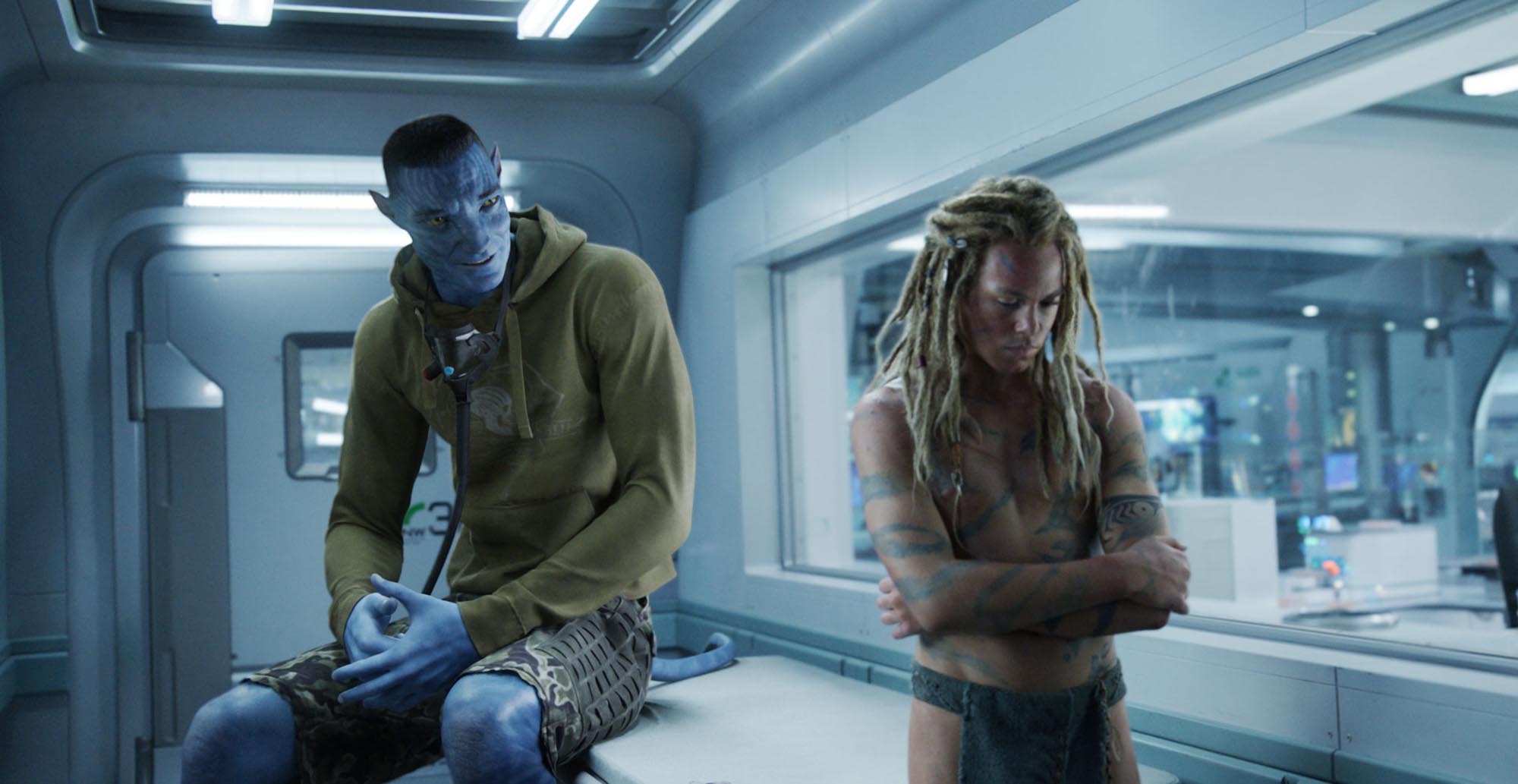
On set, tools like Sim-o-cam and real-time compositing allowed the crew to visualize digital suns, bioluminescent sources, and environmental lighting before the camera rolled. As with the last film the eyeline wire rig on set systems with live actor feeds ensured that the live action actor Jack Champion (as Spider), always focused on the correct digital character position, reducing guesswork later and blocking or eyeline problems.
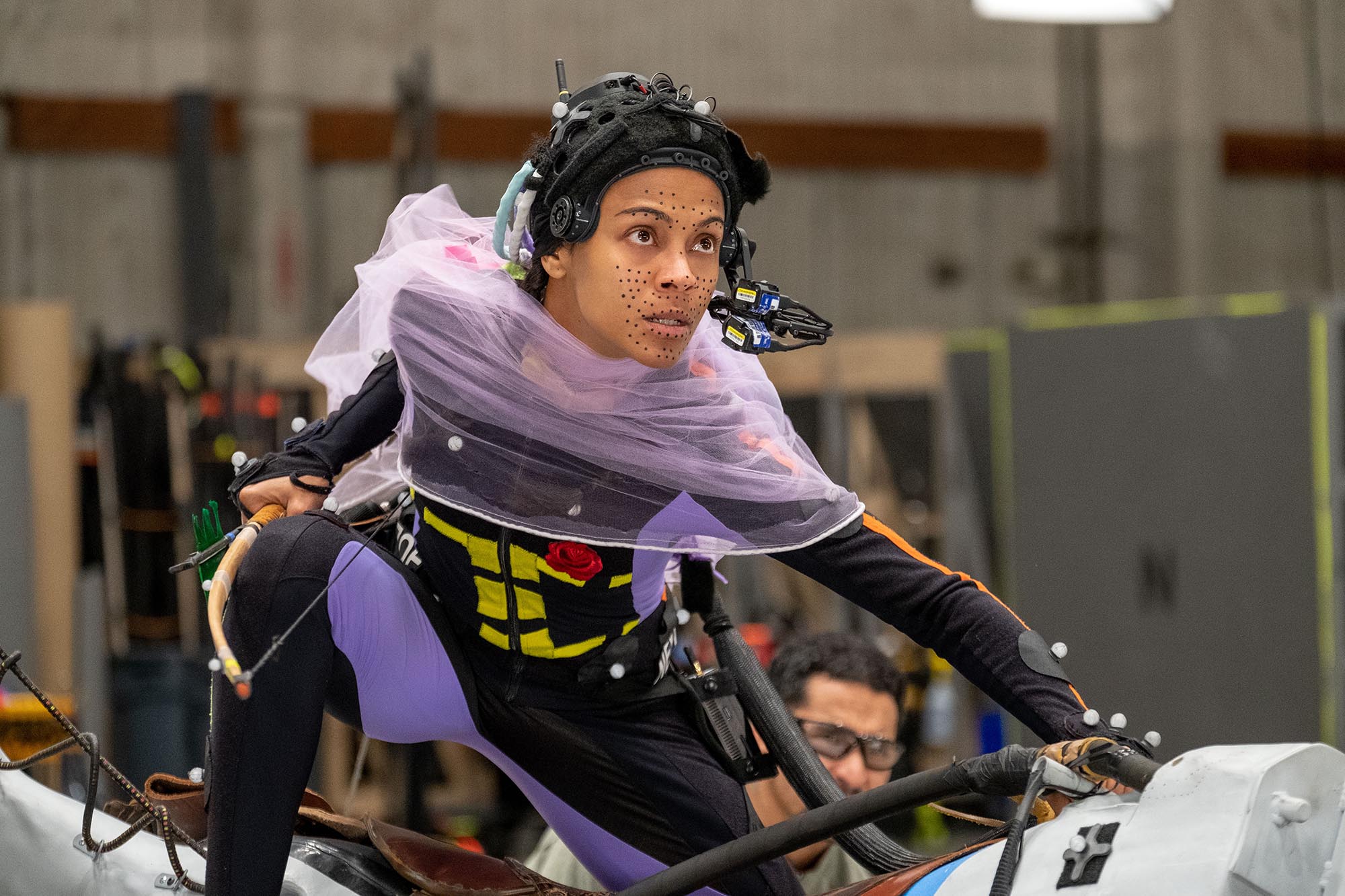
Continuity even extended to armpit hair. Because actor Jack Champion visibly aged during the multi-year shoot, later scenes required digitally simulated underarm hair (!) to match earlier footage. It’s a small detail, but emblematic of the film’s obsessive consistency.
VFX as filmmaking, not post
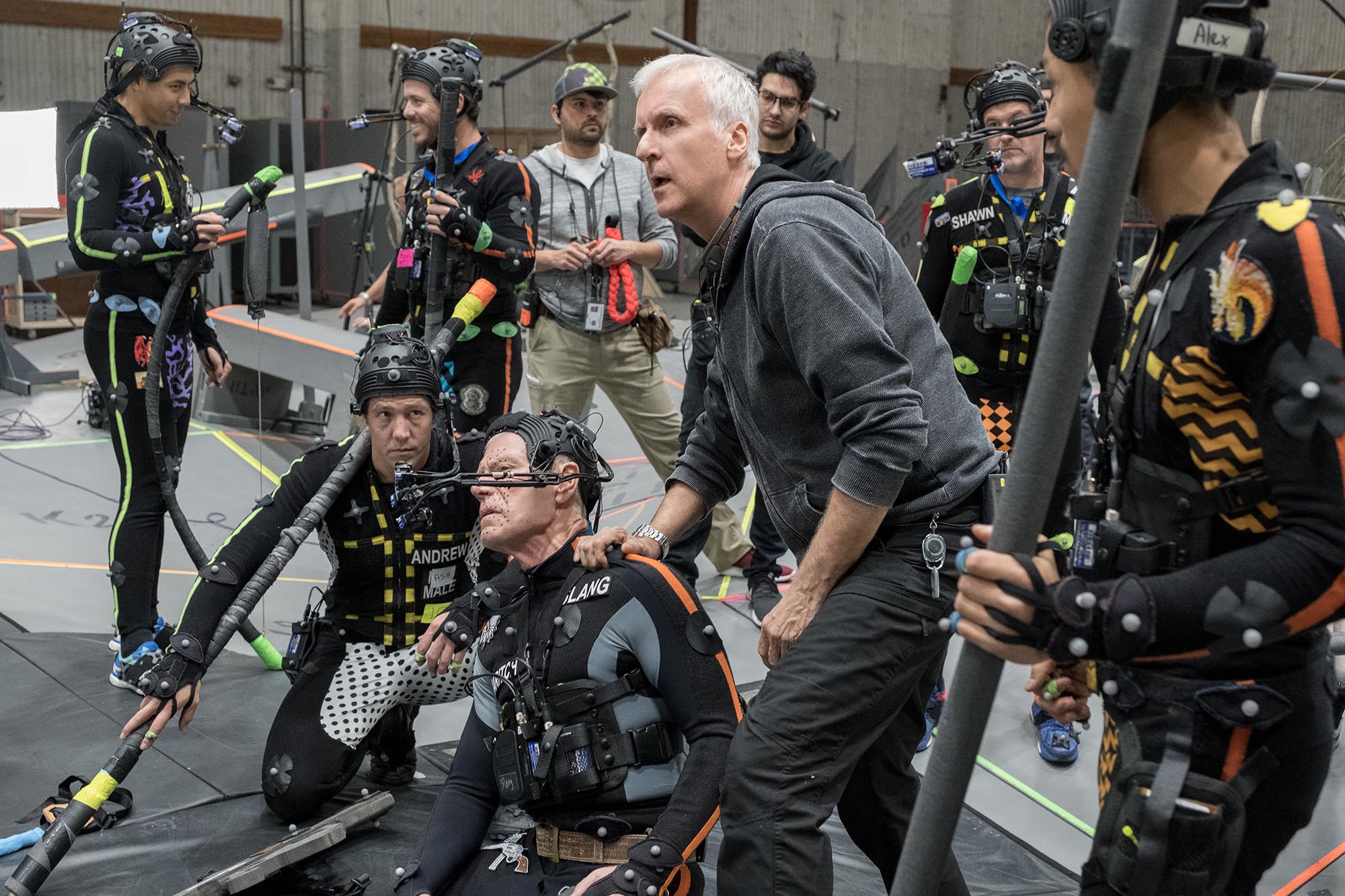
Both Saindon and Barrett emphasised that their work began at the first script read. This was not a film where VFX arrived after editorial lock. Wardrobe, props, sets, and capture stages were designed in constant dialogue with the digital pipeline. Physical builds were informed by how they would be scanned, simulated, and extended, every department operating as part of a single system.

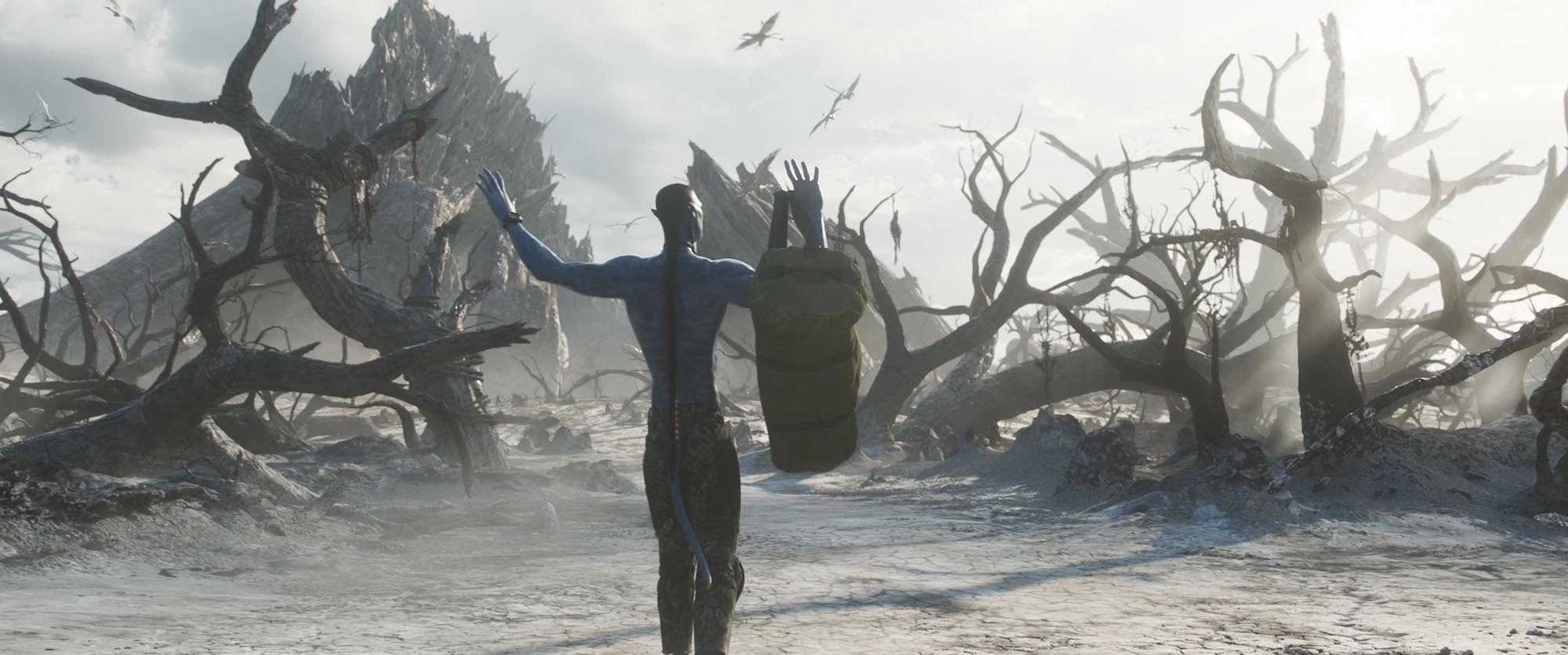
In Avatar: Fire and Ash, technology is not spectacle layered over cinema. It is the filmmaking language. High frame rate, neural deformation, physically based fire and water, and real-time visualisation aren’t innovations in isolation, they’re components in a tightly integrated workflow designed to preserve creative intent at impossible scale. And once again, Cameron has quietly reset the bar for what “normal” will look like in blockbuster visual effects.