Cinematic Immersive for Professionals
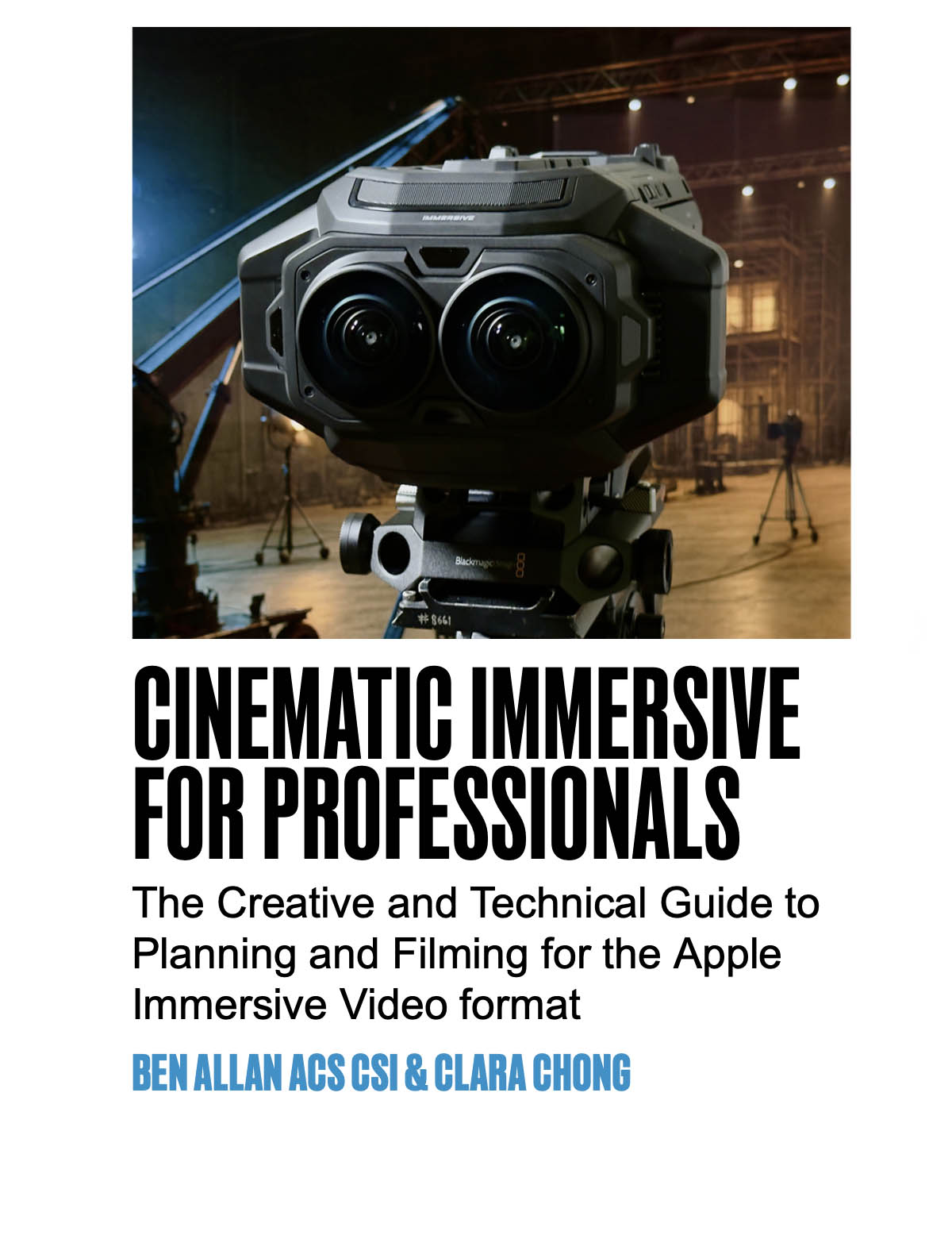
There are books that document technology, and then there are books that help create a language. Cinematic Immersive for Professionals sits firmly in the latter category. Written by cinematographer Ben Allan ACS and director Clara Chong, this is not another “gee-whiz, here’s the new Apple headset” coffee-table curiosity. It’s a serious, meticulously constructed creative and technical guide to shooting immersive spatial cinema with the Apple Vision Pro and Blackmagic URSA Cine Immersive camera (BRAW). And it may be the first resource that truly treats this emerging medium as cinema, not as a novelty.
Both authors are longtime friends of fxguide, and we’ve been privileged to be on set with them during several Apple Immersive Video productions, watching firsthand as they solved real problems and discovered new opportunities. Their lived and practical experience radiates through every chapter.
This book is perhaps the best filmmaker-literate guide to immersive spatial storytelling currently available.

A new medium, not a new gadget
One of the most important and refreshing claims the book makes, stated early, referenced often, and demonstrated with practical clarity, – is that Apple Immersive Video is not a “format upgrade.” It’s a new medium.
To quote the authors directly: “What excites us most is when technology expands creative possibility – when it lets you tell stories in ways that weren’t possible before.”
This perceptual shift anchors the text. Immersive video is not merely stereoscopic or high resolution video, it’s presence-based storytelling, where the viewer occupies a viewpoint inside the world and narrative meaning emerges from embodied perception rather than framed composition. The authors articulate this beautifully and back it up with genuine neuroscience, cognitive theory, and perceptual psychology. This is what sets the book apart: it’s not just “how to shoot 180° stereo”, it’s why perception behaves the way it does, and how filmmakers can use that responsibly and creatively.
Technical detail with real substance
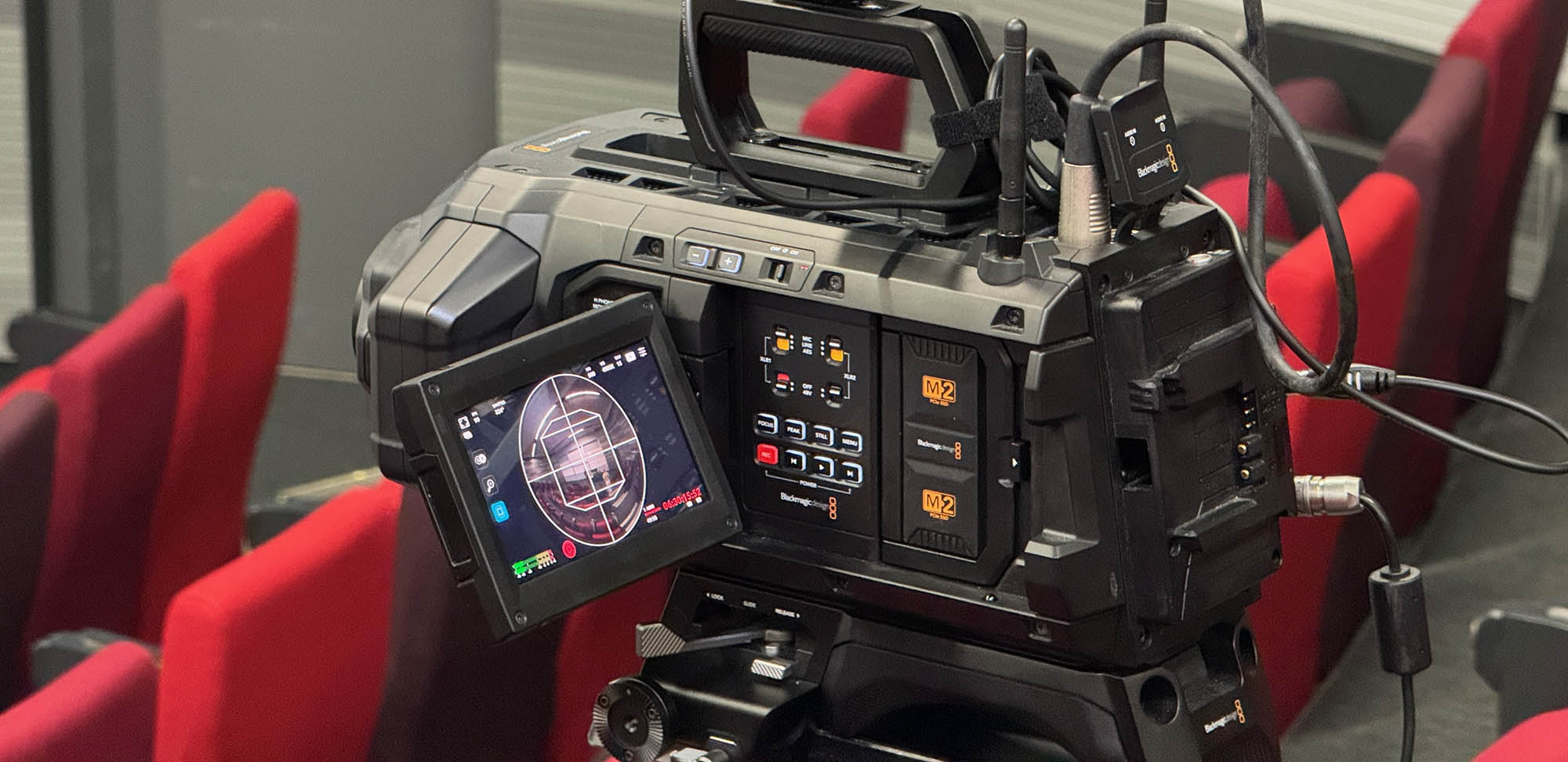
There’s no shortage of online chatter about the Vision Pro, often fixated on specs or short demo experiences. What Allan and Chong provide instead is a professional-grade breakdown of the entire AIV pipeline, from optics and physics through to post and delivery.
Some highlights:
- Precise explanation of the 180–210° field of view, how it affects blocking, viewer comfort, and depth cues.
- A clear treatment of why 90fps is mandatory, not optional. As they note,“90fps is the minimum frame rate where discomfort is minimised.”
- The best explanation we’ve read on the datum—the perceptual and geometric origin point that governs stereo geometry, camera placement, and post-production alignment.“In post-production, the datum serves as the zero point – the (0,0,0) coordinate… keeping scale consistent and digital elements seamlessly integrated.”
- A rigorous unpacking of the BRAW Immersive codec, compression strategies, and the quirks of playback vs source evaluation.
- Detailed, practical guidance on set discipline, monitoring, spatial audio capture, and metadata integrity.
It’s rare and refreshing to find a resource that genuinely treats both the creative grammar and engineering precision as equal partners..
A new cinematic language (not VR 2.0)
Where most early Vision Pro discussion and Youtube videos have treated spatial video as a branch of VR, Allan and Chong instead situate it as an evolution of cinema, a new one that demands new grammar rather than new gadgets.
They identify three foundational creative forces:
1. Proximity
Emotional intensity derived from three-dimensional intimacy.
In immersive space, micro-expressions, normally reserved for close-ups, can be read from metres away: “This ability in AIV to read micro-expressions creates a particularly strong feeling of authenticity… impossible to replicate in other traditional formats.”
2. Positioning
Environmental choreography, not frame composition.
Blocking becomes about comfort, spatial coherence, and embodied perspective, not coverage of shot-reverse-shot.
3. Perceptual salience
Guiding viewer attention through sound, light, and motivation rather than cuts or framing.
“Viewer attention is earned, not assigned.”
What emerges feels like the beginnings of a genuinely new cinematic language—framed not by rectangles but by human cognition itself.

Why this matters to visual effects artists?
For VFX professionals, this new medium is not a threat to traditioal craft, it’s a huge expansion of it.
The URSA Cine Immersive camera captures over 10.5 billion pixels per second, a staggering pipeline that enables presence and realism at a level flat screens simply cannot match. But this also means:
-
- New pipelines for stereo depth alignment
- Datum-centred CG integration
- Reconstruction accuracy far beyond traditional 3D
- Challenges in occlusion, parallax, and environmental continuity
- A need to rethink how we design invisible VFX
We’re not at the end of anything, the authors explain, rather, – at the very beginning of a new one where cinematography, VFX, and human perceptual science are all important.
It is likely that immersive spatial storytelling will become an increasingly important testing ground for presence, embodiment, and cognitive realism moving forward.
A book written by filmmakers, for filmmakers
What makes Cinematic Immersive for Professionals stand out is that it is not a tech manual dressed up as a filmmaking guide. It’s a filmmaking guide that happens to include exceptional technical detail.
Ben Allan is one of Australia’s most technically fluent cinematographers, but he is also a deeply narrative-driven artist. Clara Chong’s experience in both traditional and experimental immersive cinema grounds everything in story. Together, they speak the language of filmmakers, not marketers.
The tone is clear, patient, and refreshingly non-evangelical. Their central argument is simply:
Learn this as a new language. Then speak it fluently.
Final thoughts
For directors, cinematographers, VFX supervisors, editors, and technologists, this new area of filmmaking offers real opporunites but it also demands not just tech knowledge but wisdom, a way to step into immersive storytelling with intention, confidence, and a new cinematic craft.
The Vision Pro ecosystem will evolve. The URSA Cine Immersive will get successors. Playback formats will expand. But the perceptual principles, creative grammar, and foundational discipline articulated by Allan and Chong will likely remain relevant for years.
If you’re a filmmaker and you want to do more than test the new toy, if you want to tell stories people actually want to watch in an immersive medium, this book is a must.