
More than twenty years ago, Quentin Tarantino penned a scene for Kill Bill that never made it to screen, a fragment of mythology kept alive only through script leaks and enthusiastic fan speculation. Last week, that “lost chapter” emerged in the most unexpected of places: inside Fortnite. The Lost Chapter: Yuki’s Revenge marks not only the resurrection of a long-buried cinematic moment but also the latest example of Epic Games using its technology to push the boundary of how stories can be told.
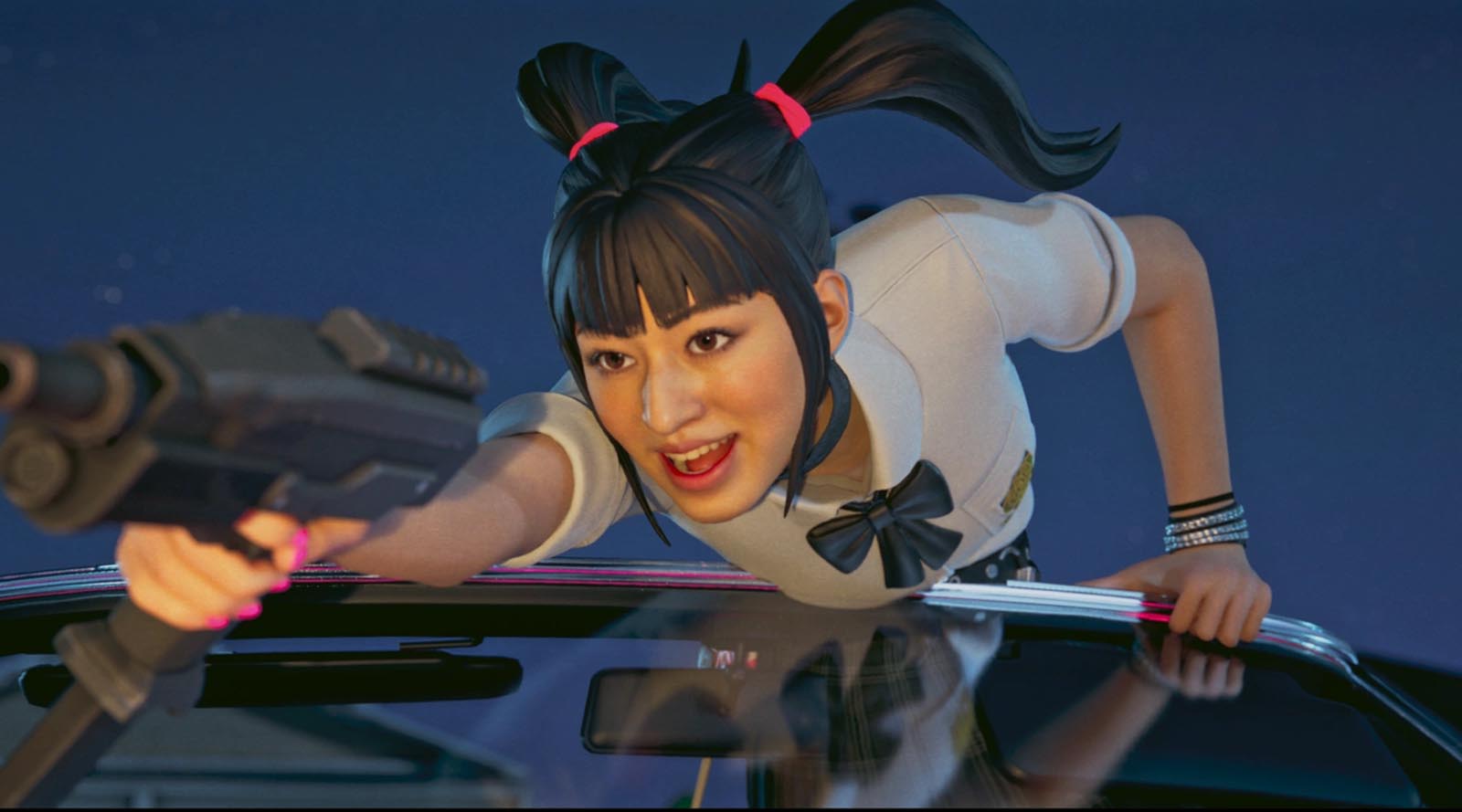
Yuki’s Revenge follows the twin sister of Gogo Yubari, as she hunts down Thurman’s ‘The Bride’ to avenge her sister’s death. Gogo, the bodyguard of Lucy Liu’s O-Ren Ishii, was assassinated along with the Crazy 88 and O-Ren in Kill Bill Vol 1.
Epic has a long tradition of producing advanced tech pieces that double as filmmaking demonstrations, and this release continues that lineage by showing how Unreal Engine can serve as a real-time storytelling canvas for major directors.
Directed by Quentin Tarantino and starring Uma Thurman, this new chapter brings Tarantino’s cinematic world into Fortnite for players to experience for the first time.
For this revival, Tarantino directed the sequence himself with Uma Thurman returning to her iconic role. What makes the project distinctive is the immediacy of the digital filmmaking experience: Tarantino could direct actors on set while seeing their performances rendered in real time within Fortnite. Working with The Third Floor and Epic Games, the team translated these performances into stylised animation using Unreal Engine’s MetaHuman tools, crafting digital likenesses that preserved the nuance of the original acting. This workflow erased much of the traditional gap between capture and visualisation, letting filmmakers iterate creatively inside a single, unified system.
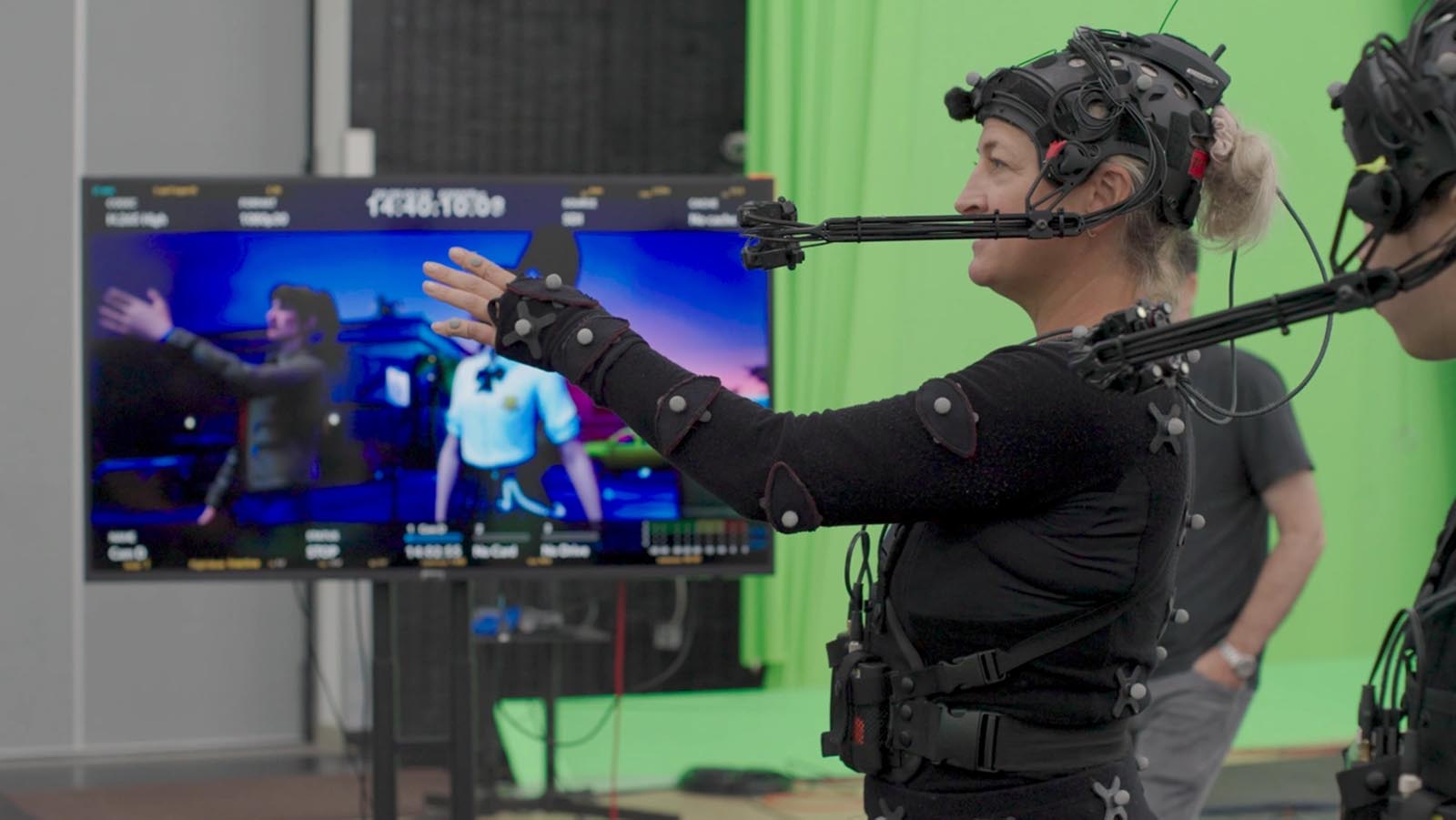
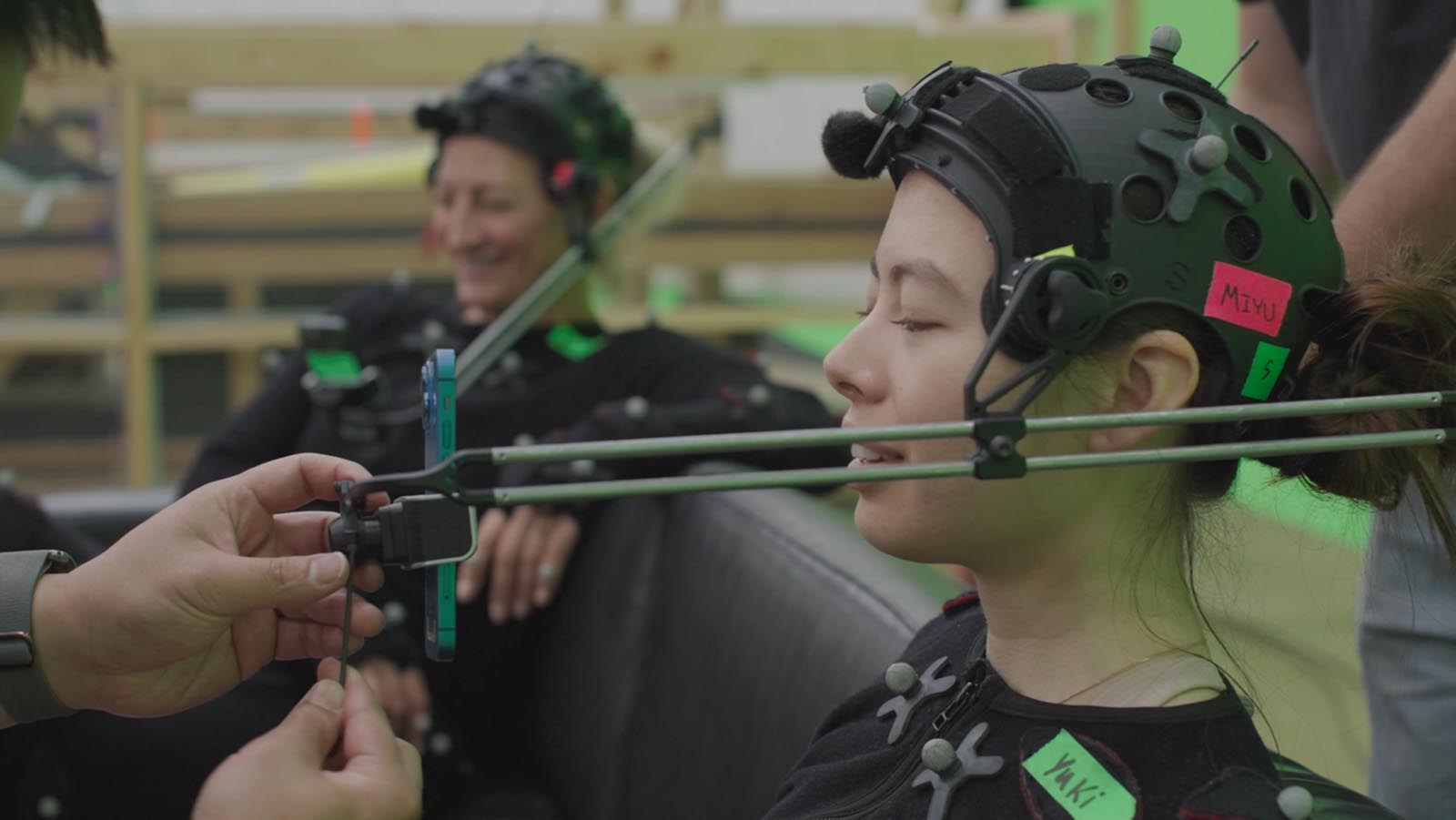
A key component of this pipeline was the high-fidelity MetaHuman facial rig, trained on dense 4D scans. By pairing this with MetaHuman Animator, the production was able to capture subtle emotional beats using everything from standard webcams and iPhones, – to stereo head-mounted cameras. Real-time retargeting allowed these expressions to be visualised instantly in Fortnite’s aesthetic, giving both Tarantino and the performers direct feedback on how scenes were translating into the stylised world. The result is a hybrid performance style, -part live-action, part animation—that retains actor intention while embracing Fortnite’s visual language.
The team also extended real-time capture into physical interactivity. To support performance-driven action scenes, they developed a prototype device called ‘MuzzleReport’, an attachment for Airsoft prop weapons that detects trigger pulls and sends the data directly into Unreal Engine. This enabled live muzzle flashes, bullet tracers and impact effects to appear in-engine as the actors performed. For the cast, this meant immediate visual and haptic cues; for the director, it allowed action beats to be staged with far greater accuracy than traditional placeholder effects.
Real-time destruction was another major innovation. By handling breakage, debris and physics-driven impacts live during capture, the filmmakers could choreograph timing, eye-lines and reactions with far more precision than would be possible if these effects were added later in post. This approach allowed the team to shape the emotional and kinetic rhythms of each moment as it unfolded, treating digital destruction as a performative element rather than a downstream technical process. It speaks to the broader shift in virtual production: the collapse of traditional post-production into live, iterative filmmaking.

Taken together, The Lost Chapter: Yuki’s Revenge signals how far Epic’s real-time tools have evolved toward unifying film and interactive storytelling. It follows a lineage that includes The Matrix Awakens (2021), another landmark Unreal Engine cinematic that blended digital doubles, live-action sensibilities and narrative experimentation. That earlier piece reflected a fascinating historical loop, Epic’s ow\ CTO Kim Libreri, who supervised bullet time on the original Matrix in 1999, returning decades later to help shape the next generation of real-time cinematic expression. Now, with Tarantino’s lost Kill Bill scene brought to life for millions inside Fortnite, Epic continues to demonstrate how its technology can empower filmmakers to explore new narrative spaces, crossing boundaries between cinema, animation and interactive worlds.